
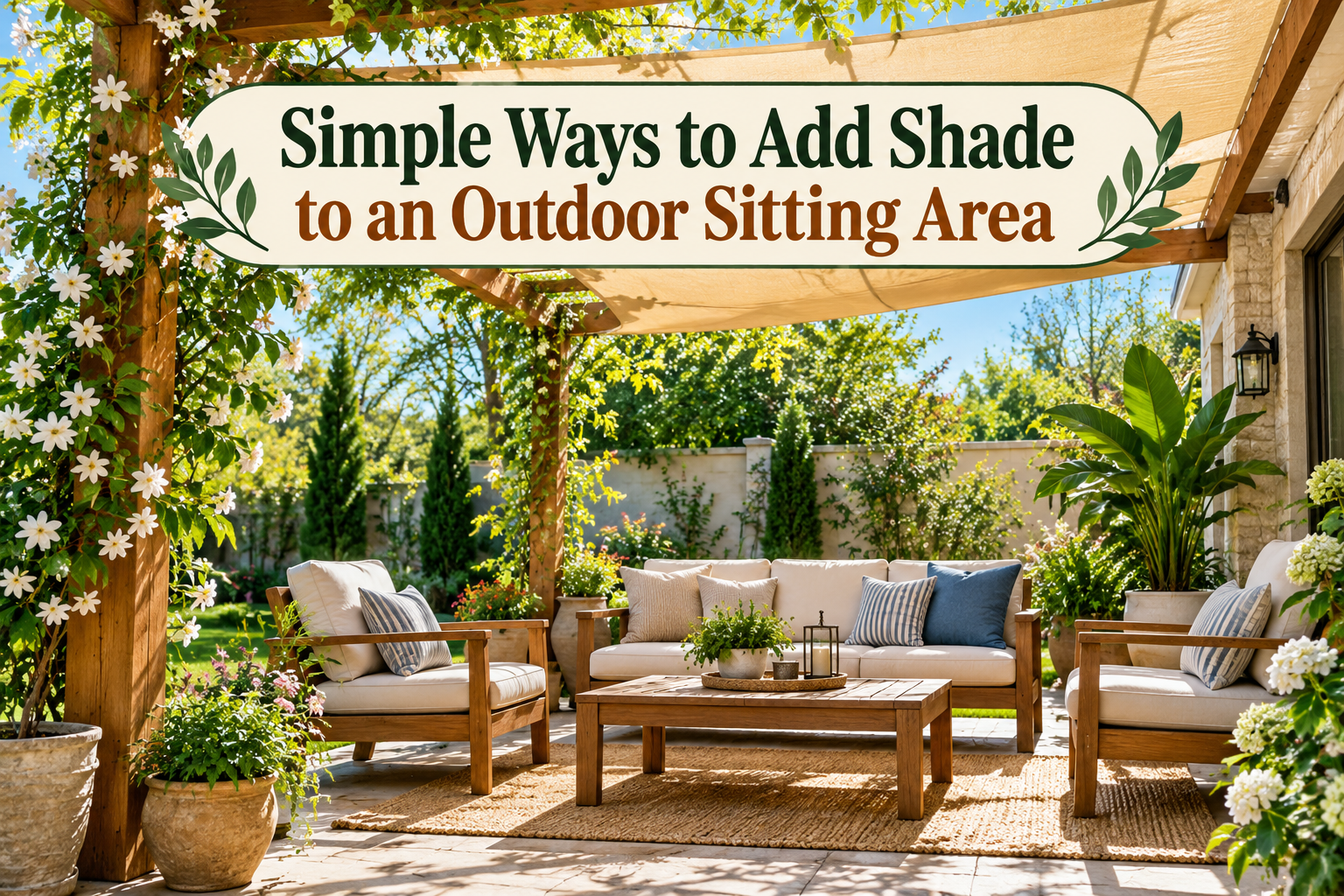
An outdoor sitting area can become one of the most enjoyable parts of a home. It gives you a place to drink tea, read a book, talk with family, or simply enjoy some fresh air. However, strong sunlight can quickly make an outdoor space uncomfortable. During warmer months, direct sun can heat chairs, tables, flooring, and surrounding walls. This is why finding simple ways to add shade to an outdoor sitting area can make such a big difference.
Adding shade does not always require a large construction project. There are many practical and affordable ideas that can improve comfort while also making the area look more attractive. The best option depends on the size of your space, the amount of sunlight it receives, your budget, and how permanent you want the shade to be.
After reading about different outdoor design methods, I found that good shade should do more than block sunlight. It should also allow air to move, suit the style of the home, and make the sitting area feel welcoming.
Understand Where the Sun Comes From
Before adding any type of shade, spend some time observing the sunlight in your outdoor sitting area. The position of the sun changes throughout the day, so an area that feels comfortable in the morning may become very hot in the afternoon.
Notice which direction receives the strongest sunlight. In many homes, afternoon sun creates the most heat because the surrounding surfaces have already warmed during the day.
You can observe the space for a few days and note when direct sunlight reaches the chairs and table. This simple step can help you choose the right type and position of shade.
For example, an umbrella may work well if the sun mostly comes from above. A curtain, screen, or plant may be more useful if sunlight enters from the side.
Understanding the sun first can prevent you from spending money on a shade solution that does not fully protect the sitting area.
Use a Large Outdoor Umbrella
One of the easiest ways to add shade to an outdoor sitting area is to use an outdoor umbrella.
Umbrellas are useful because they require very little installation. They can work on patios, balconies, garden sitting areas, and small courtyards.
Choose an umbrella that is large enough to cover the main sitting area. A small umbrella may protect only part of the table while leaving the chairs exposed to sunlight.
Adjustable umbrellas are especially useful because the angle can be changed as the sun moves.
Make sure the umbrella has a strong and stable base. Wind can easily move a lightweight umbrella, so safety should always be considered.
Neutral colors such as beige, cream, gray, or soft green usually blend well with outdoor surroundings. Brighter colors can also be used if you want the sitting area to feel more cheerful.
An umbrella is a good choice for anyone who wants quick shade without changing the structure of the home.
Install a Shade Sail
Shade sails have become popular because they provide a simple and modern way to cover outdoor areas.
A shade sail is a strong piece of outdoor fabric that is attached between several support points. It can be fixed to walls, posts, or other strong structures.
Shade sails are available in different sizes and shapes. Triangular and rectangular designs are common.
One benefit of a shade sail is that it can cover a larger space without using bulky supports in the middle of the sitting area.
The fabric should be installed with enough tension so that it does not hang loosely. It is also helpful to create a slight slope so rainwater does not collect on the surface.
When positioned correctly, a shade sail can make a patio or garden sitting area feel cooler while maintaining an open appearance.
Choose a fabric made for outdoor use so it can handle sunlight and weather exposure.
Add a Pergola
A pergola is another attractive way to create shade in an outdoor sitting area.
Pergolas are usually made from wood, metal, or similar materials. They have an open roof structure that provides partial shade while still allowing natural light to enter.
A pergola can give an outdoor area a more defined and organized appearance. It often makes the sitting space feel like a separate outdoor room.
If more shade is required, fabric panels can be added across the top. Climbing plants can also grow around the structure to create natural shade over time.
Wooden pergolas can create a warm and traditional appearance, while metal pergolas often suit modern homes.
A pergola usually requires more planning than an umbrella or shade sail, but it can become a long term feature that adds character to the garden.
Grow Climbing Plants for Natural Shade
Plants are one of the most beautiful ways to add shade to an outdoor sitting area.
Climbing plants can be trained to grow over pergolas, trellises, frames, or wires. As the plants grow, their leaves create natural shade.
Some climbing plants also produce flowers, which can make the sitting area feel more colorful and peaceful.
Before choosing a plant, consider your local climate, available sunlight, and maintenance needs. Some climbing plants grow quickly while others take more time.
Plants should also be positioned carefully so they do not damage walls, roofs, or drainage systems.
The biggest advantage of natural shade is that plants can make the outdoor space feel cooler and more connected to the garden.
Leaves can reduce the harsh appearance of strong sunlight while still allowing small amounts of light to pass through.
Plant Small Trees Near the Sitting Area
Trees provide one of the most effective forms of natural shade.
If your outdoor sitting area has enough space nearby, planting a suitable tree can provide valuable shade for many years.
The location of the tree is important. It should be close enough to create shade but far enough from buildings, walls, and underground services.
It is also important to think about the mature size of the tree. A tree that looks small at the time of planting may become very large later.
Choose trees that suit the local environment and do not require excessive maintenance.
Trees can provide shade while also improving the appearance of the garden. They may also attract birds and create a more relaxing outdoor atmosphere.
However, tree shade is a long term solution because young trees may take several years to grow large enough to provide strong protection from the sun.
Use Outdoor Curtains
Outdoor curtains can create both shade and privacy.
They work particularly well around covered patios, pergolas, balconies, and verandas.
Curtains can be opened when you want more sunlight and closed when the sun becomes too strong.
Choose fabric that is designed for outdoor conditions. Ordinary indoor fabric may fade quickly or become damaged by moisture.
Light colored curtains can make the space feel bright while still reducing direct sunlight.
Outdoor curtains are especially useful when low afternoon sunlight enters from the side.
They can also create a comfortable and private atmosphere, making the sitting area feel similar to an outdoor room.
Make sure the curtains are secured properly so they do not move too much during windy weather.
Add a Retractable Awning
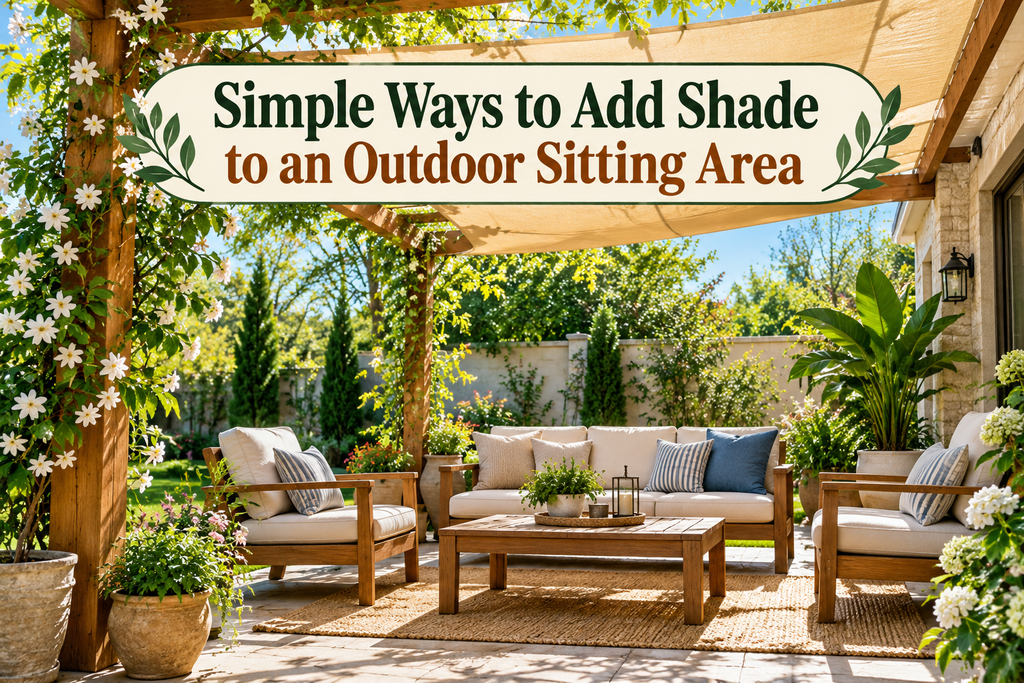
A retractable awning is a useful option for patios located next to the house.
The awning can be extended when shade is needed and closed when you want more sunlight.
This gives you more control over the outdoor environment.
Some awnings are operated manually, while others use a motor. Manual designs are usually simpler and more affordable.
Before installing an awning, check that the wall or structure is strong enough to support it.
The size should also match the area you want to shade.
A retractable awning can be especially useful for dining spaces because it provides shade without permanently covering the patio.
When closed, the outdoor area can remain completely open.
Use a Canopy or Gazebo
A canopy or gazebo can provide strong shade for a larger outdoor sitting area.
Portable canopies are useful when you need temporary shade. They can be used during family gatherings, outdoor meals, or warm weekends.
Permanent gazebos provide a stronger structure and can become an important feature in the garden.
Before choosing one, measure your outdoor space carefully. A very large gazebo can make a small garden feel crowded.
Choose a size that provides enough shade while still leaving space to walk around comfortably.
A gazebo can also protect outdoor furniture from some weather exposure, helping the sitting area remain comfortable for longer periods.
Create Shade With Tall Plants
If installing a permanent structure is not possible, tall plants in pots can provide some shade and privacy.
Large leafy plants can be placed around the sides of the sitting area where sunlight is strongest.
This method works particularly well on balconies and small patios.
Using pots also gives you flexibility because the plants can be moved when necessary.
Choose containers that are large enough for the plants and heavy enough to remain stable.
Plants should receive the correct amount of water and sunlight according to their needs.
Tall plants may not provide complete overhead shade, but they can reduce side sunlight and create a softer, more relaxing environment.
Place Seating Near Existing Shade
Sometimes the simplest solution is to change the location of the furniture.
Many gardens already have shaded areas near trees, walls, fences, or parts of the house.
Before purchasing a new shade structure, look carefully at the available space.
Moving the table and chairs a short distance may provide several hours of natural shade.
This is especially useful if the outdoor space is flexible and the furniture is easy to move.
You can also create different sitting areas for different times of the day. A morning seating area may be placed in one location while an afternoon area may use the shade of a tree or wall.
Combine More Than One Shade Method
In many outdoor spaces, one shade method may not be enough.
For example, a pergola may provide overhead shade while outdoor curtains protect against strong side sunlight.
An umbrella can be placed near a tree to increase the amount of shaded space.
Plants can also be added around a canopy or pergola to create a more natural appearance.
Combining different shade ideas often creates better comfort because sunlight changes direction throughout the day.
The goal is not necessarily to block all sunlight. A balanced outdoor space should have a mixture of light and shade.
Choose Materials That Can Handle Outdoor Conditions
Any item used outdoors should be suitable for weather exposure.
Sunlight, wind, dust, and rain can damage materials over time.
Outdoor fabrics should resist fading and moisture. Wooden structures should be properly treated. Metal parts should be protected against rust.
Regular maintenance can also extend the life of shade structures.
Clean fabric covers occasionally and check attachments for signs of damage.
If you use portable umbrellas or canopies, store them safely during strong winds or severe weather.
Taking care of outdoor shade features helps keep the sitting area attractive and safe.
Keep Air Movement in Mind
Shade is important, but airflow is also necessary for comfort.
A completely enclosed sitting area may feel hot even if it is protected from direct sunlight.
When planning your shade, leave enough open space for air to move naturally.
Pergolas, umbrellas, and shade sails usually allow good airflow because their sides remain open.
Curtains and screens can also be opened when more ventilation is needed.
A comfortable outdoor sitting area should feel shaded without feeling closed or crowded.
Make the Shaded Area Feel Comfortable
Once you have created enough shade, small improvements can make the space even more enjoyable.
Add comfortable outdoor chairs with cushions designed for exterior use.
A small table can provide space for drinks, books, or snacks.
Potted plants can bring color and soften the appearance of the area.
Outdoor lighting can also help you use the space after sunset. Simple wall lights, lanterns, or soft garden lights can create a pleasant evening atmosphere.
Try not to overcrowd the sitting area. Leaving enough open space often makes it feel calmer and more comfortable.
Final Thoughts
There are many simple ways to add shade to an outdoor sitting area without completely changing your garden or patio. Outdoor umbrellas, shade sails, pergolas, curtains, awnings, trees, and plants can all provide useful protection from strong sunlight.
The right solution depends on your available space, budget, local weather, and personal style. Temporary options such as umbrellas and canopies offer flexibility, while pergolas, trees, and awnings provide more permanent shade.
It is helpful to observe the direction of sunlight before choosing any shade solution. This allows you to place the shade exactly where it is needed.
A well shaded sitting area can make outdoor space more comfortable throughout the warmer months. With careful planning and a few simple improvements, even a small patio, balcony, or garden corner can become a peaceful place to relax and spend time outdoors.