
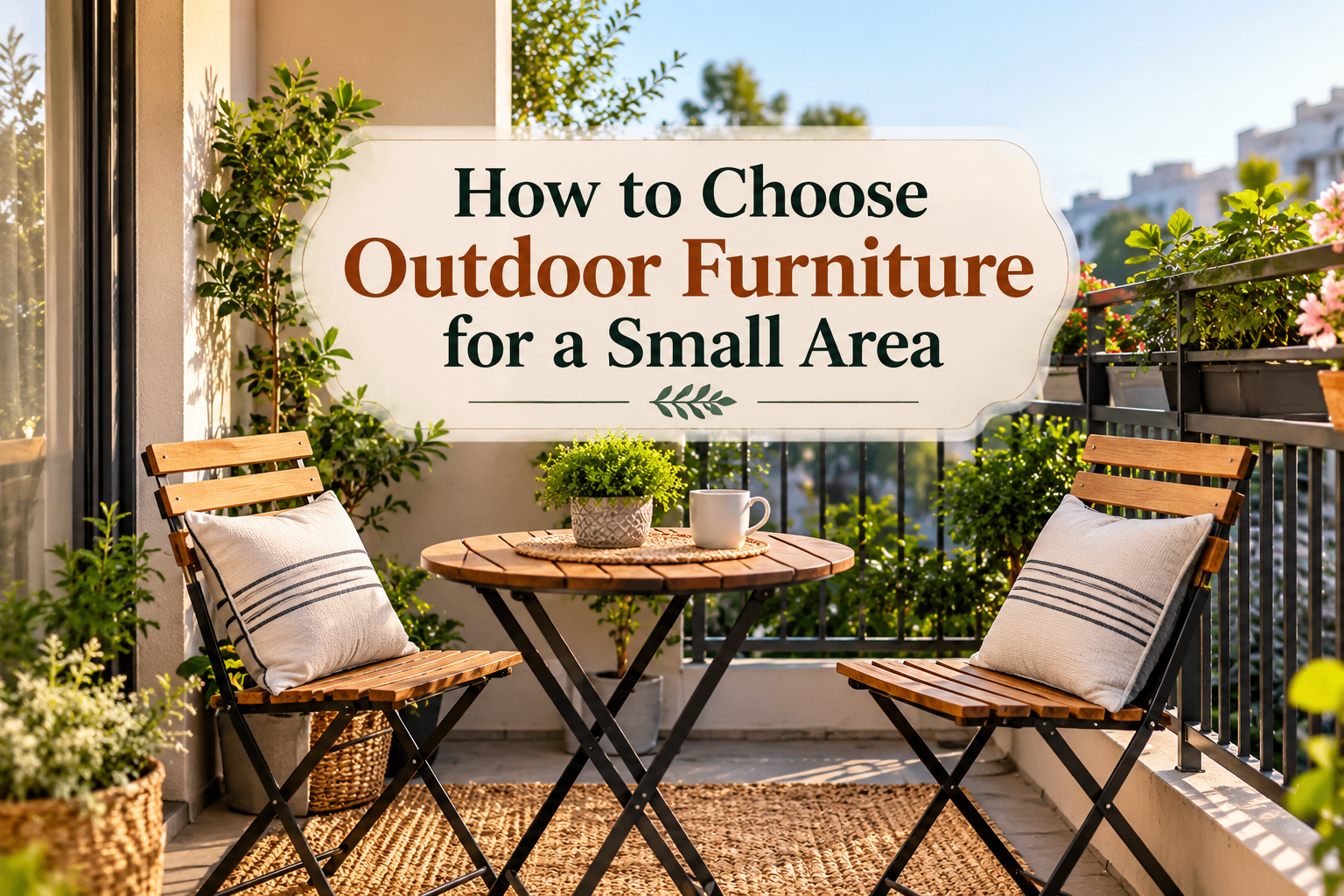
A small balcony, patio, terrace, or backyard can become one of the most enjoyable parts of a home when it is furnished carefully. You do not need a large outdoor space to create a comfortable sitting area. The right furniture can make even a limited space feel open, useful, and welcoming.
Choosing outdoor furniture for a small area requires more thought than furnishing a large garden. Every chair, table, and accessory takes up valuable space. Furniture that is too large can make the area feel crowded, while furniture that is too small may not provide enough comfort or function.
The best approach is to think about how the outdoor area will actually be used. Once you understand your needs, you can choose furniture that fits the space without making it feel restricted.
Measure the Outdoor Area First
Before buying any outdoor furniture, measure the available space carefully. This simple step can prevent many problems later.
Measure the length and width of the balcony, patio, or terrace. Also notice doors, windows, railings, steps, air conditioning units, and other fixed features.
Do not use every available inch for furniture. People need enough room to walk comfortably around chairs and tables.
It is useful to leave clear pathways between the entrance and the seating area. If chairs must be pulled away from a table every time someone sits down, additional space will also be needed.
Writing down the measurements can make shopping easier. You can compare the size of furniture with the actual dimensions of your outdoor area before making a purchase.
Decide How You Want to Use the Space
The best outdoor furniture for a small area depends on how you plan to use it.
Some people want a quiet place for morning tea or coffee. Others want a small dining area for two people. Some may simply want a comfortable chair for reading.
Think about the activities that are most important to you.
If you mainly want to relax, two comfortable chairs and a small table may be enough. If you want to eat outdoors, a compact dining set can be more practical.
Trying to use a tiny space for too many purposes can make it feel crowded. It is usually better to choose one main purpose and design the area around it.
Choose Furniture With the Right Scale
Furniture scale is extremely important in a limited outdoor space.
A large sofa may look beautiful in a showroom, but it can dominate a small balcony. Compact furniture usually creates better balance.
Look for chairs with narrower frames, smaller tables, and simple shapes. Furniture with slim legs can also help because more of the floor remains visible.
When the floor can be seen around and under furniture, the area often appears larger.
Low profile furniture can also work well in some spaces because it does not block views or create a heavy visual effect.
The goal is to choose furniture that fits naturally instead of making the space feel full.
Consider Folding Outdoor Furniture
Folding furniture is one of the most practical choices for small outdoor areas.
Folding chairs and tables can be opened when needed and stored away afterward. This gives you greater flexibility.
For example, a folding table can be used for breakfast and then placed against a wall when more floor space is needed.
Folding chairs are also helpful when guests visit. You can keep extra chairs stored indoors and bring them outside only when necessary.
When shopping for folding outdoor furniture, check the joints and locking mechanisms. They should feel stable and easy to operate.
Furniture that is difficult to fold may become inconvenient over time.
Look for Stackable Chairs
Stackable chairs are another useful option for a small patio or balcony.
Several chairs can be placed on top of each other when they are not needed. This saves floor space and makes cleaning easier.
Stackable chairs are available in many materials, including metal, plastic, and outdoor woven materials.
Choose chairs that are lightweight enough to move easily but strong enough for regular use.
If your area occasionally needs extra seating, stackable furniture can be more practical than keeping several chairs around the table permanently.
Choose Multipurpose Furniture
Furniture that performs more than one function is especially valuable in a small outdoor area.
For example, a storage bench can provide seating while also offering space for cushions, gardening tools, or outdoor accessories.
An outdoor stool can work as a seat, a side table, or even a plant stand.
Some compact tables also include shelves or storage compartments underneath.
Multipurpose furniture reduces the number of separate items you need. This keeps the outdoor area simpler and more organized.
Before buying any item, ask yourself whether it can perform more than one useful role.
Consider a Small Bistro Set
A bistro set is often ideal for a small balcony or patio.
These sets usually include a compact table and two chairs. They provide enough space for coffee, snacks, reading, or casual meals without taking over the entire area.
Round bistro tables are especially useful because they do not have sharp corners. They can also make movement easier in narrow spaces.
A square table can work well when it needs to sit against a wall or railing.
Choose the shape that fits the layout of your outdoor area.
Use Built In or Wall Mounted Options
In very small spaces, wall mounted furniture can be extremely useful.
A folding table attached to a wall or balcony railing can provide a surface when needed and fold away afterward.
Built in benches are another practical option if you are designing the space from the beginning. A bench placed against the edge of a patio can provide seating without wasting space behind it.
Wall mounted shelves can also hold plants or decorative items while keeping the floor clear.
Using vertical space allows you to make better use of a limited outdoor area.
Choose Materials Suitable for Outdoor Use
Outdoor furniture must handle changing weather conditions.
Different materials have different advantages.
Aluminum is lightweight and usually easy to move. It is also resistant to rust, which makes it a popular choice for outdoor spaces.
Steel furniture can be strong, although it may require protection against rust.
Wood creates a warm and natural appearance. However, many types of wood need regular maintenance to protect them from moisture and sunlight.
Synthetic woven furniture can offer the appearance of traditional wicker while providing improved resistance to outdoor conditions.
Plastic furniture is usually lightweight, affordable, and easy to clean.
Choose a material based on your local climate, maintenance preferences, and the amount of protection your outdoor space provides.
Think About Weather Conditions
The location of your outdoor area should influence your furniture choice.
A covered balcony has different requirements from an open rooftop terrace.
If the area receives strong sunlight, choose materials and fabrics designed to resist fading.
If the area receives frequent rain, furniture that dries quickly will be more convenient.
Wind is also important. Very lightweight chairs and tables may move during strong winds, especially on upper floor balconies.
In windy areas, slightly heavier furniture may be safer and more practical.
Understanding the local weather will help your furniture last longer.
Select Comfortable Seating
Small furniture should still be comfortable.
A chair may fit perfectly into a balcony, but it will not be useful if it is uncomfortable to sit in.
Whenever possible, test chairs before buying them. Check the seat height, back support, and overall stability.
Outdoor cushions can improve comfort, but large thick cushions may make a small chair look bulky.
Choose cushions that fit the furniture properly.
Removable cushion covers are useful because they are easier to wash and maintain.
Comfort matters because an attractive outdoor space will not be used often if the seating feels unpleasant.
Keep the Design Simple
Too many furniture styles can make a small area feel visually crowded.
A simple design usually creates a calmer and more spacious appearance.
Try to choose furniture with similar colors, materials, or shapes.
For example, two matching chairs and one simple table may look more organized than several different pieces.
Neutral colors are often easy to combine with plants, cushions, and outdoor decorations.
You can add personality through small accessories rather than large pieces of furniture.
Use Light Colors Carefully
Light colors can help make a small outdoor area feel brighter and more open.
White, beige, light gray, natural wood tones, and soft neutral shades often work well.
However, darker furniture can also look attractive if the surrounding walls and flooring are light.
The main goal is visual balance.
Avoid filling a small balcony with too many strong colors. A simple color palette usually makes the area look more organized.
You can introduce color through cushions, flowers, planters, or small decorative objects.
Avoid Overcrowding the Space
One of the most common mistakes in small outdoor design is adding too much furniture.
A small balcony does not need a sofa, dining table, storage unit, several chairs, and many decorations at the same time.
Empty space is also part of good design.
It allows people to move comfortably and helps the area feel larger.
Start with the most necessary furniture. You can always add another item later if the space still feels open.
Removing unnecessary furniture can often improve a small outdoor area more than adding something new.
Choose Furniture That Is Easy to Move
Flexible furniture can make a small outdoor area more useful.
Lightweight chairs and small tables can easily be moved depending on the activity.
You might place two chairs together for conversation and then move one near the railing for reading.
Furniture that is difficult to move limits how the space can be used.
However, very lightweight furniture may not be suitable for windy areas. Balance portability with safety and stability.
Use Corner Spaces Wisely
Corners are often underused in small patios and balconies.
A compact corner bench can provide comfortable seating without occupying the center of the space.
You can also place a small side table, plant stand, or storage unit in a corner.
Using corners efficiently helps keep the middle of the floor open.
This creates better movement and makes the area appear larger.
Think About Storage
Outdoor furniture often comes with cushions and accessories that need protection.
Before purchasing furniture, think about where these items will be stored.
If indoor storage is limited, choose furniture with built in storage.
Storage benches and hollow outdoor stools can hide cushions, small tools, or cleaning supplies.
Keeping unnecessary items out of sight makes a small space feel cleaner and more relaxing.
Add Accessories After the Furniture
It can be tempting to start buying outdoor cushions, rugs, plants, and decorations immediately.
However, furniture should come first.
Once the main pieces are in place, you can see how much space remains.
Then you can add a few accessories carefully.
A small outdoor rug may define the seating area. A cushion can add comfort and color. One or two plants can soften the appearance.
Accessories should support the furniture rather than compete with it.
Focus on Quality Instead of Quantity
A small outdoor area usually requires only a few pieces of furniture.
This can be an advantage because you can focus more on quality.
Two strong, comfortable chairs may be a better investment than several inexpensive chairs that are uncomfortable or difficult to maintain.
Look at the frame, joints, finish, and overall construction.
Outdoor furniture is exposed to harsher conditions than indoor furniture, so durability matters.
Choosing fewer good quality pieces can create a better result and may save money over time.
Final Thoughts
Learning how to choose outdoor furniture for a small area is mainly about understanding space, function, and comfort.
Start by measuring the area carefully and deciding how you want to use it. Choose furniture that matches the scale of the space and avoid pieces that make movement difficult.
Folding tables, stackable chairs, storage benches, compact bistro sets, and multipurpose furniture can all work well in limited outdoor areas.
Materials should also be chosen according to weather conditions and the amount of maintenance you are willing to do.
Most importantly, avoid overcrowding. A small outdoor space can feel peaceful and comfortable when every piece has a clear purpose.
With a few well chosen pieces of outdoor furniture, even a small balcony or patio can become a pleasant place for eating, reading, relaxing, or enjoying fresh air.