
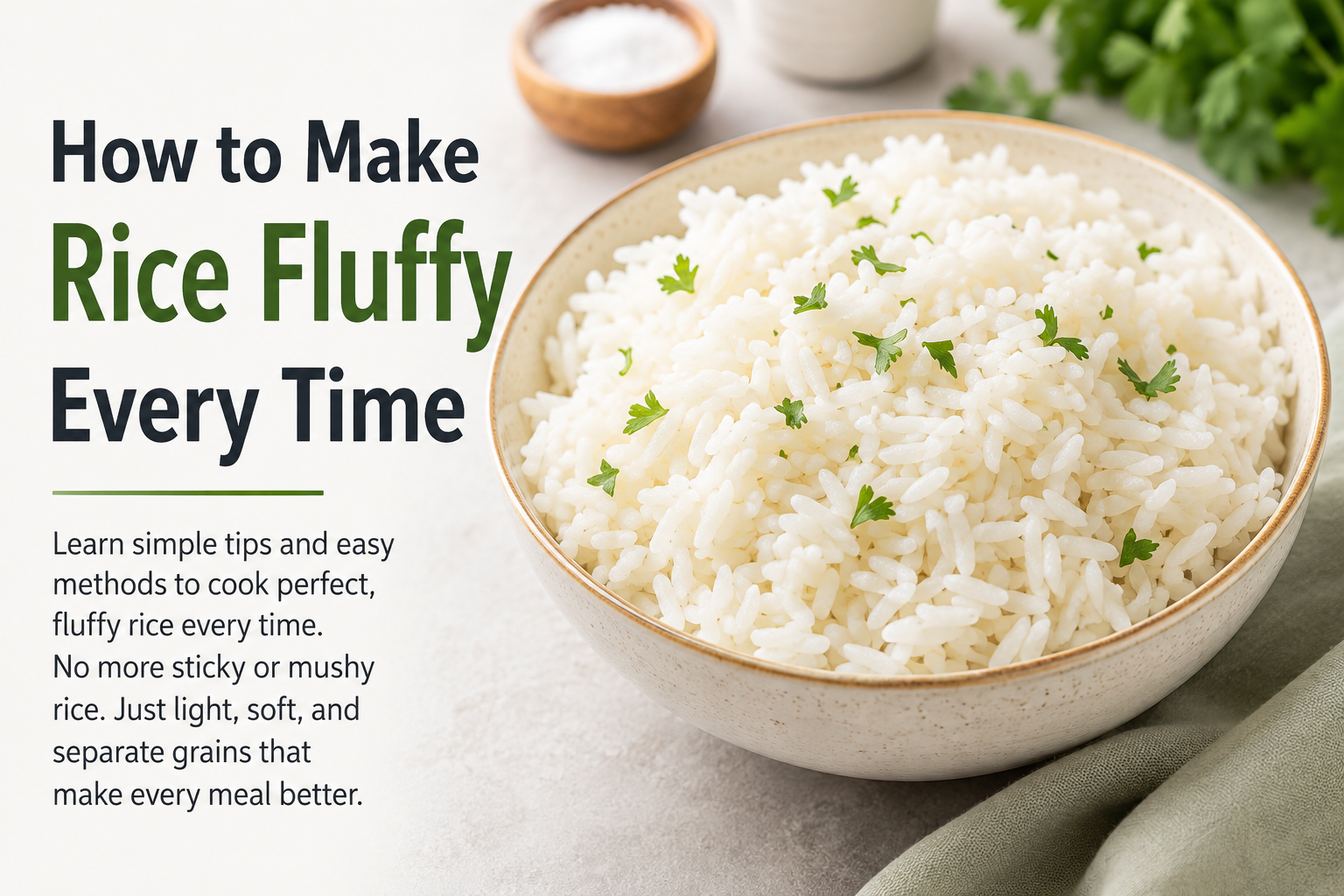
Cooking fluffy rice sounds simple, but getting perfectly separate grains every time can sometimes be surprisingly difficult. I have found that the difference between fluffy rice and sticky, mushy rice usually comes down to a few simple details. The type of rice, the amount of water, rinsing, cooking temperature, and resting time can all affect the final result.
In my experience, you do not need expensive equipment or complicated techniques to make perfect rice at home. Once you understand how rice absorbs water and how steam finishes the cooking process, making fluffy rice becomes much easier.
If you want to learn how to make rice fluffy every time, this guide will walk you through the process using simple methods that work well for everyday cooking.
Choose the Right Type of Rice
The first thing I consider when making fluffy rice is the type of rice I am using. Different varieties have different amounts of starch, so they do not all cook in exactly the same way.
Long grain white rice is one of the easiest choices when you want separate, fluffy grains. Basmati rice is another excellent option because its naturally long grains can become light and fragrant when cooked properly.
Jasmine rice can also be delicious, although it tends to be slightly softer and more naturally sticky than basmati or regular long grain rice.
If your main goal is fluffy rice with clearly separated grains, I recommend starting with a good quality long grain or basmati rice.
Rinse the Rice Before Cooking
One of the easiest steps that can improve your rice is rinsing it before cooking. Rice contains surface starch, and too much of this starch can make the cooked grains stick together.
I usually place the rice in a bowl and rinse it with cool water. I gently move the grains around with my fingers and then drain the cloudy water. I repeat this process several times until the water becomes much clearer.
You do not necessarily need perfectly clear water, but removing excess surface starch can make a noticeable difference.
This small step is especially useful when your goal is fluffy rice with separate grains.
Measure the Water Carefully
Water is probably the most important part of cooking rice. Too much water can produce soft and mushy rice, while too little can leave the grains hard or undercooked.
The correct amount of water depends on the rice variety, cooking method, and even the age of the rice. For many types of long grain white rice, a common starting point is around one cup of rice to one and a quarter to one and a half cups of water.
For basmati rice, the amount may be different depending on whether you soak the rice first.
I recommend checking the instructions on your rice package when trying a new brand. After that, you can adjust the water slightly according to your personal preference.
The key is consistency. Once you find the right rice to water ratio for your favorite rice, use the same measurement each time.
Soaking Rice Can Help
Soaking is not always necessary, but I find it particularly useful when cooking basmati rice.
After rinsing, you can soak the rice in clean water for about 15 to 30 minutes. This allows the grains to absorb some water before cooking and can help them cook more evenly.
Soaking can also make the grains more delicate and help reduce the chances of broken rice during cooking.
After soaking, remember to drain the rice well. Since the grains have already absorbed some water, you may need to slightly reduce the amount of cooking water.
Use the Right Cooking Temperature
Once the rice and water are in the pot, bring the water to a gentle boil. After it begins boiling, reduce the heat to low and cover the pot with a tight fitting lid.
This is where patience becomes important.
I have learned that cooking rice over high heat for the entire process is usually not the best approach. High heat can cause the water to disappear too quickly while the rice is still cooking.
Low heat allows the rice to cook gently while the steam remains trapped inside the pot.
The goal is to create a steady environment where the rice can absorb the water without becoming disturbed.
Keep the Lid Closed
One mistake I see people make when cooking rice is constantly lifting the lid to check it.
It is tempting because you want to see what is happening, but opening the lid allows steam to escape. Steam is an important part of the cooking process, so keeping the lid closed helps maintain the right temperature and moisture inside the pot.
Once you reduce the heat and cover the pot, try to leave it alone until the cooking time is finished.
If your pot has a transparent lid, you can check it visually without removing the lid.
Do Not Stir the Rice Too Much
Another simple rule I follow is to avoid unnecessary stirring.
Stirring rice while it is cooking can release more starch from the grains. This can make the rice stickier and change its final texture.
After combining the rice and water, give it a gentle stir if necessary. Then leave it alone while it cooks.
You do not need to keep moving the rice around. Let the heat and steam do the work.
Let the Rice Rest After Cooking
This is one of my favorite tips for making fluffy rice.
When the rice appears cooked and most of the water has been absorbed, turn off the heat and leave the lid on for about 10 minutes.
This resting period allows the remaining steam to distribute throughout the rice. It also gives the grains time to finish absorbing moisture.
I used to think resting rice was optional, but I have found that it can make a real difference. The texture becomes more balanced, and the grains are easier to separate.
Fluff the Rice Properly
After the rice has rested, remove the lid and use a fork to gently fluff it.
A fork works well because its individual tines can separate the grains without crushing them.
I usually start from the edges and gently lift the rice toward the center. There is no need to stir aggressively.
If you are making basmati rice, you will often see the long grains separate beautifully after this step.
The result should be light, soft rice with individual grains rather than one heavy mass.
Common Reasons Rice Becomes Sticky
If your rice is constantly turning out sticky, there may be a few possible reasons.
The first possibility is using too much water. Even a small difference in water can affect the final texture.
Another possibility is not rinsing the rice. Excess surface starch can make grains stick together.
Cooking at very high heat can also cause problems because the water may evaporate before the rice has finished cooking.
Opening the lid repeatedly can release steam and change the cooking environment.
Finally, stirring the rice too much can release additional starch and make the grains stickier.
The good news is that these problems are easy to correct once you know what is causing them.
How to Make Rice Fluffy Without a Rice Cooker
You do not need a rice cooker to make fluffy rice. A regular saucepan with a good lid can work perfectly well.
Start by rinsing your rice. Add the appropriate amount of water and bring it to a boil. Then reduce the heat to low, cover the pot, and allow the rice to cook gently.
Once the cooking time is complete, turn off the heat and let the rice rest with the lid closed.
After resting, fluff it gently with a fork.
For me, this simple stovetop method is enough for everyday meals.
How to Fix Rice That Is Too Wet
If your rice has finished cooking but still contains too much water, do not panic.
If the grains are already tender, you can remove the lid and allow some moisture to evaporate over very low heat for a short time. Be careful not to leave it on the heat too long because the bottom can burn.
Another option is simply to let the rice rest uncovered for a few minutes. Some of the excess moisture may evaporate naturally.
Next time, slightly reduce the amount of water and see how the texture changes.
Cooking rice is partly about learning how your particular rice behaves.
How to Make Rice Fluffy and Flavorful
Plain fluffy rice is useful for many meals, but you can also add flavor without making the recipe complicated.
I sometimes replace part of the cooking water with broth for a richer taste. A small amount of salt can also improve the flavor.
You can add a bay leaf, a small piece of cinnamon, or a few whole spices if they match the meal you are preparing.
For a simple everyday rice dish, however, I prefer keeping the ingredients basic. Good rice, the correct amount of water, and proper cooking technique are usually enough.
My Simple Method for Perfect Rice
When I want reliable fluffy rice, this is the basic process I follow.
First, I measure the rice carefully. Then I rinse it several times to remove excess surface starch. If I am cooking basmati rice, I often soak it for around 20 minutes.
Next, I drain the rice well and add it to a saucepan with the appropriate amount of water. I bring the water to a gentle boil, reduce the heat to low, and cover the pot.
I let the rice cook without stirring or lifting the lid unnecessarily. When the rice is finished, I turn off the heat and leave it covered for about 10 minutes.
Finally, I remove the lid and gently fluff the rice with a fork.
This method is simple, but it produces consistently good results once you become familiar with the correct water ratio for your rice.
Final Thoughts
Learning how to make rice fluffy every time is mostly about understanding a few basic cooking principles. Rinse the rice, measure the water carefully, use gentle heat, keep the lid closed, avoid excessive stirring, and allow the rice to rest before serving.
In my opinion, the resting step is one of the easiest things to overlook, yet it can make a noticeable difference in texture.
Do not worry if your first few attempts are not perfect. Rice behaves differently depending on the variety, brand, pot, and cooking method. Make small adjustments and pay attention to the results.
Once you find the right combination for your favorite rice, making fluffy rice becomes a simple routine. Whether you are serving it with vegetables, chicken, curry, beans, or another homemade meal, perfectly cooked rice can make the entire dish feel more satisfying.
The best part is that you do not need complicated techniques. With a little practice and attention to water, heat, and steam, you can make light, fluffy rice at home again and again.