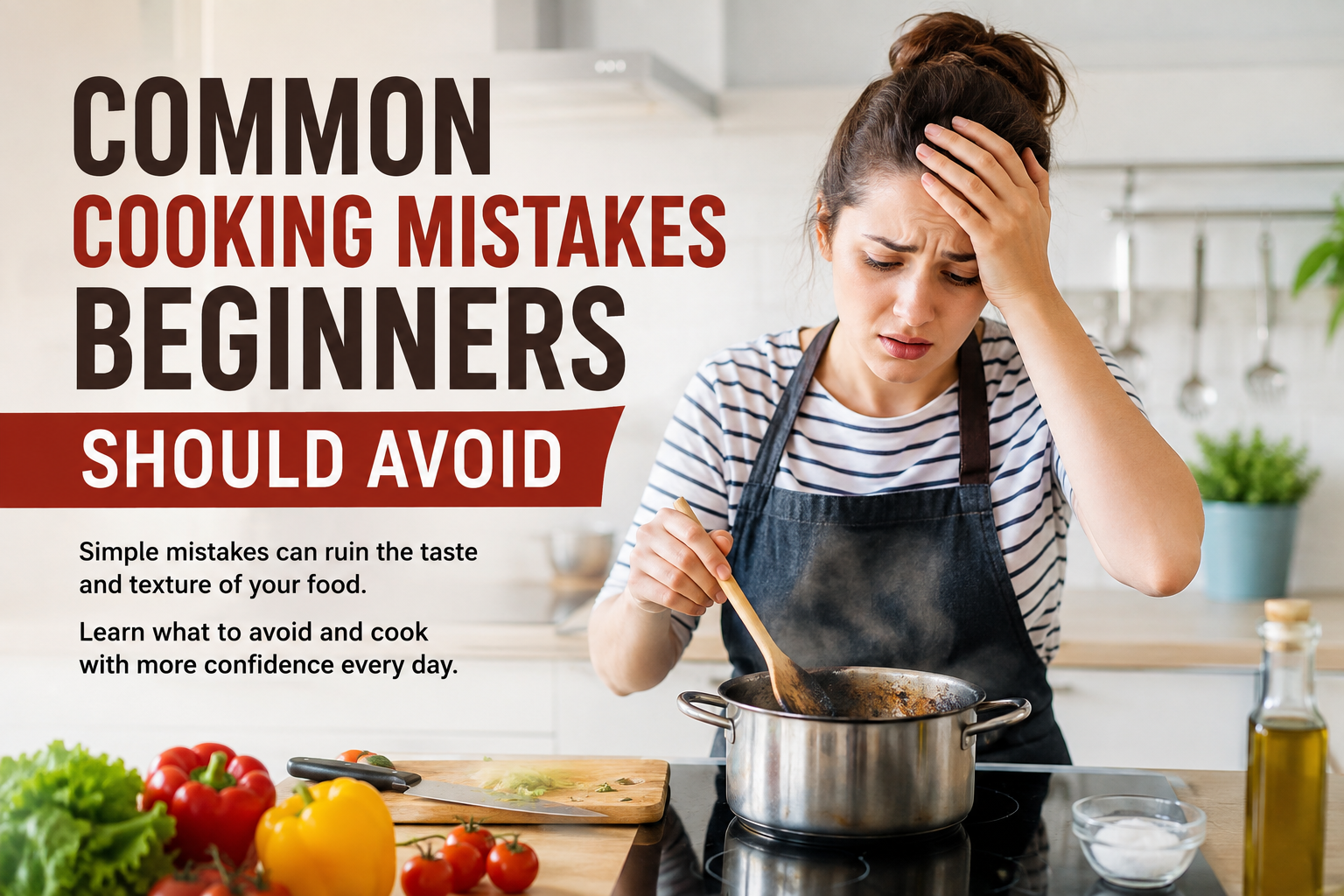
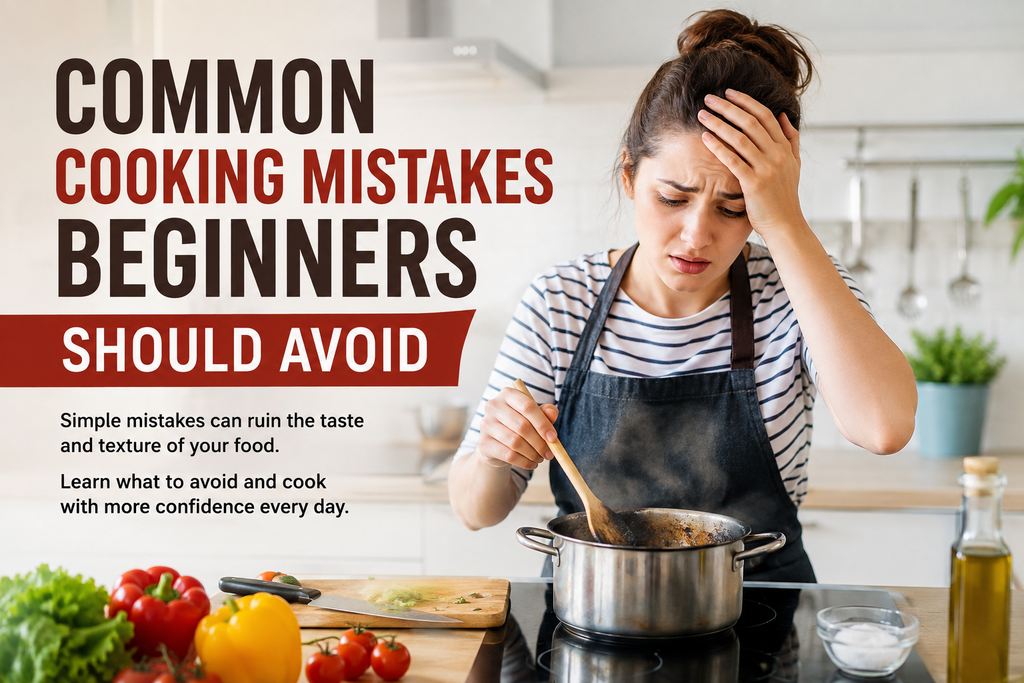
Cooking at home can be one of the most enjoyable and rewarding skills to learn. When I first started paying more attention to cooking, I realized that good food is not only about having the right ingredients. Small details such as preparation, temperature, timing, seasoning, and patience can make a huge difference. Many beginners make simple cooking mistakes without even realizing them, and these mistakes can affect the taste, texture, and appearance of a meal.
The good news is that most common cooking mistakes are easy to fix. You do not need expensive equipment or advanced culinary skills to become a better cook. You simply need to understand a few basic principles and give yourself time to practice.
In this article, I will share some of the most common cooking mistakes beginners should avoid and explain what I personally find helpful when preparing food at home.
1. Not Reading the Recipe Before Cooking
One of the biggest mistakes beginners make is starting to cook before reading the entire recipe. It may seem convenient to read each step as you go, but this can create unnecessary problems.
A recipe may require ingredients to be prepared in advance, meat to be brought to room temperature, dough to rest, or vegetables to be chopped before cooking begins. If you discover these requirements halfway through cooking, you may feel rushed.
I prefer reading the complete recipe first. I check the ingredients, cooking time, equipment, and important instructions before turning on the stove. This simple habit makes cooking much more organized.
2. Using Ingredients Without Preparing Them First
Another common cooking mistake is trying to chop, measure, and cook everything at the same time. This can make even a simple recipe feel stressful.
Professional cooks often prepare their ingredients before they begin cooking. You can do the same at home. Chop your vegetables, measure your spices, prepare your sauces, and keep everything within reach.
This method is especially useful when cooking recipes that require quick timing. Once the pan is hot, you do not want to be searching for garlic or trying to measure spices while your food is already cooking.
3. Overcrowding the Pan
Overcrowding a pan is a common mistake when cooking vegetables, chicken, meat, or other ingredients that need browning.
When too much food is placed in a pan at once, the temperature can drop. Instead of getting a beautiful golden brown surface, the food may release moisture and start steaming.
I have found that giving ingredients enough space usually produces much better results. If you are cooking a large amount of food, it is often better to work in batches. It may take a little longer, but the improvement in texture and flavor is worth it.
4. Cooking With the Wrong Temperature
Temperature is one of the most important parts of cooking. Beginners sometimes use very high heat because they believe food will cook faster. In reality, high heat can burn the outside while leaving the inside undercooked.
Different foods require different temperatures. Delicate ingredients often need gentle heat, while some foods benefit from higher heat for browning.
Learning how your stove behaves is also important. Every stove can be slightly different. I recommend paying attention to how quickly your pan heats and adjusting the temperature as needed instead of blindly following a setting.
5. Not Tasting Food While Cooking
Many beginners wait until the meal is completely finished before tasting it. I think this is a missed opportunity.
Tasting food during cooking helps you understand how flavors develop. You can notice whether the dish needs more seasoning, acidity, herbs, or other adjustments.
Of course, food should only be tasted when it is safe to do so. But when appropriate, tasting as you cook can help you develop your cooking instincts.
With experience, you begin to recognize what a dish needs before it reaches the table.
6. Adding Too Much Salt at Once
Salt can make food taste much better, but adding too much can quickly ruin a dish. One of the most common cooking mistakes beginners make is adding a large amount of salt at the beginning.
I prefer adding seasoning gradually. You can always add more, but removing excess salt from a finished dish can be difficult.
Remember that ingredients such as cheese, sauces, stocks, canned foods, and processed meats may already contain salt. Consider the saltiness of the entire recipe before adding extra seasoning.
7. Cutting Meat Immediately After Cooking
Cutting meat immediately after removing it from the heat can cause juices to escape quickly. This may result in meat that feels drier than expected.
Allowing cooked meat to rest for a suitable amount of time can help the juices redistribute. The exact resting time depends on the type and size of the meat.
This is a small step, but it can make a noticeable difference when preparing steaks, roasted chicken, or other larger pieces of meat.
8. Constantly Opening the Oven
When baking or roasting food, beginners sometimes open the oven repeatedly to check progress. While checking your food is understandable, opening the oven too frequently can affect the cooking environment.
For baked goods especially, maintaining a consistent temperature is important. Cakes, breads, and pastries can be sensitive to sudden temperature changes.
I recommend using the oven light and window whenever possible. If a recipe gives a specific baking time, allow the food enough time to cook before checking it.
9. Ignoring Knife Safety
Cooking becomes much easier when you learn how to use a knife correctly. Beginners sometimes focus so much on chopping quickly that they forget about safety.
A sharp knife is generally easier to control than a dull one because it requires less force. Keep your cutting board stable and use proper hand positioning.
There is no reason to rush. Speed comes naturally with practice. In my opinion, controlled and careful chopping is far more important than trying to look like a professional chef.
10. Not Understanding Cooking Times
Recipes often provide approximate cooking times, but these times can vary depending on ingredient size, equipment, temperature, and cooking method.
For example, two pieces of chicken may have different cooking times if they are different sizes. Vegetables can also cook at different speeds depending on how they are cut.
Instead of relying only on the clock, learn to recognize visual and textural signs of doneness. For foods where food safety matters, use a reliable food thermometer and follow appropriate food safety guidance.
11. Using Too Many Ingredients
Beginners sometimes believe that adding more ingredients automatically creates better flavor. I have learned that this is not always true.
A simple dish made with fresh ingredients and balanced seasoning can be much more enjoyable than a complicated dish containing too many competing flavors.
When learning to cook, start with simple recipes. Once you understand how basic ingredients work together, you can gradually experiment with herbs, spices, sauces, and different cooking methods.
12. Neglecting Kitchen Organization
A messy kitchen can make cooking much harder than it needs to be. Ingredients can become difficult to find, dirty dishes can pile up, and important utensils may disappear under clutter.
I like to keep my workspace reasonably clean while cooking. This does not mean washing every dish immediately. It simply means putting ingredients away, clearing unnecessary items, and keeping the main work area available.
Good organization can make cooking feel calmer and more enjoyable.
13. Forgetting to Preheat the Pan or Oven
Preheating is another simple step that beginners sometimes skip. Putting food into a cold pan can affect browning, texture, and cooking time.
Similarly, many baking recipes depend on starting with a properly preheated oven.
Before you begin cooking, check whether your recipe requires preheating. Giving your equipment enough time to reach the correct temperature can improve the final result.
14. Following Recipes Too Rigidly
Recipes are helpful, especially when you are learning, but cooking also involves observation and adjustment.
Ingredients can vary in size, freshness, moisture, and flavor. A tomato today may not taste exactly like a tomato you used last week. A sauce may need slightly more seasoning depending on the other ingredients.
Once you understand the basic technique, do not be afraid to make small adjustments. Cooking becomes more enjoyable when you learn to trust your senses while still respecting the important instructions of a recipe.
15. Being Afraid of Making Mistakes
Perhaps the biggest mistake beginners can make is being afraid to make mistakes.
Not every meal will be perfect. Sometimes vegetables will be overcooked, bread will not rise properly, or a sauce will be too salty. These experiences are actually useful because they teach you what to do differently next time.
I believe cooking improves through practice rather than perfection. Every mistake gives you information. You learn how ingredients react to heat, how much seasoning you prefer, and how different techniques affect texture.
The more you cook, the more confident you become.
How to Become a Better Home Cook
Improving your cooking skills does not require learning everything at once. Start with a few basic recipes and repeat them until you become comfortable.
Pay attention to preparation, temperature, seasoning, timing, and texture. Keep notes about what worked and what did not. If something tastes too salty, remember that for next time. If vegetables became too soft, adjust the cooking time.
I also recommend learning a few basic techniques instead of memorizing hundreds of recipes. Knowing how to sauté, roast, bake, boil, simmer, and season food gives you the foundation to create many different meals.
Most importantly, enjoy the process. Cooking should not feel like a test where every meal must be perfect.
Final Thoughts
Avoiding common cooking mistakes can make a huge difference for beginners. Simple habits such as reading recipes beforehand, preparing ingredients, controlling temperature, seasoning gradually, avoiding overcrowded pans, and keeping your kitchen organized can improve your results.
In my experience, becoming a good home cook is mainly about patience and practice. You do not need to know everything from the beginning. Start with simple meals, learn from your mistakes, and gradually build your confidence.
The kitchen is a place where experience matters. The more you cook, the better you understand your ingredients, your equipment, and your own taste. Once these basics become natural, cooking becomes much easier, more creative, and much more enjoyable.