
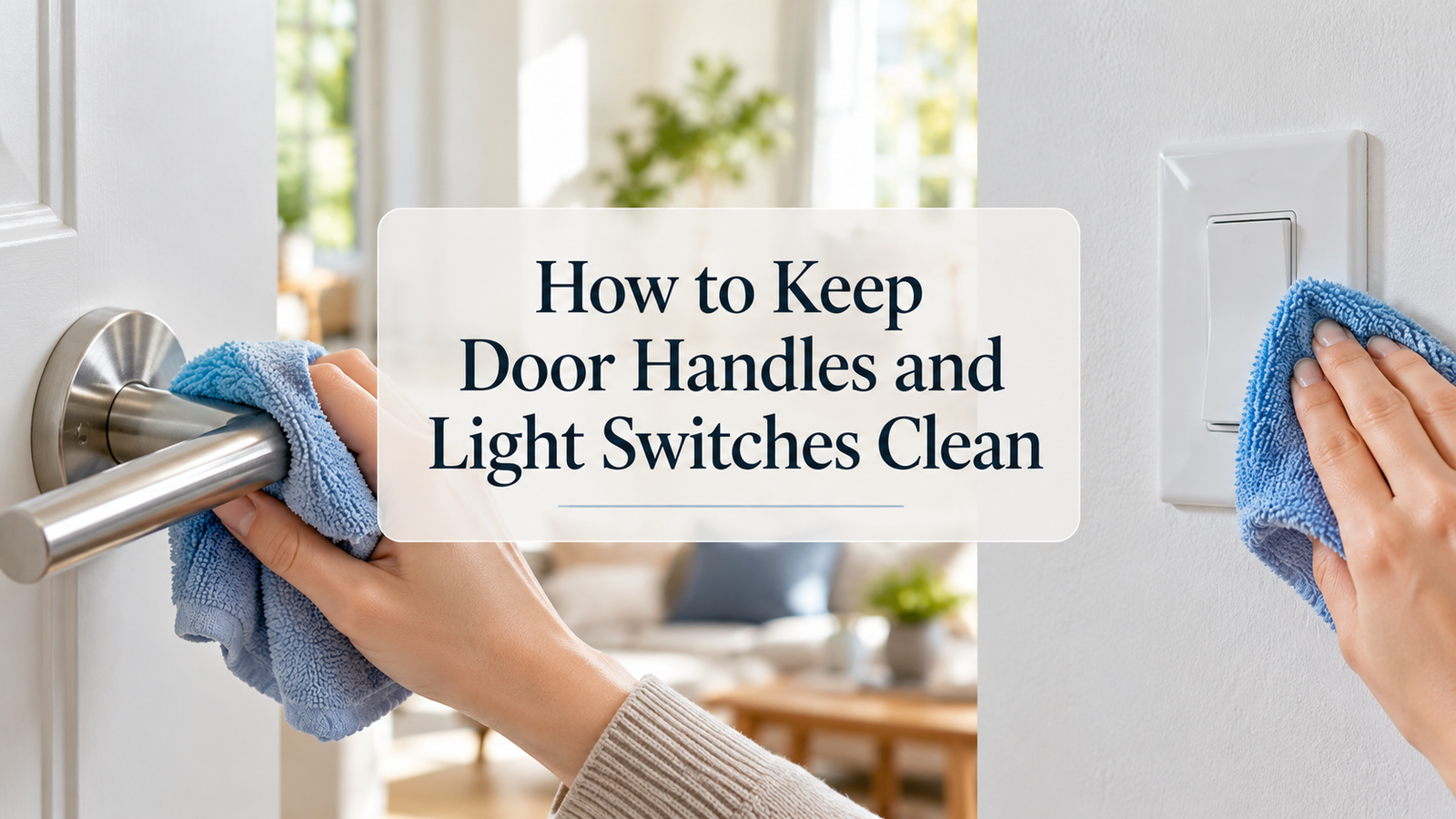
Keeping a home clean is not only about sweeping floors, washing dishes, or wiping furniture. Some of the smallest surfaces in the house are touched many times every day, yet they are often forgotten during regular cleaning. Door handles and light switches are good examples.
These surfaces are used by almost everyone in the home. We touch them when entering a room, leaving the house, switching on lights, opening cupboards, and using bathrooms. Because of this frequent contact, dirt, fingerprints, skin oils, dust, and other residues can slowly build up.
Learning how to keep door handles and light switches clean can make a home feel fresher and more comfortable. The task is simple, does not usually require expensive products, and can easily become part of a weekly home cleaning routine.
Why Door Handles and Light Switches Need Regular Cleaning
Door handles and light switches may look clean from a distance, but they are high touch surfaces. A high touch surface is simply an area that people touch many times during the day.
Think about how often you open your bedroom door, turn on the kitchen light, use the bathroom handle, or touch the front door. Each time your hand touches the surface, a small amount of oil or dirt may be left behind.
Over time, these marks can create a dull or greasy appearance.
Regular cleaning helps remove visible fingerprints, dust, and everyday grime. It can also help keep these surfaces looking newer for longer.
Another benefit is that clean switches and handles improve the overall appearance of a room. A freshly cleaned room may still feel unfinished if the door handle is covered with fingerprints or the switch plate has dark marks around it.
How Often Should You Clean Door Handles and Light Switches?
There is no single rule that works for every household. The right cleaning schedule depends on how many people live in the home and how often the surfaces are used.
In many homes, cleaning door handles and light switches once a week is a practical routine.
Some areas may need more frequent attention. For example, bathroom handles, kitchen switches, entrance doors, and shared rooms are often touched more than handles in storage rooms or guest rooms.
If children are present in the house, you may also notice fingerprints and marks appearing more quickly.
A simple approach is to inspect these surfaces while doing your regular cleaning. If they look dusty, greasy, or marked, wipe them even if your usual cleaning day has not arrived.
What You Need for Cleaning
You do not need a large collection of cleaning products for this task. In most cases, a few simple items are enough.
You may need a soft microfiber cloth, mild dish soap, warm water, a small bowl, cotton swabs, and a dry cloth.
For certain materials, you may also use a cleaner that is suitable for the specific finish.
Always avoid soaking electrical switches or allowing liquid to enter gaps around the switch mechanism.
When cleaning light switches, the cloth should be damp rather than wet.
Start by Removing Surface Dust
Before using any cleaning solution, remove loose dust.
Take a clean, dry microfiber cloth and gently wipe the door handle or switch plate. This removes dust and prevents it from turning into a muddy residue when moisture is added.
For small corners around switches, a dry cotton swab can be useful.
Dust often collects around the edges of switch plates because these areas are not always reached during normal dusting.
Removing this layer first makes the next cleaning step easier.
How to Clean Door Handles
Door handles are available in many materials, including stainless steel, brass, chrome, plastic, wood, and painted metal.
Because materials can react differently to cleaning products, a gentle method is usually the safest starting point.
Mix a small amount of mild dish soap with warm water.
Dip a microfiber cloth into the water and squeeze it well. The cloth should feel damp but should not drip.
Wipe the entire handle carefully. Pay attention to the areas where fingers normally grip the handle.
If your door has a lever handle, clean both the upper and lower surfaces.
Also wipe the base where the handle connects to the door. Dust and grime can collect around this area.
After cleaning, use a separate dry cloth to remove any moisture.
Drying is especially useful for metal handles because water spots may otherwise remain on the surface.
Cleaning Stainless Steel Door Handles
Stainless steel handles are common because they have a clean and modern appearance.
However, fingerprints can be very visible on polished stainless steel.
For regular cleaning, mild soapy water is usually enough.
Wipe gently in the direction of the metal grain if the grain is visible. This can help keep the finish looking even.
After wiping, dry the handle with a clean microfiber cloth.
Avoid using rough sponges because they may leave scratches.
Strong chemical cleaners are usually unnecessary for everyday cleaning.
Cleaning Brass Door Handles
Brass handles can give a home a traditional and elegant appearance.
Some brass finishes are polished and protected with a coating, while others may naturally change color with age.
For routine cleaning, begin with a soft damp cloth and mild soap.
Do not immediately use strong polishing products unless you know the type of finish on the handle.
Some modern brass handles have protective coatings that can be damaged by harsh cleaners.
If you want to polish brass, always follow the instructions provided by the manufacturer.
Cleaning Plastic Handles
Plastic handles are generally easy to maintain.
Use warm water with a small amount of mild soap and wipe the surface with a soft cloth.
Avoid strong solvents because they may damage the plastic or cause the surface to become cloudy.
After cleaning, dry the handle completely.
Plastic handles in kitchens or bathrooms may collect greasy marks more quickly, so they may need more regular cleaning.
How to Clean Light Switches Safely
Light switches require extra care because electricity is involved.
The main rule is simple. Never spray liquid cleaner directly onto a light switch.
Instead, apply a small amount of cleaning solution to a cloth.
Make sure the cloth is only slightly damp.
Gently wipe the switch plate and the switch itself.
Avoid pushing liquid into the gaps around the switch.
For extra safety, especially when doing deeper cleaning, you can turn off the electrical circuit connected to the switch before cleaning. If you are unsure about electrical safety, keep the cleaning very light and dry.
After wiping, dry the area with a clean cloth.
Cleaning Around the Edges of a Light Switch
The edges of a switch plate often collect more dirt than the center.
This happens because fingers sometimes touch the wall or plate while reaching for the switch.
Use a lightly damp cotton swab to clean around the edges.
Do not allow liquid to drip into the switch opening.
You can also use a dry soft toothbrush for dust trapped in small corners. Use it gently so that you do not scratch the surface.
These small details can make a noticeable difference in how clean the switch looks.
Avoid Using Too Much Water
One of the most important cleaning habits is controlling the amount of water you use.
Door handles can usually tolerate a damp cloth, but too much water can damage wooden doors, painted surfaces, or metal parts over time.
Light switches require even more caution.
Never pour water onto a switch plate and never spray cleaning liquid directly onto electrical fittings.
Using a damp cloth gives you much better control.
If a cloth feels wet enough to drip when squeezed, it is too wet for cleaning a switch.
Be Careful With Strong Cleaning Chemicals
It is easy to assume that stronger cleaners provide better results, but that is not always true.
Harsh chemicals can damage metal finishes, remove protective coatings, discolor plastic, or affect nearby paint.
For normal household cleaning, mild soap and water can remove most everyday dirt.
If you choose to use a specialized cleaning product, check whether it is suitable for the surface.
Testing a small hidden area first is also a good habit.
This simple step can prevent accidental damage.
Pay Attention to Kitchen Handles and Switches
Kitchen surfaces often collect more grease than other areas of the home.
When cooking, tiny particles of oil can spread through the air and settle on nearby surfaces.
As a result, kitchen cabinet handles, door handles, and light switches may feel slightly sticky.
A damp microfiber cloth with mild dish soap can help remove this layer.
You may need to wipe the surface twice if it is greasy.
Finish by drying it with a clean cloth.
Regular cleaning prevents grease from becoming difficult to remove.
Bathroom Handles May Need More Attention
Bathrooms are another area where handles are used frequently.
Moisture in the room can also leave marks on metal surfaces.
Wipe bathroom door handles and cabinet handles regularly.
Dry them after cleaning to reduce water spots.
You should also clean bathroom light switches because they are often touched before and after using the room.
Keeping these small surfaces clean can make the whole bathroom look better maintained.
Do Not Forget Cabinet and Cupboard Handles
When people think about door handles, they often focus only on room doors.
Cabinet handles, wardrobe handles, drawer pulls, and cupboard knobs are also touched regularly.
Kitchen cabinet handles may collect grease, while bedroom wardrobe handles can collect dust and fingerprints.
You can clean them using the same gentle method.
A weekly wipe is usually enough for most areas.
Including these handles in your normal routine means you will not need a separate cleaning session later.
Create a Simple Weekly Routine
The easiest way to keep door handles and light switches clean is to include them in another cleaning task.
For example, when dusting a room, take one extra minute to wipe the switch plate and door handle.
When cleaning the bathroom, clean the bathroom handle at the same time.
When wiping kitchen surfaces, include nearby handles and switches.
This approach is easier than waiting until every handle in the house becomes visibly dirty.
Small and regular cleaning jobs usually require less effort than occasional deep cleaning.
Use a Clean Cloth for Better Results
A dirty cleaning cloth can spread grime instead of removing it.
Use a clean microfiber cloth whenever possible.
Microfiber works well because it can collect dust and fingerprints without scratching most surfaces.
If you are cleaning several rooms, rinse or replace the cloth when it becomes dirty.
It is also helpful to keep separate cloths for kitchens, bathrooms, and general household cleaning.
This makes your cleaning routine more organized.
Check for Loose Handles While Cleaning
Cleaning time is also a good opportunity to inspect door handles.
If a handle feels loose, it may need tightening.
A loose handle can become more difficult to repair if the problem is ignored for a long time.
You can also look for scratches, rust, worn finishes, or damaged switch plates.
Finding small maintenance issues early can help prevent larger problems later.
However, electrical repairs should always be handled carefully. If a light switch is loose, cracked, sparking, or making unusual sounds, it is safer to have it checked by a qualified electrician.
Keep Cleaning Products Nearby
One reason small cleaning jobs are often ignored is that the supplies are not easy to reach.
Keeping a microfiber cloth and a mild cleaner in a convenient cleaning area can make the routine easier.
You do not need to carry a large cleaning basket for every small task.
A simple cloth can often remove fresh fingerprints before they become stubborn marks.
The easier the cleaning process feels, the more likely you are to maintain it regularly.
Teach Everyone to Keep Hands Clean
Cleaning habits can also reduce how quickly handles and switches become dirty.
Encourage family members to wash their hands after messy activities, cooking, gardening, or working with oily materials.
Clean hands leave fewer marks on frequently touched surfaces.
This does not remove the need for regular cleaning, but it can help the home stay cleaner between cleaning days.
Children may need gentle reminders because switches and handles are often touched immediately after play or meals.
Final Thoughts
Knowing how to keep door handles and light switches clean is a small but useful part of home care.
These surfaces are touched many times every day and can quickly collect dust, fingerprints, grease, and everyday dirt. Fortunately, keeping them clean does not require complicated tools or expensive products.
A soft microfiber cloth, mild soap, careful wiping, and regular attention are usually enough.
The most important point is consistency. Add door handles and light switches to your normal weekly cleaning routine instead of waiting until they look dirty.
Use only a small amount of moisture, especially around electrical switches, and avoid strong chemicals that may damage the surface.
When these often forgotten areas are clean, the whole home can feel more polished, comfortable, and well cared for.