
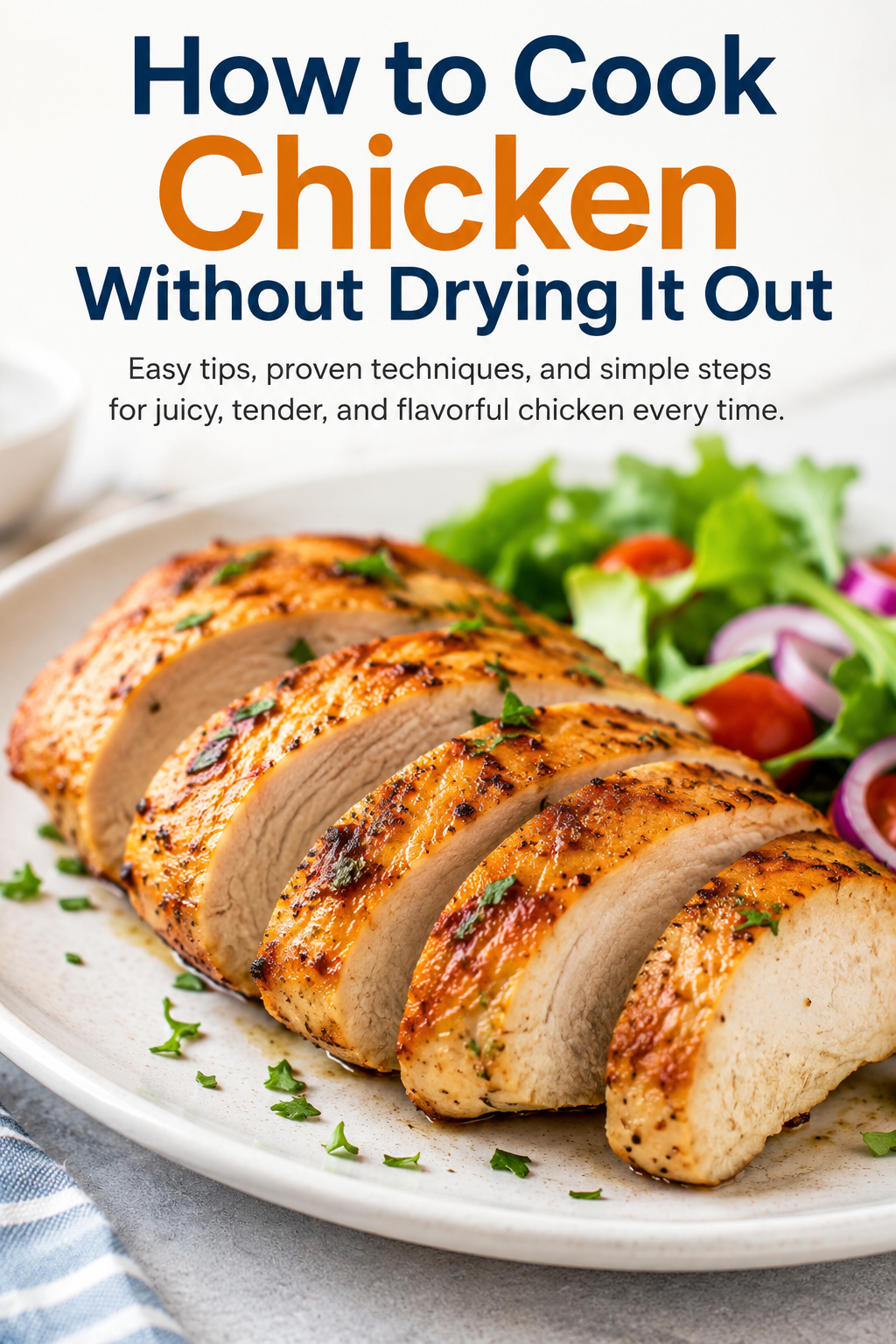
Cooking chicken seems simple, but getting it juicy and tender every time can be surprisingly difficult. I have found that the biggest problem is not the recipe itself. It is usually the cooking method, temperature, timing, or preparation. When chicken is cooked for too long, it quickly loses moisture and becomes dry, tough, and difficult to enjoy.
The good news is that learning how to cook chicken without drying it out does not require complicated techniques. With a few simple habits, you can make juicy chicken at home whether you are using a frying pan, oven, grill, or air fryer.
In this article, I will share the methods and tips I find most useful for keeping chicken moist, tender, and flavorful.
Choose the Right Chicken
The first step toward juicy chicken starts before you turn on the stove. Different cuts of chicken have different amounts of fat and moisture, so the cut you choose can affect the final result.
Chicken thighs are naturally more forgiving because they contain more fat and connective tissue. They can handle longer cooking without becoming dry. Chicken breasts are leaner, which means they need more attention because they can lose moisture quickly.
When I want a simple meal that is easy to prepare, I often choose boneless chicken breasts. However, I make sure they have a fairly even thickness so they cook at the same rate.
If one part of the chicken breast is very thick while another part is thin, the thin section may become dry before the thickest part is fully cooked.
Bring Chicken to an Even Thickness
One of my favorite tips for cooking chicken breast is to make the meat an even thickness before cooking.
You can place the chicken between two sheets of food safe plastic wrap or parchment and gently flatten the thicker areas with a meat mallet or rolling pin. The goal is not to make the chicken extremely thin. You simply want it to have a more consistent thickness.
This small step makes a big difference because the chicken cooks more evenly. It also reduces the chance of having a dry outside while the center is still undercooked.
For busy weeknight meals, this is one of the easiest things you can do to improve your chicken.
Season the Chicken Properly
Good seasoning does more than improve flavor. Salt can also help the chicken retain moisture when used correctly.
I usually season chicken with salt, black pepper, garlic powder, paprika, and a little dried herbs. You can adjust the seasoning based on the meal you are preparing.
For even better results, you can season the chicken several hours before cooking and keep it refrigerated. This gives the seasoning time to work into the meat.
If you have the time, a simple marinade can also help. Yogurt, lemon juice, olive oil, garlic, herbs, and spices can create a flavorful coating while helping the chicken stay tender.
However, you do not need an elaborate marinade to make juicy chicken. Good cooking technique is still the most important part.
Do Not Cook Chicken Straight From the Refrigerator
I have noticed that very cold chicken often cooks less evenly. When the outside is exposed to high heat while the center is still extremely cold, the exterior can become overcooked before the inside reaches the desired temperature.
Letting chicken sit out briefly while you prepare the other ingredients can help take some of the chill off. However, do not leave raw chicken at room temperature for an extended period. Food safety should always come first.
The goal is simply to avoid unnecessary temperature differences when you begin cooking.
Use the Right Cooking Temperature
One of the biggest mistakes people make when cooking chicken is using extremely high heat for the entire cooking process.
High heat can quickly brown the outside, but it can also cause the outside to become dry before the center is properly cooked.
For pan cooked chicken, I prefer starting with a moderately hot pan. Once the chicken develops a golden exterior, the heat can be reduced so the inside cooks gently.
The exact cooking time depends on the thickness and cut of the chicken. Instead of relying only on time, I recommend using a food thermometer to check the internal temperature.
Chicken should reach a safe internal temperature of 165°F, or 74°C, measured in the thickest part.
Avoid Overcooking Chicken
If I had to choose one rule for keeping chicken juicy, it would be this: do not overcook it.
Chicken breast is especially sensitive to overcooking. Once it has reached a safe internal temperature, continuing to cook it for much longer can cause the meat to lose more moisture.
A kitchen thermometer is one of the most useful tools you can have. It takes away much of the guesswork.
Instead of cutting the chicken repeatedly to see whether it is cooked, insert the thermometer into the thickest section. This helps you monitor the temperature without releasing the juices.
Let the Chicken Rest
Resting chicken after cooking is another simple step that I never like to skip.
When chicken comes off the heat, the juices inside are still moving around. If you immediately slice it, some of those juices can end up on the cutting board instead of staying in the meat.
I usually let cooked chicken rest for a few minutes before slicing. You do not need to leave it sitting for a long time. A short resting period is enough for the juices to settle.
This can make the chicken feel noticeably more tender and moist when you finally cut into it.
How to Cook Chicken in a Pan
Pan cooking is one of my favorite methods because it is quick and does not require much equipment.
Start by drying the chicken with paper towels. Season both sides and heat a suitable pan over medium to medium high heat. Add a small amount of cooking oil and place the chicken into the pan.
Let it cook without constantly moving it. This helps the surface develop a golden brown crust.
Once the first side is nicely browned, turn the chicken over and continue cooking. If the outside is browning too quickly, reduce the heat.
Use a thermometer to check the thickest section. Once the chicken reaches a safe temperature, remove it from the pan and let it rest.
For extra flavor, you can make a simple pan sauce using the juices left in the pan, along with garlic, herbs, broth, or a small amount of butter.
How to Cook Chicken in the Oven
The oven is another excellent choice, especially when you are cooking several pieces at once.
Before baking, I like to season the chicken generously and lightly coat it with olive oil. You can also add herbs, garlic, paprika, or your favorite spice mixture.
Place the chicken in a suitable baking dish and cook it at a moderate oven temperature. Avoid leaving it in the oven much longer than necessary.
The cooking time depends on the size and thickness of the chicken. Check the thickest part with a thermometer rather than depending entirely on a recipe’s suggested time.
Once the chicken reaches a safe internal temperature, remove it and let it rest before serving.
Use a Simple Marinade
A marinade can make a big difference when you want flavorful and tender chicken.
One easy combination is plain yogurt, lemon juice, olive oil, garlic, salt, black pepper, and paprika. Mix everything together and coat the chicken evenly.
You can refrigerate the chicken while it marinates and then cook it using your preferred method.
I especially like yogurt based marinades because they create a flavorful coating and work well with chicken breasts and thighs.
Just remember that a marinade is not a substitute for proper cooking. The chicken still needs to reach a safe internal temperature.
Do Not Cut the Chicken Too Early
It can be tempting to cut chicken open while it is cooking to see what is happening inside. I used to do this often, but it is not the best habit.
Repeatedly cutting the chicken can allow moisture to escape and makes it harder to judge doneness accurately.
A thermometer is a much better option. It allows you to check the temperature without creating unnecessary openings in the meat.
Once the chicken is finished cooking, let it rest before slicing.
Slice Chicken Against the Grain
The way you slice chicken can also affect how tender it feels.
After the chicken has rested, look at the direction of the muscle fibers. Slice across those fibers rather than following them.
Cutting against the grain shortens the muscle fibers, making each bite easier to chew.
This is especially helpful with chicken breast, grilled chicken, and chicken thighs.
Add Moisture After Cooking
Sometimes even properly cooked chicken can benefit from a little extra moisture.
I like serving chicken with a simple sauce, gravy, yogurt sauce, fresh salsa, or pan juices. These additions can make the meal feel richer without requiring complicated preparation.
For example, a simple garlic yogurt sauce can be made with plain yogurt, garlic, lemon juice, salt, and herbs.
You can also add a little broth or sauce to sliced chicken when using it in rice bowls, wraps, pasta, or salads.
Common Mistakes That Make Chicken Dry
Several common mistakes can turn juicy chicken into dry chicken.
The first is cooking it for too long. The second is using extremely high heat throughout the cooking process. Another mistake is choosing chicken pieces with very uneven thickness.
Skipping seasoning can also make chicken seem bland, which often leads people to add too much sauce afterward.
Another problem is cutting the chicken immediately after cooking. Allowing it to rest is a small step, but it can improve the final texture.
Finally, guessing the temperature instead of checking it can lead to either undercooked or overcooked chicken.
My Favorite Simple Method
When I want reliable juicy chicken without spending too much time in the kitchen, I usually flatten the chicken breast to an even thickness, season it well, and cook it in a lightly oiled pan over moderate heat.
I let each side develop a golden brown surface and then lower the heat if necessary. I check the thickest part with a thermometer and remove the chicken once it reaches a safe internal temperature.
After that, I let it rest for a few minutes before slicing.
This method is simple, but it produces chicken that works well with rice, vegetables, salads, sandwiches, wraps, and pasta.
Final Thoughts
Learning how to cook chicken without drying it out is mostly about controlling the heat and knowing when the chicken is finished.
Choose the right cut, create an even thickness, season it properly, avoid excessive heat, and do not overcook it. Using a food thermometer is one of the easiest ways to improve your results because it removes much of the guesswork.
I also recommend letting chicken rest before slicing. It takes only a few minutes but can help keep the meat juicy and tender.
Once you understand these basic techniques, cooking chicken becomes much easier. You do not need expensive ingredients or complicated recipes. With the right preparation and careful cooking, you can make flavorful, juicy chicken at home again and again.
Whether you are preparing a quick dinner for your family or meal prepping chicken for the week, these simple methods can help you get better results every time.