
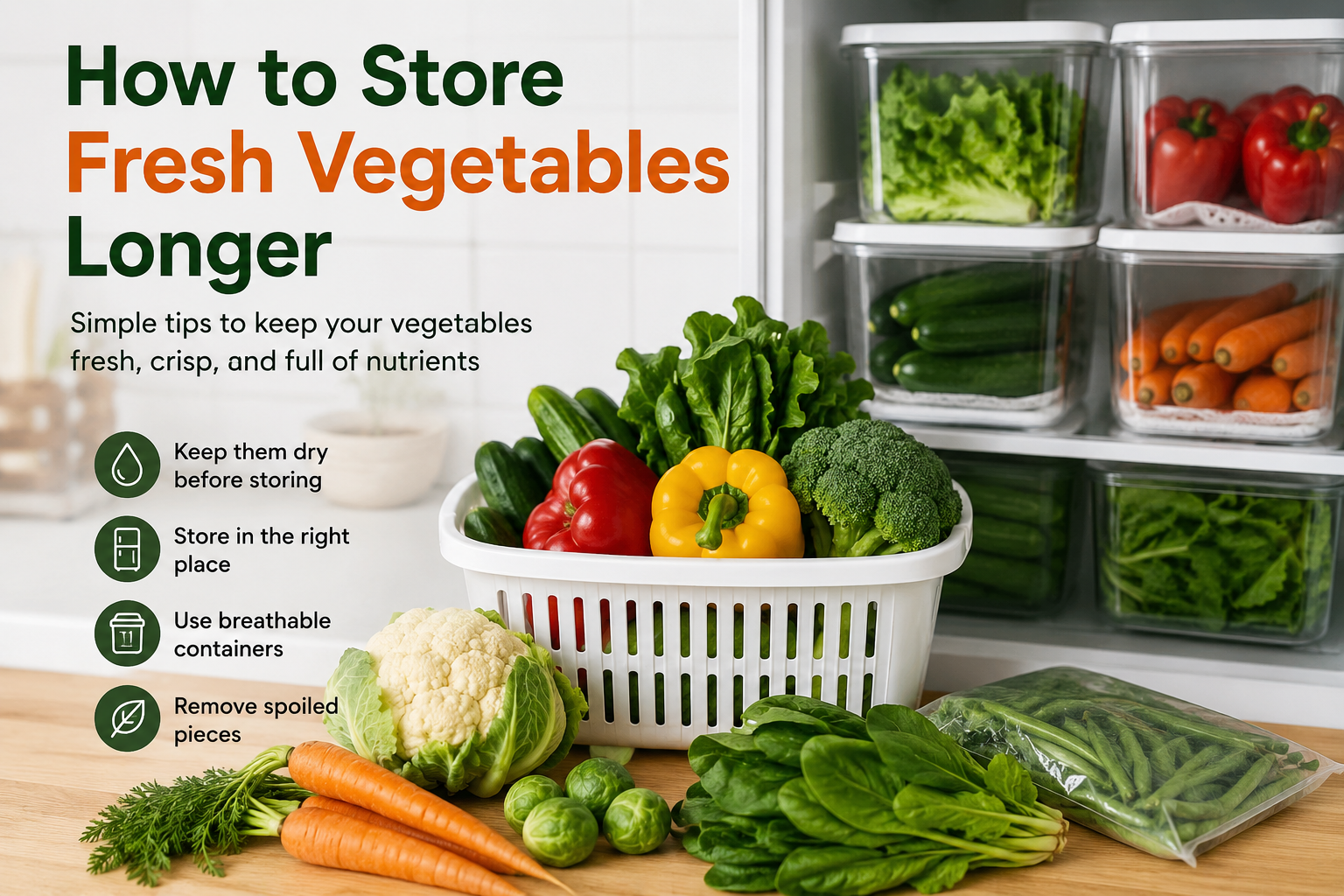
Fresh vegetables are one of the most useful foods to keep at home, but I have noticed that buying vegetables is only half the job. The other half is storing them properly. When vegetables are stored in the wrong place or packed incorrectly, they can become soft, dry, slimy, or spoiled much faster than expected.
I have learned that a few simple storage habits can make a noticeable difference. You do not always need expensive containers or special equipment. In many cases, the right temperature, proper airflow, and keeping vegetables dry are enough to help them stay fresh for longer.
In this guide, I will share my practical tips on how to store fresh vegetables longer, including how to store leafy greens, carrots, cucumbers, broccoli, peppers, potatoes, onions, and several other common vegetables.
Why Proper Vegetable Storage Matters
Vegetables naturally continue to change after they are harvested. They lose moisture, breathe, and sometimes release gases that can affect nearby produce. Because of this, simply putting every vegetable into the refrigerator is not always the best solution.
I prefer to think about vegetable storage according to the type of vegetable. Some vegetables need cold and humid conditions, while others prefer a dry and cool environment.
Proper storage can help vegetables maintain their texture, flavor, appearance, and freshness. It can also reduce food waste because you are less likely to throw away vegetables that have spoiled before you had a chance to use them.
Keep Vegetables Dry Before Storage
One of the most important tips I follow is to avoid storing vegetables while they are unnecessarily wet.
Extra moisture can encourage mold and spoilage, especially when vegetables are packed tightly together. This is particularly important for leafy vegetables such as lettuce, spinach, kale, and fresh herbs.
If I wash vegetables before storing them, I make sure they are properly dried first. A clean kitchen towel or salad spinner can help remove excess water.
However, some vegetables can be stored without washing and cleaned immediately before cooking. This can sometimes make storage easier because there is less moisture inside the container.
Store Leafy Greens Carefully
Leafy greens can lose their freshness quickly. Lettuce, spinach, kale, and similar vegetables can become wilted when they lose moisture, but too much trapped moisture can also make them slimy.
I usually remove damaged leaves first and then store the greens in the refrigerator. A paper towel can be useful for absorbing excess moisture inside a storage container or bag.
Avoid crushing leafy greens under heavy vegetables. Give them enough space so that air can move around them.
If the leaves begin to look slightly wilted, they may sometimes become crisp again after being placed in cold water for a short period. I always check their condition before using them.
How to Store Carrots Longer
Carrots are relatively easy to store when you keep them cold and protected from excess moisture.
If carrots have green tops attached, I recommend removing the tops before storage. The leafy tops can pull moisture from the carrots and cause them to become limp more quickly.
I keep carrots in the refrigerator, preferably inside a suitable storage container or produce bag. The goal is to prevent them from drying out while avoiding excessive moisture.
Properly stored carrots can remain useful for a good amount of time, making them one of the vegetables I like to buy in larger quantities when I know I will use them regularly.
Store Broccoli and Cauliflower Properly
Broccoli and cauliflower usually do well in the refrigerator. I avoid sealing them in completely airtight packaging if there is significant moisture inside because trapped moisture can encourage deterioration.
Keeping them cool is important. I also try to use them before their florets become noticeably soft, dark, or unpleasant in appearance.
If I know I will not cook broccoli or cauliflower soon, I sometimes divide larger pieces into smaller portions. This makes them easier to use and helps me avoid repeatedly handling the entire vegetable.
How to Store Cucumbers
Cucumbers can be a little different from many other vegetables. They generally prefer a cool environment but can become damaged if exposed to very cold temperatures for extended periods.
I keep cucumbers in a suitable part of the refrigerator rather than placing them wherever there is the most intense cold. I also avoid storing them next to vegetables that produce a lot of ripening gas.
Cucumbers are best when they remain firm and fresh. If they become extremely soft or develop an unusual smell, I would rather discard them than risk using spoiled produce.
Keep Bell Peppers Fresh
Bell peppers are another vegetable that I normally store in the refrigerator. Before storing them, I check for cuts, soft spots, or moisture.
I avoid washing peppers until I am ready to use them unless I have a specific reason to wash them earlier. Keeping them dry can help extend their useful storage time.
Whole peppers usually stay fresher than cut peppers. Once a pepper has been cut, I store the unused portion in a clean container and use it relatively quickly.
Potatoes Need Different Storage
Potatoes are one of the vegetables that I do not normally store in the refrigerator. They generally do better in a cool, dark, dry, and well ventilated place.
I keep potatoes away from direct sunlight because light can cause unwanted changes. I also avoid storing them in completely sealed plastic bags where moisture can become trapped.
Potatoes should be checked occasionally. If one potato becomes badly spoiled, removing it can help prevent the problem from affecting other stored potatoes.
Store Onions in a Dry Place
Onions also prefer a cool, dry, and well ventilated environment rather than a damp refrigerator drawer.
I keep whole onions away from excess moisture and make sure there is enough airflow around them. Proper ventilation can help reduce the chance of mold.
Once an onion is cut, the situation changes. I place the unused portion in a clean airtight container and refrigerate it. Cut onions should be used within a reasonable period rather than stored indefinitely.
Do Not Store Every Vegetable Together
One mistake I think many people make is treating all vegetables exactly the same.
Different vegetables have different storage requirements. Some prefer high humidity, while others need a dry environment. Some produce gases that can cause nearby produce to deteriorate faster.
For this reason, I try to organize vegetables based on their storage needs. Keeping vegetables in suitable drawers or containers can make a big difference.
It is also useful to keep vegetables that need to be used soon in a visible location. When food is hidden behind other items, it is much easier to forget about it.
Use the Right Containers
You do not need a kitchen full of expensive storage products. Simple containers can work well when used correctly.
For vegetables that benefit from humidity control, a suitable produce container can help maintain freshness. For leafy greens, adding a clean paper towel can help manage excess moisture.
I avoid packing vegetables so tightly that there is no room for airflow. Overcrowding can create moisture and make it harder to notice vegetables that are starting to spoil.
Clean storage containers are also important. Before reusing a container, I make sure it is clean and dry.
Check Your Vegetables Regularly
One of the easiest ways to reduce food waste is to check your vegetables every few days.
I like to look for soft spots, mold, unusual smells, discoloration, and excessive moisture. If one vegetable is spoiled, I remove it from the rest.
Some vegetables can still be used after removing a small damaged section, depending on their condition. However, vegetables with extensive mold, a strong unpleasant smell, or significant decay should be discarded.
When in doubt, I prefer not to take unnecessary risks with spoiled food.
Organize Your Refrigerator
A well organized refrigerator can make vegetable storage much easier.
I recommend keeping vegetables where they are easy to see and access. Refrigerator drawers can be useful because they are designed to provide an environment suitable for produce.
I also avoid filling the refrigerator so much that cold air cannot circulate properly. A crowded refrigerator can make it harder to maintain consistent conditions.
Another simple habit is to place older vegetables where you will see them first. Then place newly purchased vegetables behind them. This encourages a first in, first out approach and helps prevent forgotten produce.
Buy Only What You Can Use
Storage techniques can help vegetables last longer, but they cannot make fresh produce last forever.
One of the best ways I have found to reduce waste is to buy quantities that match my cooking habits. If I know I will cook several meals during the week, I can purchase more vegetables. If I expect to eat out or travel, I buy less.
Planning a few meals before grocery shopping can also help. It gives you a better idea of which vegetables you actually need.
Freeze Vegetables When Appropriate
If I have more vegetables than I can reasonably use while they are fresh, freezing can be a useful option.
Some vegetables benefit from blanching before freezing. This involves briefly heating them and then cooling them rapidly before placing them in the freezer.
Frozen vegetables are useful for soups, stews, stir fries, sauces, and many other meals. However, freezing can change the texture of some vegetables, so they may not be ideal for dishes where you want a crisp texture.
My Simple Vegetable Storage Routine
My approach is fairly simple. When I bring vegetables home, I first inspect them and remove anything damaged.
Then I separate vegetables according to their storage needs. Vegetables that belong in the refrigerator go into appropriate areas, while potatoes and onions are kept in a cool, dry, well ventilated place.
I avoid unnecessary washing, remove excess moisture when needed, and check the refrigerator regularly.
Most importantly, I try to use older vegetables first. This small habit helps me save money and reduces the amount of food that ends up in the trash.
Final Thoughts
Learning how to store fresh vegetables longer does not have to be complicated. The biggest difference usually comes from understanding what each vegetable needs.
Leafy greens generally benefit from moisture control and refrigeration. Carrots, broccoli, cauliflower, and peppers usually do well when kept cool. Potatoes and whole onions generally prefer a dry and well ventilated environment.
The key is to avoid excess moisture, use suitable containers, provide enough airflow, and check your vegetables regularly. I have found that these simple habits make grocery shopping more worthwhile because vegetables stay useful for longer and less food gets wasted.
With a little organization, you can keep your vegetables fresher, reduce unnecessary waste, and make everyday cooking easier. The next time you bring home fresh produce, take a few minutes to store each item according to its needs. That small effort can make a surprisingly big difference.