
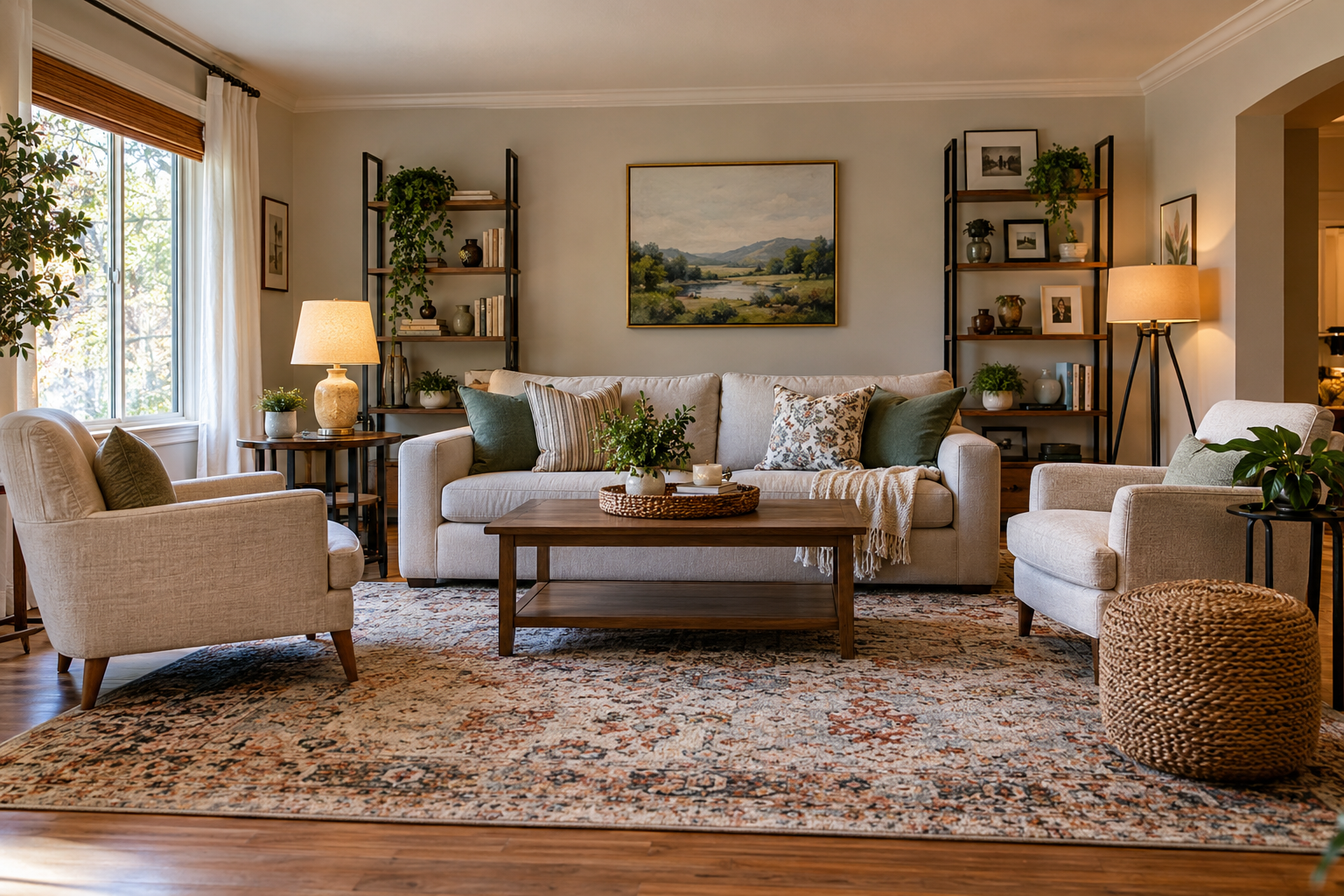
Decorating a room may look simple at first, but creating a space that feels comfortable, organized, and visually pleasing requires some thought. A room can contain beautiful furniture, attractive colors, and expensive accessories, yet still feel uncomfortable if the elements do not work well together.
One of the most important ideas in interior decorating is balance. Balance does not mean that everything has to look exactly the same. It means that the visual weight of furniture, colors, textures, lighting, and decorative objects feels evenly distributed throughout the room.
When a room is balanced, the eyes can move naturally from one area to another. Nothing feels too heavy, too empty, or out of place. The space feels calm and complete.
The good news is that creating a balanced look does not require professional interior design knowledge. By understanding a few basic decorating principles, almost anyone can make a room feel more comfortable and attractive.
Understand What Balance Means in Interior Decorating
Before arranging furniture or choosing decorations, it helps to understand the meaning of visual balance.
Every object in a room has visual weight. A large dark sofa usually feels heavier than a small light colored chair. A large painting attracts more attention than a small photograph. Bright colors can also feel stronger than soft neutral shades.
Balance is created when these visual weights are distributed carefully.
For example, if one side of a living room contains a large sofa, the opposite side may need a chair, a floor lamp, a bookshelf, or another visual element to prevent the room from feeling uneven.
The goal is not perfect symmetry. The goal is harmony.
A balanced room allows different elements to support each other rather than compete for attention.
Start With the Main Purpose of the Room
Every room should have a clear purpose before decorating begins.
A living room may be designed for family conversations, watching television, entertaining guests, or relaxing. A bedroom should normally feel peaceful and comfortable. A dining room should make eating and conversation easy.
Understanding the purpose of the room helps determine where furniture should be placed and which decorative elements are necessary.
For example, if a living room is mainly used for conversation, seating should face toward the center rather than being placed randomly against different walls.
When furniture supports the purpose of the room, the entire space usually feels more balanced.
Choose a Clear Focal Point
Most well decorated rooms have a focal point.
A focal point is the area that naturally attracts attention when someone enters the room. It gives the eye a place to begin before noticing the rest of the space.
Common focal points include a fireplace, television wall, large window, artwork, decorative wall, bed, or dining table.
Once the focal point has been selected, furniture and accessories can be arranged around it.
In a bedroom, the bed is usually the natural focal point. You can strengthen this effect with an attractive headboard, wall art, lamps, or comfortable bedding.
In a living room, a large window with a beautiful view may become the focal point. The seating can then be arranged to complement that view.
Having a clear focal point prevents too many elements from competing for attention.
Pay Attention to Furniture Size
Furniture size has a major effect on balance.
Large furniture in a small room can make the space feel crowded and heavy. Very small furniture in a large room may make the room feel empty or unfinished.
Before buying furniture, consider the dimensions of the room.
A large living room may comfortably support a sectional sofa, large coffee table, and several chairs. A smaller room may look better with a compact sofa and one or two lighter chairs.
Furniture should also relate well to the size of other pieces.
A very small coffee table can look strange in front of a large sofa. In the same way, a huge side table beside a small chair may feel visually uncomfortable.
Choosing furniture with similar proportions helps create harmony.
Avoid Pushing Every Piece Against the Wall
Many people automatically place all furniture against the walls. This can sometimes make a room feel empty in the center.
If space allows, try bringing furniture slightly inward.
A sofa can be positioned away from the wall, especially in a large living room. Chairs can be placed around a coffee table to create a comfortable conversation area.
This type of arrangement makes the room feel more connected and purposeful.
However, always leave enough walking space between furniture pieces. A balanced room should look attractive while remaining easy to move through.
Use Symmetry Carefully
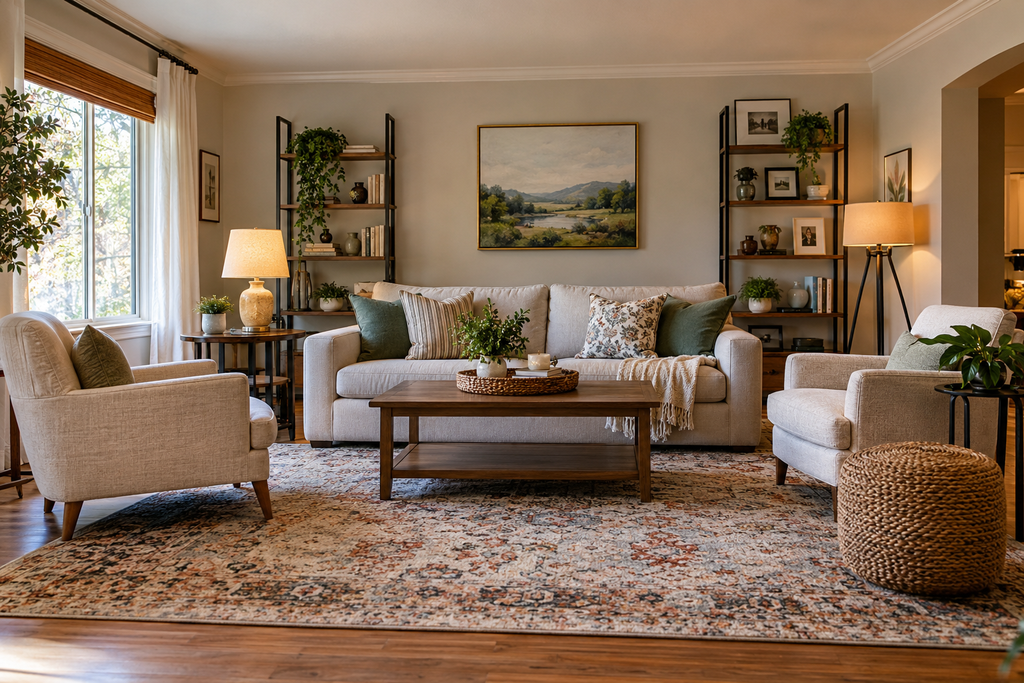
Symmetry is one of the easiest ways to create balance.
Symmetrical decorating means placing similar objects on both sides of a central point.
For example, two matching lamps can be placed on either side of a bed. Two chairs can face each other across a coffee table. Similar decorative objects can be placed on both sides of a fireplace.
Symmetry works especially well in bedrooms, dining rooms, and more traditional interiors.
However, too much symmetry can sometimes make a room feel overly formal.
A few differences between objects can add personality while maintaining visual order.
Try Asymmetrical Balance
A room does not need matching furniture to feel balanced.
Asymmetrical balance uses different objects that have similar visual weight.
For example, one side of a sofa may have a large floor lamp, while the other side has a side table with a smaller lamp and decorative items.
The objects are different, but their overall visual presence can still feel balanced.
This approach often creates a more relaxed and modern appearance.
Asymmetrical balance is especially useful when decorating with furniture and accessories collected over time.
Create Balance With Color
Color strongly influences how a room feels.
Dark colors usually appear visually heavier, while light colors often feel softer and more spacious.
If one part of the room contains a strong color, try repeating that color somewhere else.
For example, if you have a dark blue chair, you might use dark blue cushions, artwork, or decorative accessories in another part of the room.
Repeating colors helps connect different areas.
You do not need to use the exact same shade everywhere. Related colors can also create harmony.
The important thing is to avoid placing all strong colors in one area while leaving the rest of the room completely neutral.
Use a Simple Color Palette
Too many colors can make a room feel busy.
Choosing a simple color palette makes decorating much easier.
Start with one main color for large surfaces such as walls, rugs, or major furniture pieces.
Then choose one or two supporting colors for curtains, cushions, artwork, and smaller accessories.
You can also introduce a stronger accent color in smaller amounts.
For example, a room may use cream as the main color, soft brown as a supporting color, and green as an accent.
A limited color palette allows the room to feel connected without becoming boring.
Repeat Shapes Throughout the Room
Repeating shapes is another simple way to create visual balance.
If the room contains many straight lines, adding a few curved objects can soften the appearance.
A round mirror, curved lamp, or circular table can balance rectangular sofas, cabinets, and windows.
Similarly, if you introduce a circular shape in one area, repeating that shape somewhere else helps create continuity.
You do not need many matching objects. Small visual connections are often enough.
Mix Different Textures
Texture gives a room depth and character.
A room filled with only smooth surfaces may feel cold or unfinished. Mixing different materials makes the space more interesting.
You might combine soft cushions, cotton curtains, wooden furniture, woven baskets, ceramic accessories, and a textured rug.
These surfaces create visual variety without requiring many colors.
However, texture should also be balanced.
If every object has a very strong texture, the room can start to feel busy. Mix noticeable textures with smoother materials to create contrast.
Use Rugs to Define Areas
Rugs can help organize furniture and create visual balance.
In a living room, a rug can connect the sofa, chairs, and coffee table into one clear seating area.
The rug should usually be large enough to relate comfortably to the furniture.
A very small rug placed in the center of a large seating arrangement can make the furniture appear disconnected.
In a dining room, the rug should extend beyond the table so that chairs remain comfortably positioned when they are pulled out.
Rugs also introduce color and texture, which can help connect other decorative elements in the room.
Balance Wall Decorations
Walls play an important role in how balanced a room feels.
One wall covered with pictures while all the other walls remain empty can make the room feel visually uneven.
Wall decorations should relate to the furniture below them.
A large sofa can support a large artwork or a collection of smaller frames. A narrow table may look better with a smaller mirror or artwork.
Avoid hanging very small artwork alone on a large wall unless there is a clear decorative reason.
The scale of the wall decoration should feel appropriate for the available space.
Leave Some Empty Space
One of the easiest decorating mistakes is trying to fill every empty area.
Empty space is important.
It gives the eyes a place to rest and prevents the room from feeling crowded.
You do not need decorations on every wall, every table, or every shelf.
Sometimes a simple wall or an uncluttered table creates more impact than another decorative object.
Good decorating is often about knowing what to leave out.
Arrange Accessories in Small Groups
Small decorative objects can add personality, but they should be arranged carefully.
Instead of spreading many small items around the room, try grouping them.
Books, candles, vases, and decorative objects can be arranged together on shelves or tables.
Groups of three objects often look natural because different heights and shapes create interest.
For example, you might arrange a tall vase, a medium sized candle, and a small decorative bowl together.
This creates one clear visual arrangement instead of several unrelated objects.
Add Different Heights
A room can feel flat if everything is positioned at the same height.
Try creating different visual levels.
A tall floor lamp can draw the eye upward. A medium height chair creates another level. A coffee table and rug keep attention closer to the floor.
Plants can also introduce height naturally.
Different heights encourage the eyes to move around the room, creating a more dynamic but balanced appearance.
Use Lighting in Several Areas
Lighting affects both function and atmosphere.
Relying on only one ceiling light can make some areas feel too bright while others remain dark.
A balanced room usually benefits from several light sources.
You might combine ceiling lighting with floor lamps, table lamps, wall lights, or natural daylight.
For example, a living room may have a central ceiling light, a lamp beside the sofa, and another lamp near a reading chair.
This creates a more comfortable and flexible environment.
Include Natural Elements
Natural materials often help create a calm and balanced atmosphere.
Wood, plants, stone, cotton, linen, and woven materials introduce warmth and texture.
Indoor plants are especially useful because they add color and life without requiring major decorative changes.
A tall plant can fill an empty corner, while a smaller plant can add interest to a shelf or table.
You do not need to turn the room into an indoor garden. Even one or two plants can soften hard surfaces and improve visual balance.
Pay Attention to Visual Weight
When decorating, step back and look at the entire room.
Ask yourself where your eyes naturally go.
If one corner immediately attracts all your attention, that area may be too visually heavy.
You can often fix this by adding a smaller object, plant, lamp, artwork, or color to another part of the room.
For example, a large dark cabinet on one side may be balanced with a tall plant and artwork on the opposite side.
Learning to notice visual weight is one of the most useful decorating skills.
Keep Patterns Under Control
Patterns can bring energy and personality to a room.
However, using too many patterns at once can create visual confusion.
If you use a patterned rug, you may prefer simpler curtains or furniture.
If your curtains have a strong design, use calmer cushions and accessories.
You can still mix patterns, but they should share something in common, such as similar colors or related shapes.
This allows them to work together rather than compete.
Create Rhythm Through Repetition
Interior designers often use repetition to create rhythm.
Rhythm simply means that certain visual elements appear again throughout the room.
For example, you may repeat the same wood finish on a coffee table, picture frame, and shelf.
You may repeat green through plants, cushions, and artwork.
These small connections guide the eye around the room and create a feeling of unity.
The repeated elements do not need to be identical. They only need enough similarity to feel connected.
Keep Practical Needs in Mind
A beautiful room should also be practical.
Leave enough space for doors to open properly. Keep walking paths clear. Make sure tables are within comfortable reach of chairs and sofas.
Lighting should be available where reading or working takes place.
Storage should also be considered.
If everyday items have no place to go, clutter can quickly destroy the balanced look you created.
Baskets, cabinets, drawers, and shelves can help keep essential items organized.
Edit the Room After Decorating
One of the best decorating habits is to review the room after you think it is finished.
Stand at the entrance and look around.
Notice whether one area feels too crowded or another feels too empty.
You may discover that a chair needs to move slightly, a picture should be repositioned, or a decorative object should be removed.
Sometimes balance is improved by subtraction rather than addition.
Removing one unnecessary object can make the entire arrangement feel calmer.
Allow the Room to Develop Over Time
A balanced room does not have to be created in one day.
In fact, rooms often feel more personal when they develop gradually.
You may begin with essential furniture and then add artwork, lamps, plants, and accessories over time.
Living with the room allows you to notice what is missing and what is unnecessary.
This gradual approach can also prevent unnecessary spending.
Instead of buying decorations simply to fill empty spaces, you can choose objects that have real purpose or meaning.
Final Thoughts
Creating a balanced look when decorating a room is mainly about understanding proportion, placement, color, texture, and visual weight.
You do not need expensive furniture or complicated design rules.
Start with the purpose of the room and choose a clear focal point. Arrange furniture according to the available space. Repeat colors and shapes to create connection. Mix textures carefully and use lighting at different levels.
Most importantly, avoid overcrowding the room.
A balanced interior should have both decorated areas and quiet areas. Furniture should feel connected without making movement difficult. Colors should repeat naturally without becoming overwhelming.
When every element has a reason for being there, the room begins to feel more organized and comfortable.
Decorating is also personal. The most attractive room is not always the one that follows every design trend. It is the room that feels comfortable to the people who use it.
By observing your space carefully and making small adjustments, you can create a room that feels balanced, welcoming, and pleasant every day.
Frequently Asked Questions
What is the easiest way to make a room look balanced?
Start by looking at the largest furniture pieces. Make sure they are not all concentrated on one side of the room. Then repeat important colors, shapes, and materials throughout the space.
Does balanced decorating mean everything should match?
No. A balanced room can contain different furniture styles, colors, and accessories. The important thing is that their visual weight and proportions work well together.
How can I balance a small room?
Choose furniture that suits the size of the room, keep walking areas clear, use a simple color palette, and avoid too many decorative objects. Light colors and carefully placed mirrors can also help the room feel more open.
How many colors should I use in one room?
There is no strict rule, but two or three main colors are often easier to manage. You can then introduce small variations through accessories, plants, artwork, and natural materials.
Can plants help make a room look more balanced?
Yes. Plants can add height, texture, and color. They are especially useful for filling empty corners or balancing large pieces of furniture.
Why does my room still feel unbalanced after decorating?
The problem may be furniture scale, uneven visual weight, too many accessories, or poor placement. Step back and identify which area attracts too much attention. Then remove, move, or add elements until the room feels more visually even.
Focus Keyword
Simple Ways to Create a Balanced Look When Decorating a Room
SEO Title
Simple Ways to Create a Balanced Look When Decorating a Room
Meta Description
Discover simple ways to create a balanced look when decorating a room. Learn how to arrange furniture, choose colors, use lighting, add texture, and create a comfortable, visually pleasing interior.