
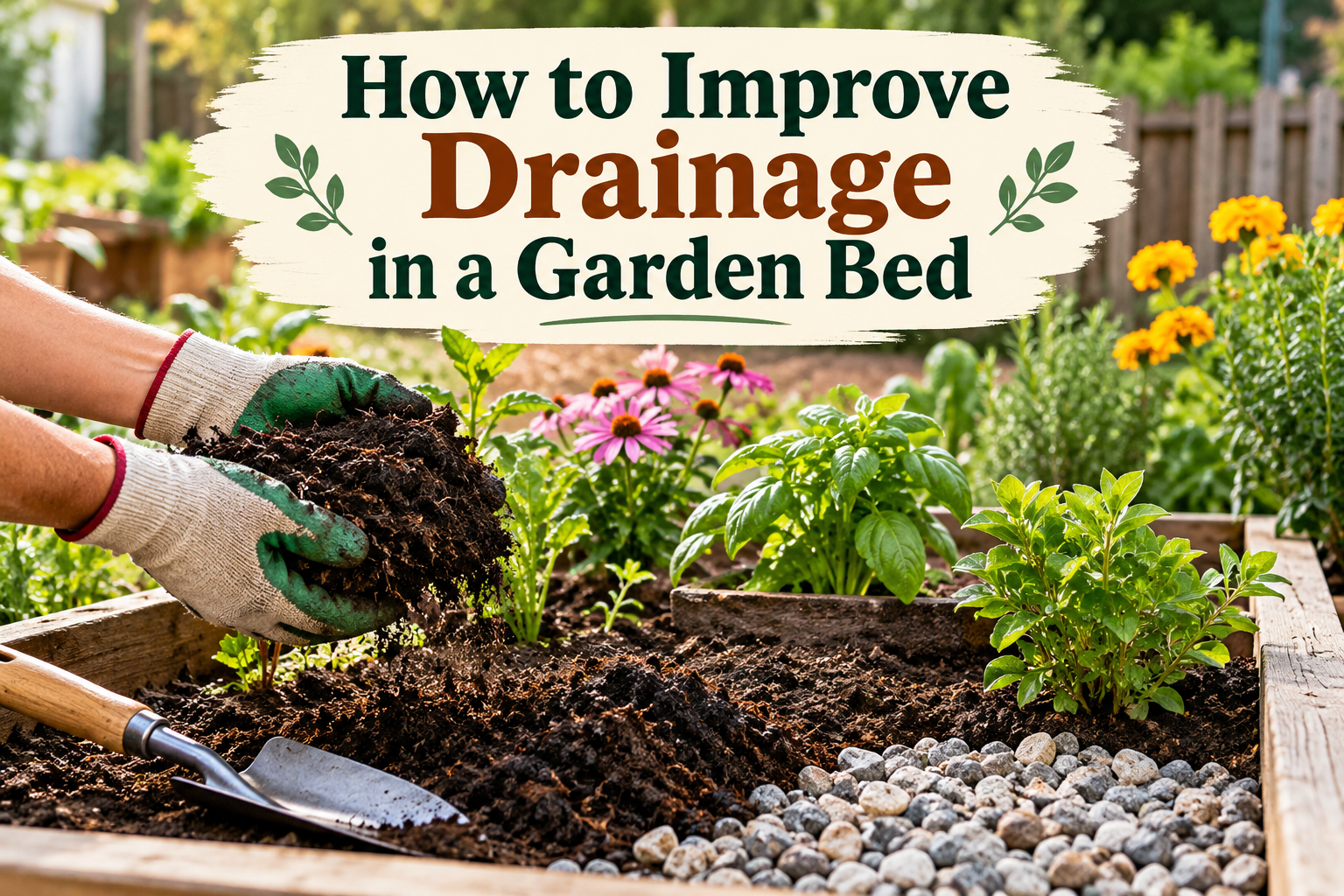
Good drainage is one of the most important parts of a healthy garden. Plants need water to grow, but they also need air around their roots. When too much water remains in the soil for a long time, the roots may struggle to breathe. This can lead to weak growth, yellow leaves, root problems, and sometimes the death of the plant.
When I first started learning about garden soil, I used to think that watering was the main issue. Later, I understood that the way water moves through the soil is just as important as the amount of water we give to plants. A garden bed that drains well can support stronger roots, healthier plants, and better growth throughout the season.
Improving drainage does not always require expensive materials or major construction. In many cases, a few simple changes can make a noticeable difference.
This guide explains how to improve drainage in a garden bed using practical methods that are suitable for beginners as well as regular home gardeners.
What Does Good Garden Drainage Mean?
Good drainage means that extra water can move away from the root area while enough moisture remains in the soil for plants to use.
Soil should not become completely dry immediately after watering, but it should also not remain soaked for a long period.
Healthy garden soil usually holds some moisture while allowing extra water to travel downward. It also contains small air spaces that provide oxygen to plant roots.
If the soil becomes too compacted, water cannot move easily. If the soil contains too much heavy clay, water may remain near the surface. This is why understanding your soil is the first step when trying to improve garden drainage.
Signs of Poor Drainage in a Garden Bed
Before changing the soil, it is useful to look for signs that drainage is actually a problem.
One common sign is water standing on the surface after rain or watering. A small amount of water may be normal for a few minutes, but water that remains for several hours may indicate slow drainage.
The soil may also feel sticky, heavy, or muddy for a long time.
Plants growing in poorly drained soil can develop yellow leaves even when they are receiving enough nutrients. Their growth may become slow, and some plants may begin to wilt even though the soil is wet.
This happens because roots need oxygen. Waterlogged soil can reduce the amount of oxygen available around the roots.
Another sign is a sour or unpleasant smell coming from wet soil. Healthy soil usually has a fresh, earthy smell.
Check the Soil Before Making Changes
One of the easiest ways to understand your garden bed is to examine the soil with your hands.
Take a small amount of moist soil and gently squeeze it.
If it forms a very firm ball that stays together easily, the soil may contain a high amount of clay.
If it falls apart immediately, the soil may contain more sand.
Good garden soil usually holds together slightly but breaks apart easily when touched.
You can also dig a small hole and fill it with water. Watch how long the water takes to disappear.
If the water drains slowly, the garden bed may need improvement.
This simple observation can help you decide how much work is required.
Add Organic Matter to Improve Drainage
One of the best ways to improve drainage in a garden bed is to add organic matter.
Organic matter can improve the structure of many different soil types.
Compost is one of the most useful materials for this purpose. Well prepared compost helps create spaces between soil particles. These spaces allow water and air to move more freely.
Spread a layer of compost over the garden bed and gently mix it into the upper soil.
You do not have to completely replace your existing soil. Regularly adding compost over time can gradually improve its structure.
Leaf mold, aged manure, and well decomposed garden material can also help.
Organic matter has another advantage. It improves water holding ability in sandy soil while helping heavy soil drain more effectively.
This balance is one reason compost is so valuable in home gardening.
Avoid Working With Wet Soil
It may be tempting to dig or prepare a garden bed immediately after heavy rain, but this can damage soil structure.
Wet soil can become compressed when it is walked on or worked heavily.
When soil particles are pressed tightly together, the spaces that normally hold air and allow water movement become smaller.
Before digging, take a handful of soil and squeeze it.
If water comes out or the soil becomes a sticky lump, it is probably too wet to work.
Waiting until the soil becomes slightly moist can help protect its natural structure.
This simple habit can prevent many drainage problems.
Reduce Soil Compaction
Compacted soil is one of the most common reasons for poor drainage.
Garden beds can become compacted when people walk across them regularly or when heavy objects are placed on the soil.
Try to avoid stepping directly inside planting areas.
Creating narrow beds that can be reached from the sides is a useful solution.
Garden paths can also help by giving people a clear place to walk without pressing down the planting soil.
For an existing compacted bed, loosening the upper soil carefully with a garden fork can help.
Push the fork into the soil and gently lift it. The goal is not to completely turn the soil over but to create small openings where air and water can move.
Use Raised Garden Beds
Raised beds can be very useful in areas where the natural soil drains slowly.
A raised garden bed lifts the root zone above the original ground level. This allows extra water to move away more easily.
Raised beds are especially useful where heavy clay soil is common.
They can be built using wood, brick, stone, concrete blocks, or other suitable garden materials.
The bed should be filled with a balanced mixture of quality soil and organic matter.
The exact depth depends on the plants you want to grow, but many vegetables and flowers perform well when they have enough loose soil for their roots to develop freely.
Raised beds also make it easier to control soil quality because you are not completely dependent on the natural ground conditions.
Add Compost Regularly
Improving drainage is not always a one time job.
Soil changes gradually through weather, watering, root growth, and regular garden activity.
Adding compost once or twice a year can help maintain good soil structure.
A thin layer spread over the surface can slowly become part of the soil through natural activity.
Earthworms and other useful soil organisms help move organic matter downward.
Over time, this process can make the soil easier to work and better able to manage water.
Healthy soil is usually built gradually rather than created in a single day.
Consider the Natural Slope of the Garden
Water naturally moves from higher areas to lower areas.
When designing or improving a garden bed, observe where water goes after heavy rain.
If the bed is located in a natural low area, water may collect there even if the soil itself is reasonably good.
In some cases, gently raising the soil level can help.
A small slope can also guide excess water away from valuable plants.
The slope does not need to be steep. Even a slight difference in height can influence water movement.
Always make sure that redirected water does not create problems for another part of the garden or nearby property.
Choose Plants That Match the Soil
Sometimes the easiest solution is to choose plants that are naturally suited to your garden conditions.
Some plants prefer soil that drains very quickly, while others tolerate heavier and wetter conditions.
If a certain part of the garden regularly remains moist, planting species that can handle those conditions may be easier than trying to completely change the environment.
Before buying plants, read about their preferred soil type and moisture needs.
Matching plants to the garden can reduce maintenance and improve their chance of healthy growth.
Be Careful When Adding Sand
Many beginners hear that sand improves drainage and decide to add it directly to heavy clay soil.
This method needs caution.
Adding a small amount of sand to clay may not solve the problem. In some cases, the combination can create a very dense soil texture.
If sand is used, it usually needs to be added in a significant amount and mixed with other suitable materials.
For most home garden beds, adding organic matter is usually a simpler and safer approach.
Compost improves soil structure without creating the same risk of forming a hard mixture.
Improve Drainage With Proper Mulching
Mulch is usually used to protect soil moisture, but it can also support better soil structure over time.
Organic mulch such as shredded leaves, bark, or compost can protect the soil surface from heavy rain.
Without mulch, strong rainfall can hit bare soil and cause the surface to become compacted.
A layer of organic material reduces this impact.
As natural mulch breaks down, it also adds organic matter to the soil.
However, avoid placing an extremely thick layer that keeps the surface constantly wet.
A moderate layer is usually enough for most garden beds.
Make Sure Containers and Bed Borders Do Not Trap Water
Some garden beds are surrounded by concrete, solid walls, or other materials.
These borders may sometimes trap water if there is no place for excess moisture to escape.
Check the edges of the bed after watering or rain.
If water repeatedly collects along a border, you may need to create a drainage opening or adjust the soil level.
The exact solution depends on how the garden bed has been built.
The goal is simply to give extra water a natural path away from the root zone.
Water the Garden Correctly
Poor drainage and overwatering can look very similar.
Even well prepared soil can remain too wet if it receives more water than plants need.
Before watering, check the soil with your finger.
If the soil below the surface still feels moist, watering may not be necessary.
It is usually better to water deeply and less frequently than to keep adding small amounts of water every day.
Deep watering encourages roots to grow farther into the soil.
The correct watering schedule depends on the plant type, weather, temperature, soil, and season.
There is no single schedule that works for every garden.
Use Soil Amendments Carefully
Several materials can be used to improve garden soil, but they should be chosen according to the existing soil.
Compost is usually the most useful general amendment.
Some gardeners also use aged bark, leaf mold, or other organic materials.
The purpose is not simply to make the soil lighter. The main goal is to create a healthy structure with enough space for air, moisture, and root growth.
Avoid adding large amounts of unfamiliar material without first understanding how it affects your soil.
Gradual improvement is often more successful than making an extreme change.
Keep the Garden Bed Healthy Over Time
Good drainage should be treated as part of regular garden care.
Observe the soil throughout the year.
Notice what happens after rain.
Check whether certain areas remain wetter than others.
Add compost regularly and avoid unnecessary soil compaction.
Plants themselves can also help improve the soil. Their roots create channels that allow air and water to move through the ground.
When old roots decompose, they can leave small spaces behind.
This natural process is one reason healthy garden soil often becomes easier to manage over time.
Common Mistakes to Avoid
One common mistake is adding too much water because the soil surface looks dry. The deeper soil may still contain plenty of moisture.
Another mistake is walking regularly on planting areas.
Some gardeners also try to solve drainage problems by adding random materials without understanding their effect on soil structure.
Completely replacing garden soil is not always necessary.
In many situations, adding organic matter, reducing compaction, and adjusting watering habits can solve the problem gradually.
Patience is important when improving soil.
Why Good Drainage Matters for Plant Health
Healthy roots are the foundation of healthy plants.
Roots absorb water and nutrients, but they also need oxygen.
Soil that remains permanently saturated can create stressful conditions for many common garden plants.
Better drainage supports stronger root development and can reduce the risk of certain root problems.
It also makes it easier to control watering because the soil is better able to handle excess moisture.
A well drained garden bed does not mean a dry garden bed. The best soil creates a balance between moisture and air.
Final Thoughts
Learning how to improve drainage in a garden bed can make gardening much easier.
You do not need to rebuild your entire garden to see improvement.
Start by observing how water moves through the soil. Check whether the soil is compacted, heavy, or located in a low area. Add good quality compost, avoid walking on planting areas, and improve the bed gradually.
Raised beds can be useful where drainage problems are severe, while proper watering can solve situations where excess moisture is caused by garden habits rather than soil type.
The most important lesson is that healthy soil needs both water and air.
When soil has good structure, roots can grow more freely, useful soil organisms can remain active, and plants can develop in a healthier environment.
With regular care and simple improvements, even a garden bed with drainage problems can become a productive space for vegetables, herbs, flowers, and many other plants.
The process may take some time, but improving the soil is one of the best long term investments a gardener can make.