
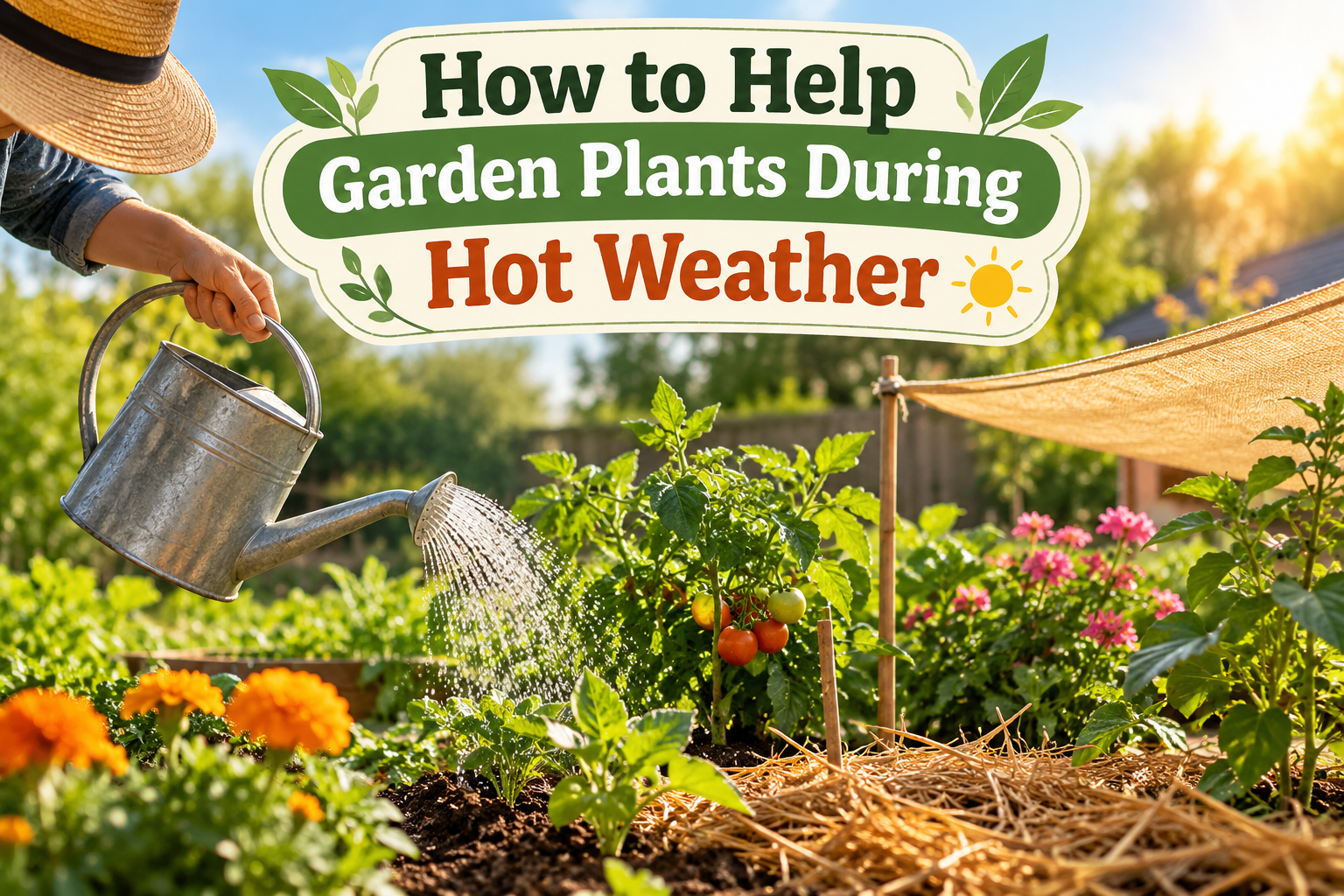
Hot weather can be one of the most difficult times for garden plants. When temperatures rise for several days, plants may lose water faster than their roots can replace it. Leaves may become soft, flowers may drop, soil may dry quickly, and young plants can struggle to survive.
The good news is that most garden plants can handle periods of heat if they receive the right care. The main goal during hot weather is to protect roots, reduce water loss, keep the soil healthy, and avoid adding unnecessary stress.
Learning how to help garden plants during hot weather does not require complicated equipment. Simple changes in watering, mulching, shading, and daily garden care can make a big difference.
Understand How Heat Affects Garden Plants
Plants naturally lose water through their leaves. This process helps them control temperature and move water through their tissues. During hot weather, this water loss becomes much faster.
If the soil contains enough moisture, a healthy plant may continue growing normally. Problems begin when the roots cannot absorb water quickly enough.
A plant under heat stress may show several signs. Leaves can wilt during the afternoon, edges may become brown, flowers may fall early, and fruits may stop developing properly. Some plants also curl their leaves to reduce the surface exposed to sunlight.
It is important to understand that temporary afternoon wilting does not always mean a plant is dying. Some plants look weak during the hottest part of the day and recover in the evening. However, plants that remain wilted early in the morning usually need attention.
Water Plants at the Right Time
Good watering is one of the most important ways to protect garden plants during hot weather.
Early morning is usually the best time to water a garden. Temperatures are lower, evaporation is slower, and plants have time to absorb moisture before the hottest hours begin.
Morning watering also allows leaves to dry during the day if they become wet.
Evening watering can also help in very hot conditions, especially when the soil has dried badly. However, constantly wet leaves during the night may create favorable conditions for some fungal problems.
Whenever possible, water the soil directly instead of spraying the entire plant.
Water Deeply Instead of Lightly
A common mistake during hot weather is giving plants a small amount of water many times during the day.
Light watering mainly moistens the top layer of soil. This encourages roots to remain close to the surface, where temperatures are high and moisture disappears quickly.
Deep watering allows moisture to travel farther into the soil. Plant roots then grow deeper and become better protected from heat.
Apply water slowly so it can soak into the ground instead of flowing away.
After watering, you can gently check the soil a few centimeters below the surface. If the deeper soil is still dry, more water may be needed.
The exact amount depends on the plant, soil type, temperature, wind, and whether the plant is growing in the ground or in a container.
Check Soil Moisture Before Watering
Hot weather does not mean every plant should be watered constantly.
Too much water can also damage roots by reducing oxygen in the soil. This is especially common in heavy clay soils or containers without proper drainage.
Before watering, touch the soil.
If the top layer is dry but the deeper soil still feels slightly moist, the plant may not need immediate watering.
For container plants, you can insert a finger into the potting mix to check moisture. Another simple method is lifting smaller containers. A dry container usually feels much lighter than a recently watered one.
Regular soil checking helps prevent both underwatering and overwatering.
Add Mulch Around Plants
Mulch is extremely useful during hot weather.
A layer of organic material placed over the soil helps reduce evaporation. It also protects the soil surface from direct sunlight and can keep root zones cooler.
Common organic mulch materials include compost, dry leaves, straw, shredded bark, grass clippings that have dried slightly, and other suitable plant material.
Spread mulch around the plant while leaving a small space around the main stem.
Avoid piling mulch directly against stems or trunks because constant moisture around these areas may encourage rot or other problems.
A moderate layer is usually enough to protect the soil while still allowing air and water to move through it.
Protect Plants From Strong Afternoon Sun
Some plants enjoy full sunlight, but even sun loving plants can become stressed during extreme heat.
Young plants, recently transplanted plants, leafy vegetables, and certain flowering plants are especially sensitive to strong afternoon sun.
Temporary shade can help protect them during the hottest hours.
Shade cloth is one useful option. You can also use garden fabric, a simple screen, or other materials that reduce direct sunlight without completely blocking air circulation.
The goal is not to keep plants in darkness. Plants still need light for healthy growth. The purpose of temporary shade is simply to reduce the intensity of harsh sunlight.
Morning sun is usually easier for plants to tolerate than strong late afternoon sun.
Pay Extra Attention to Container Plants
Plants growing in containers usually suffer from heat faster than plants growing directly in the ground.
A small amount of potting soil can heat and dry quickly. Dark colored pots may also absorb more heat when they are exposed to direct sunlight.
During very hot weather, check container plants every day.
Some small pots may need more frequent watering than garden beds.
You can also move containers to a location that receives morning sun and afternoon shade. Grouping pots together may help create a slightly cooler and more humid environment around the plants.
Make sure every container has drainage holes. Water should be able to leave the pot freely.
Avoid Heavy Fertilizing During Extreme Heat
When plants are struggling with heat, strong fertilizing may create additional stress.
Fertilizer encourages growth, but new growth requires water and energy. A plant that is already trying to survive high temperatures may not benefit from rapid growth.
Some fertilizers can also damage roots if they become concentrated in dry soil.
During extreme heat, focus mainly on keeping plants hydrated and reducing stress.
Normal feeding can usually continue when temperatures become more moderate and plants begin growing actively again.
If fertilizer is necessary, follow the product instructions carefully and avoid applying more than recommended.
Avoid Major Pruning During Hot Weather
Pruning can stimulate plants to produce fresh growth. New leaves and shoots are often more sensitive to heat than older, established growth.
Removing too many leaves can also expose branches, fruits, and soil to stronger sunlight.
For these reasons, heavy pruning is usually better avoided during extremely hot periods unless damaged or diseased material needs to be removed.
Light maintenance may be fine, but major shaping can usually wait until conditions improve.
Leaves provide natural shade for many parts of the plant, so keeping enough healthy foliage is useful during heat.
Keep Weeds Under Control
Weeds compete with garden plants for water, nutrients, light, and growing space.
During hot weather, competition for water becomes especially important.
A garden bed filled with weeds may dry faster because several unwanted plants are using the available soil moisture.
Remove weeds regularly, but try not to disturb the soil deeply during extreme heat.
Deep cultivation can damage plant roots and expose moist soil to the hot air.
Pulling small weeds carefully and covering bare soil with mulch is often a better approach.
Protect Newly Planted Seedlings
Young seedlings are more vulnerable to heat than established plants because their root systems are still small.
If possible, avoid transplanting seedlings during the hottest part of the day.
Early morning or late afternoon is usually better because temperatures are lower.
After transplanting, water the soil thoroughly and consider giving the seedlings temporary shade for a few days.
Keep the soil evenly moist while the roots become established.
New plants should be watched carefully because a single extremely hot day can cause more damage to them than to mature plants.
Improve Soil With Organic Matter
Healthy soil helps plants handle difficult weather.
Organic matter such as compost can improve the soil’s ability to hold water while still allowing excess moisture to drain.
Sandy soil may dry quickly because water moves through it rapidly. Adding organic matter can improve moisture retention.
Heavy clay soil may hold water for a long time but can become compacted. Organic matter can gradually improve its structure as well.
Healthy soil also supports beneficial organisms and encourages stronger root development.
Improving soil is therefore one of the best long term ways to prepare a garden for future hot weather.
Use Drip Irrigation or Soaker Hoses
Drip irrigation and soaker hoses can make watering more efficient.
Instead of spraying water into the air, these systems deliver moisture closer to the soil and root zone.
This reduces water loss from evaporation and keeps plant leaves drier.
A slow flow of water also gives the soil more time to absorb moisture.
These systems are especially useful for vegetable beds, flower borders, shrubs, and larger gardens.
Even a simple hose placed near the base of plants can be effective if the water is allowed to run slowly.
Watch for Heat Stress Every Day
During extremely hot weather, small problems can become serious quickly.
Spend a few minutes checking the garden each morning or evening.
Look for wilted leaves, dry soil, brown leaf edges, dropped flowers, damaged fruits, and pests.
Also check irrigation equipment for blocked openings or leaks.
Regular observation allows you to solve problems before plants become badly damaged.
Garden care during hot weather is often more about observation than doing more work. A gardener who notices changes early can respond much more effectively.
Do Not Assume More Water Solves Every Problem
Wilting is often connected with dry soil, but this is not always the case.
Plants can also wilt when roots are damaged, soil is waterlogged, or certain diseases are present.
Before adding large amounts of water, check the soil.
If the soil is already very wet, additional watering may make the problem worse.
This is why understanding soil condition is more useful than following a fixed watering schedule.
Plants should be watered according to their actual needs.
Help Vegetable Plants During Hot Weather
Vegetable gardens may need special attention because many crops are producing flowers and fruits during warm seasons.
Tomatoes, peppers, cucumbers, beans, and other vegetables may temporarily slow their production during extreme heat.
Keep the soil consistently moist and use mulch around the plants.
Avoid allowing the soil to become completely dry and then suddenly flooding it with water.
Large changes in soil moisture can affect fruit development.
Harvest mature vegetables regularly so plants do not spend unnecessary energy maintaining overripe produce.
If flowers drop during an extreme heat period, production may improve again when temperatures become more comfortable.
Give Plants Time to Recover
Plants do not always return to normal immediately after hot weather ends.
Some damaged leaves may remain brown or dry even after the plant begins recovering.
Avoid removing the entire plant too quickly unless it is clearly dead.
Continue normal watering and observe the plant for new growth.
In many cases, healthy roots can produce new leaves once temperatures improve.
Recovery depends on the type of plant, length of the heat period, available moisture, and amount of damage.
Patience is often an important part of garden care.
Prepare the Garden Before the Next Heatwave
The best time to protect a garden from hot weather is before extreme temperatures arrive.
Check irrigation systems regularly.
Add mulch before the soil becomes extremely dry.
Improve soil with compost during the normal gardening season.
Place sensitive plants where they receive some protection from intense afternoon sunlight.
Choose plants that are suitable for your local climate whenever possible.
Plants adapted to warm conditions usually require less emergency care during summer.
Planning ahead can reduce both plant stress and the amount of water needed.
Common Mistakes to Avoid During Hot Weather
Several common gardening habits can make heat stress worse.
Avoid shallow watering that only wets the soil surface.
Do not apply large amounts of fertilizer to struggling plants.
Avoid heavy pruning during extreme heat.
Do not allow containers to remain in standing water.
Avoid watering according to a strict schedule without checking the soil.
Do not suddenly move shade grown plants into strong direct sunlight.
Most importantly, do not panic when a plant temporarily wilts during the hottest part of the afternoon. Check the soil and observe whether the plant recovers later in the day.
Final Thoughts
Learning how to help garden plants during hot weather is mainly about helping them maintain a healthy balance of water, shade, soil moisture, and root protection.
Deep morning watering, mulch, temporary shade, healthy soil, proper drainage, and regular observation can protect many garden plants during difficult summer conditions.
Container plants and young seedlings usually need the most attention because their roots are more exposed to heat and drying.
It is also important to avoid unnecessary stress. Heavy fertilizer, major pruning, poor watering habits, and excessive soil disturbance can make hot weather more difficult for plants.
A garden does not need perfect conditions every day. Plants are naturally able to adjust to changing weather. When gardeners understand their basic needs and respond carefully, most healthy plants can pass through hot periods and recover when temperatures become comfortable again.