
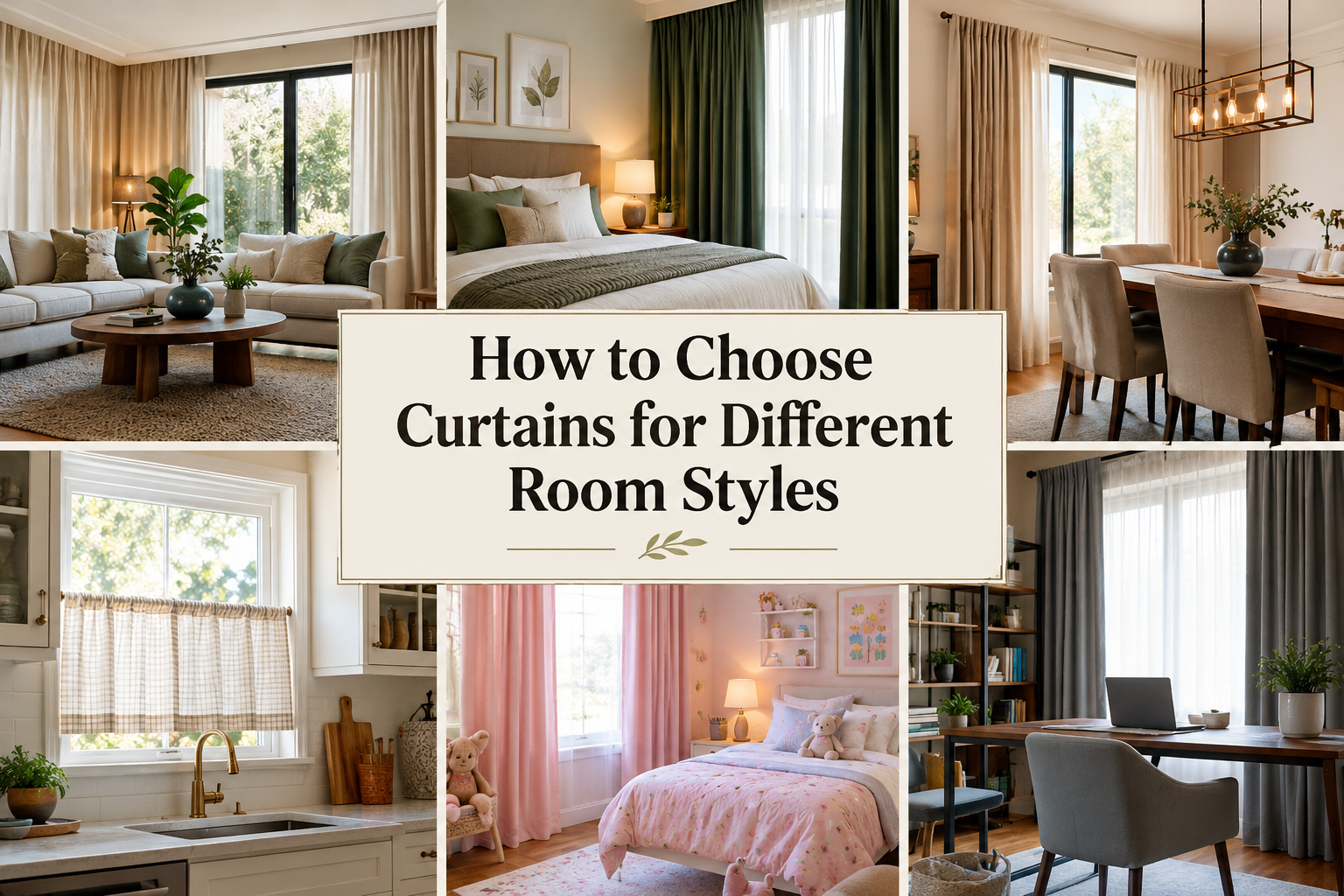
Curtains may look like a small part of a room, but they can completely change how a space feels. I have noticed that even a beautifully decorated room can feel unfinished when the curtains do not match the furniture, colors, lighting, or overall style. On the other hand, the right curtains can make an ordinary room look warm, balanced, and thoughtfully designed.
Choosing curtains is not only about finding a fabric or color that looks attractive. You also need to think about the purpose of the room, the amount of natural light, privacy, furniture style, wall color, and the mood you want to create.
Different rooms usually need different types of curtains. A formal living room may look better with elegant full length curtains, while a small modern bedroom may feel more comfortable with simple neutral panels. A kitchen needs practical window treatments that are easy to clean, while a child’s room often benefits from cheerful but functional curtains.
In this guide, I will explain how to choose curtains for different room styles in a simple and practical way.
Start by Understanding the Style of the Room
Before buying curtains, take a careful look at the room.
Notice the furniture, wall colors, flooring, lighting, and decorative items. Ask yourself whether the room feels modern, traditional, minimalist, rustic, luxurious, casual, or something in between.
Curtains should normally support the existing design instead of competing with it.
For example, if your room has clean furniture, plain walls, and very little decoration, heavily embroidered curtains may feel too formal. Similarly, extremely simple white curtains may look out of place in a luxurious traditional drawing room.
The goal is to create visual balance.
When the curtains match the character of the room, everything feels more connected.
How to Choose Curtains for a Modern Room
Modern interiors usually focus on clean lines, simple shapes, and uncluttered spaces.
For this type of room, I would usually choose curtains with a simple design.
Neutral colors such as white, cream, gray, beige, soft brown, and muted green work well in modern spaces. You can also use deeper colors such as charcoal, navy, or dark olive when you want a stronger visual effect.
Plain fabrics are often better than heavily patterned materials.
Linen, cotton blends, soft polyester, and smooth textured fabrics usually work very well.
Floor length curtains can make a modern room look more polished. The fabric should fall neatly without too many folds or decorative details.
Simple curtain rods in black, silver, white, or wood finishes can complete the look.
Avoid too many tassels, decorative borders, or heavy valances because they may make the room feel more traditional.
Curtains for a Minimalist Room
Minimalist rooms are even simpler than modern interiors.
The main idea is to keep only what is necessary and useful.
In a minimalist room, curtains should almost become part of the background.
Choose soft neutral shades such as white, off white, light gray, beige, or sand.
Sheer curtains are especially useful when privacy is not a major problem because they allow natural light to enter while keeping the room soft and airy.
If more privacy is needed, you can combine sheer curtains with plain blackout panels.
Try to avoid strong patterns.
Minimalist spaces usually look better when curtain colors are similar to the wall color.
This makes the room feel larger and calmer.
Ceiling mounted curtain tracks can also work beautifully because they create a clean appearance.
Curtains for a Traditional Living Room
Traditional living rooms often include classic furniture, carved wood, patterned rugs, formal seating, decorative lighting, and warmer colors.
Curtains can be more decorative in this type of room.
Fabrics such as velvet, jacquard, damask, silk blends, and thick cotton can create a richer appearance.
Deep shades such as burgundy, dark green, gold, cream, brown, navy, and warm beige usually suit traditional interiors.
Patterns can also work well, especially floral designs, classic motifs, and subtle geometric patterns.
Full length curtains are generally the best choice.
You can also use decorative curtain rods, tiebacks, or layered curtains if the room is large enough.
However, it is still important not to overload the space.
If the sofa, carpet, and wallpaper already have strong patterns, choose simpler curtains.
How to Choose Curtains for a Contemporary Room
Contemporary style changes with current design trends, but it usually combines simplicity with comfort.
Unlike strict minimalist interiors, contemporary rooms may include more texture, contrast, and decorative details.
For curtains, look for materials that appear modern but comfortable.
Soft linen, textured cotton, light velvet, and quality polyester can all work.
Neutral colors remain popular, but contemporary rooms can also handle stronger shades such as rust, forest green, mustard, navy, or muted blue.
One useful approach is to select curtains in a color that already appears somewhere else in the room.
For example, if the cushions have a soft green tone, you can choose curtains in a similar shade.
This creates connection without making everything identical.
Curtains for a Scandinavian Style Room
Scandinavian interiors are known for light colors, natural materials, simple furniture, and plenty of daylight.
Curtains should help maintain this bright and relaxed feeling.
White, ivory, soft beige, light gray, and pale natural tones are usually the safest options.
Lightweight linen and cotton curtains are especially suitable.
Sheer curtains also work very well because they allow daylight to spread throughout the room.
Avoid very heavy curtains unless you need them for privacy or temperature control.
If blackout curtains are necessary, choose a simple light colored design.
Natural wood curtain rods can complement Scandinavian furniture.
The overall result should feel comfortable, natural, and effortless.
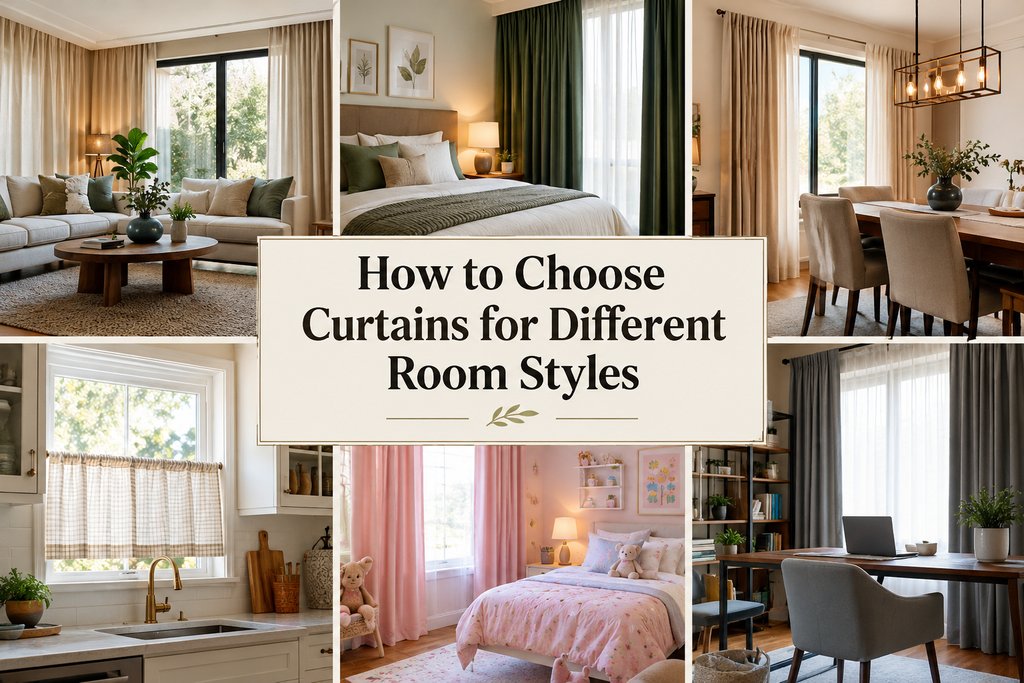
Curtains for a Rustic Room
Rustic rooms often use natural textures, wooden furniture, earthy colors, and handmade looking decorative pieces.
Curtains should feel relaxed rather than formal.
Cotton and linen are excellent choices.
You can also consider small checks, stripes, subtle floral patterns, or simple textured fabrics.
Good colors include cream, beige, brown, muted green, warm gray, terracotta, and soft mustard.
Avoid shiny fabrics because they may look too glamorous for a rustic room.
Wooden curtain rods work particularly well.
The curtains do not always need to touch the floor in a casual rustic space. Shorter curtains can sometimes work in kitchens or informal rooms.
Curtains for a Luxury Style Room
Luxury interiors often depend on rich materials, elegant furniture, dramatic lighting, and carefully selected details.
Curtains can become an important decorative feature in these rooms.
Velvet is one of the most popular options because it creates depth and softness.
Silk blends, heavy jacquard, and high quality textured fabrics can also work beautifully.
Colors such as deep navy, emerald green, champagne, warm gold, charcoal, cream, and rich brown are commonly used.
Full length curtains usually look best.
Some people allow the curtains to gently touch or slightly rest on the floor for a more luxurious appearance.
Layering sheer curtains behind heavier panels can make the room feel more sophisticated.
Make sure the curtain rod or track also looks appropriate. Small details become more noticeable in elegant rooms.
Curtains for a Bedroom
Bedrooms need both comfort and privacy.
For this reason, I usually prefer curtains that can block enough light for sleeping.
Blackout curtains are a practical choice, especially if the bedroom receives strong morning sunlight.
However, blackout curtains do not have to look heavy.
You can find them in simple modern fabrics and many colors.
Soft colors such as beige, cream, gray, dusty blue, sage green, and muted brown can help create a peaceful atmosphere.
If you like a softer look, combine sheer curtains with blackout panels.
During the day, you can open the heavy curtains and keep the sheers closed. This allows light into the room while still providing some privacy.
For a calm bedroom, avoid overly bright or aggressive colors unless they are part of the overall design.
Curtains for a Small Bedroom
Small bedrooms require careful choices because heavy curtains can sometimes make the room feel crowded.
Light colors usually work best.
Try white, cream, light gray, pale beige, or soft pastel shades.
Installing the curtain rod slightly above the window can make the ceiling appear higher.
You can also extend the rod slightly beyond the sides of the window. This allows the curtains to sit outside the glass when open, making the window look wider.
Choose lightweight fabrics where possible.
If blackout is required, select a simple blackout material without thick decorative layers.
Curtains for a Living Room
The living room is often one of the most visible areas of a home, so curtains deserve extra attention.
The right choice depends heavily on your furniture and overall decorating style.
For a relaxed living room, linen or cotton curtains can work well.
For a formal living room, velvet or jacquard may look more suitable.
If the living room is small, use lighter colors.
If it is large and receives plenty of sunlight, darker shades can create warmth and depth.
Sheer curtains are also very useful in living rooms because they soften harsh sunlight without completely blocking it.
Layering sheers with heavier panels gives you more control throughout the day.
Curtains for a Dining Room
Dining rooms can be casual or formal.
For everyday family dining areas, simple cotton, linen, or blended fabrics usually work well.
For formal dining rooms, you can choose slightly richer fabrics and deeper colors.
Consider how close the curtains are to the dining table.
Very long curtains can look beautiful, but they should not interfere with chairs or walking space.
Colors can be selected from the dining chairs, rug, artwork, or other decorative elements.
Warm shades such as beige, brown, olive, rust, and cream often make dining rooms feel welcoming.
Curtains for a Kitchen
Kitchen curtains need to be practical.
This area is exposed to cooking smells, moisture, heat, and sometimes grease.
For that reason, I would avoid very heavy fabrics.
Choose lightweight cotton, washable polyester, or easy care fabric blends.
Short curtains can be practical above kitchen counters or sinks.
Cafe curtains are another useful option. They cover the lower part of the window while allowing light through the upper section.
Keep curtains away from open flames and cooking surfaces.
Light colors can help a kitchen feel brighter and cleaner.
Small patterns may also work nicely in country style or traditional kitchens.
Curtains for a Child’s Room
Children’s rooms should feel cheerful, comfortable, and safe.
You can use brighter colors and playful patterns here.
However, I still prefer curtains that can grow with the child rather than very specific cartoon designs that may quickly become outdated.
Simple stars, clouds, geometric shapes, animals, or soft patterns can work well.
Blackout curtains can be especially helpful for younger children who sleep during the day.
Safety is also important.
Make sure curtain cords are secured or avoided where possible.
Curtain rods should be properly installed.
Choose easy to clean materials because children’s rooms often need more frequent cleaning.
Curtains for a Home Office
A home office needs good lighting without excessive glare.
If sunlight falls directly on your computer screen, sheer curtains or light filtering curtains can help.
Neutral colors usually work best because they create a professional and calm atmosphere.
Gray, cream, beige, soft green, and muted blue are good choices.
Avoid extremely busy patterns if you want the room to feel focused.
Blackout curtains may be useful when you need full control over light for video calls, photography, or presentations.
Match Curtains With Wall Colors
Curtains do not always need to match the wall color exactly.
In fact, a small amount of contrast can make the room more interesting.
If you have white walls, you can use almost any curtain color.
For beige walls, try cream, brown, olive, muted blue, or warm gray.
For gray walls, consider white, charcoal, navy, dusty pink, or soft green.
For darker walls, lighter curtains can create balance.
A useful rule is to choose curtains that are either slightly lighter or slightly darker than the wall color.
This usually creates a natural connection without making the room look too flat.
Think About Curtain Length
Curtain length has a strong effect on the appearance of a room.
Floor length curtains are usually the most versatile.
They make rooms feel taller and more elegant.
Curtains that stop just above the floor are practical and easy to maintain.
Curtains that slightly touch the floor can create a softer appearance.
Very long curtains that gather on the floor can look luxurious, but they may require more cleaning and maintenance.
Short curtains are generally better for kitchens, bathrooms, and certain casual spaces.
Choose the Right Fabric
Fabric affects both appearance and function.
Light fabrics allow more sunlight into the room.
Heavy fabrics provide more privacy and insulation.
Linen gives a natural and relaxed appearance.
Cotton is practical and versatile.
Velvet feels rich and luxurious.
Polyester is affordable and easy to maintain.
Sheer fabrics create softness and allow light to pass through.
Before choosing, think about how much light you want and how often you are willing to clean the curtains.
Consider Natural Light
The direction of sunlight matters.
Rooms with strong sunlight may benefit from thicker curtains or lined panels.
Sunlight can also fade certain fabrics over time.
Light colored curtains usually handle bright rooms better because they reflect more light.
If a room is naturally dark, avoid overly heavy or dark curtains unless you specifically want a dramatic atmosphere.
Sheer curtains can help darker rooms feel brighter.
Do Not Ignore Privacy
Privacy requirements are different in every room.
Street facing bedrooms and bathrooms generally need more privacy.
Living rooms on upper floors may need less coverage.
Sheer curtains provide daytime privacy in many situations, but they may become more transparent at night when interior lights are on.
Combining sheers with heavier curtains gives you flexibility.
Always check the curtain from both inside and outside when possible.
Use Patterns Carefully
Patterned curtains can add character, but too many patterns can make a room look busy.
If your furniture and carpet already contain strong designs, use plain curtains.
If the room is mostly neutral, patterned curtains can become an attractive feature.
Try to repeat at least one color from the room inside the curtain pattern.
This helps the design feel intentional.
Measure Windows Properly
Good curtains can still look wrong if the measurements are incorrect.
Measure both the width and height carefully.
Curtains should usually be wider than the actual window so they create proper folds when closed.
Many people also install the rod higher than the window frame.
This can make the room appear taller.
Extending the rod beyond the window edges can also make the window look wider.
Accurate measurement is one of the most important steps when choosing curtains.
Final Thoughts
Learning how to choose curtains for different room styles becomes much easier when you focus on the room as a whole.
Start with the style of the space. Then think about wall color, furniture, lighting, privacy, fabric, and practical needs.
Modern rooms usually look best with simple curtains. Traditional spaces can handle richer fabrics and patterns. Minimalist rooms benefit from neutral colors. Rustic interiors suit natural materials, while luxury rooms can use velvet and layered fabrics.
Bedrooms usually need privacy and light control, kitchens need easy care materials, and living rooms often benefit from flexible layered curtains.
There is no single curtain style that works in every home.
The best curtains are the ones that feel connected to the room, perform the job you need them to do, and make the space more comfortable.
When curtains are chosen carefully, they do more than cover a window. They improve light, privacy, proportion, color balance, and the overall atmosphere of the room.
That is why I believe curtains should never be treated as an afterthought. Even a simple change in curtain color, fabric, or length can make a room feel more complete and thoughtfully designed.
Frequently Asked Questions
What curtain color works with most room styles?
Neutral colors such as white, cream, beige, soft gray, and light brown can work with many interior styles. They are especially useful when you want a timeless look.
Should curtains match the sofa?
Curtains do not need to match the sofa exactly. It is usually better to choose a color that complements the sofa or repeats another shade already present in the room.
Should curtains be lighter or darker than walls?
Both options can work. Curtains that are slightly lighter create a softer effect, while darker curtains create more contrast and visual interest.
Are floor length curtains better?
Floor length curtains are suitable for most bedrooms, living rooms, and dining rooms because they make the room feel taller and more polished.
Are sheer curtains good for privacy?
Sheer curtains can provide some privacy during the daytime, but they may not provide enough privacy at night. Combining them with heavier curtains is often a better solution.
What curtains make a small room look bigger?
Light colored curtains, floor length panels, simple fabrics, and curtains installed above the window can help a small room appear taller and more open.
What is the best curtain fabric for a bedroom?
Cotton blends, linen, velvet, and blackout fabrics can all work depending on the style. Blackout lining is especially useful when you want better sleep and more privacy.
How do I choose curtains for a modern living room?
Choose simple floor length panels in neutral or muted colors. Avoid heavy decorative details and focus on clean lines, soft texture, and fabrics that complement the furniture.
SEO Keywords
How to choose curtains for different room styles, curtain ideas for living room, bedroom curtain ideas, modern curtain styles, curtains for home decor, best curtains for different rooms, curtain color ideas, how to choose curtain fabric, interior curtain ideas, curtains for modern rooms