
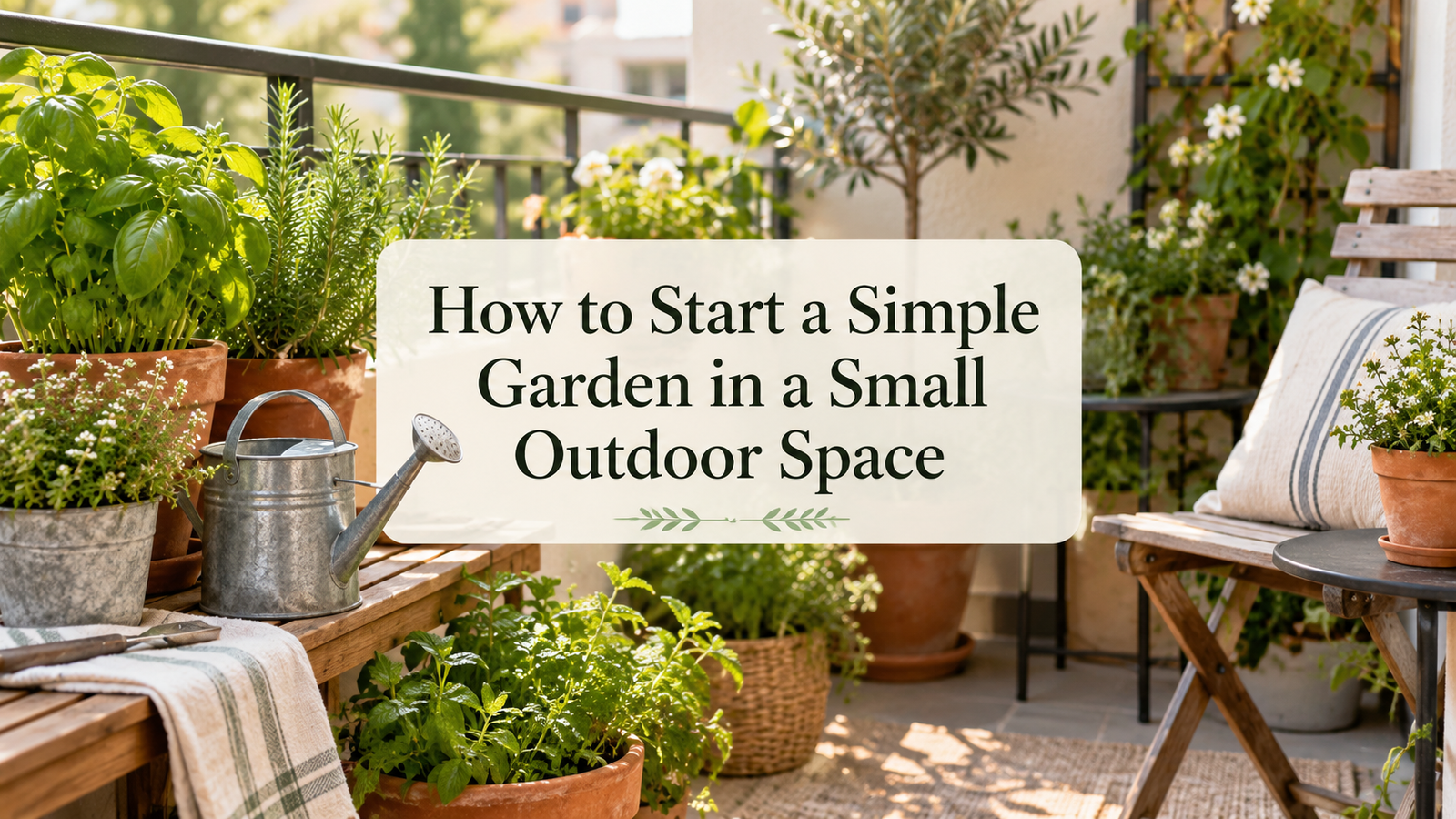
Starting a garden does not require a large backyard or a huge piece of land. A small balcony, patio, terrace, narrow yard, or even a sunny corner outside the house can become a useful and attractive garden. What matters most is planning the space carefully and choosing plants that suit the available sunlight, climate, and maintenance level.
Many beginners avoid gardening because they think they need a lot of space, expensive tools, or advanced knowledge. In reality, a simple garden can be started with a few containers, good soil, suitable plants, and a regular watering routine.
A small garden can provide fresh herbs, vegetables, flowers, and a relaxing place to spend time. It can also make an outdoor area look more welcoming and organized.
This guide explains how to start a simple garden in a small outdoor space using practical steps that are easy for beginners to follow.
Understand Your Available Garden Space
The first step is to carefully study the outdoor area you have.
Do not worry if the space looks too small. Even a few square feet can be useful when it is planned properly.
Look at the amount of sunlight the area receives during the day. Some plants need several hours of direct sunlight, while others can grow in partial shade.
Spend a day observing the area.
Notice where the sunlight appears in the morning, afternoon, and evening.
You should also check whether the area is exposed to strong wind, heavy rain, or excessive heat.
A balcony on a higher floor may receive more wind than a ground level patio. A space surrounded by walls may remain warmer than an open garden.
Understanding these conditions will help you choose plants that are more likely to grow successfully.
Start With a Small Number of Plants
One of the most common mistakes beginners make is buying too many plants at once.
A small garden is easier to manage when you begin with only a few plants.
You might start with three to six containers instead of filling the entire area.
This gives you time to understand watering, plant growth, sunlight, and soil conditions.
Once you become comfortable caring for these plants, you can slowly expand your garden.
Starting small also reduces the amount of money you need to spend in the beginning.
Gardening becomes more enjoyable when it feels manageable instead of becoming another difficult responsibility.
Choose Plants That Fit Small Spaces
Plant selection is very important when you are starting a garden in a small outdoor space.
Some plants spread quickly and require a lot of room. Others stay compact and grow very well in pots and containers.
Herbs are often a good choice for beginners.
You can grow mint, basil, coriander, parsley, rosemary, and thyme in relatively small containers.
Leafy vegetables such as lettuce and spinach can also be grown successfully in limited spaces.
Chilies, tomatoes, and some varieties of peppers can grow well in medium or large pots.
Flowers can also add color to a small garden. Choose compact flowering plants that match the sunlight conditions of your outdoor area.
Try to select plants based on the amount of space you actually have instead of choosing them only because they look attractive at a nursery.
Use Containers to Save Space
Container gardening is one of the easiest ways to create a garden in a small outdoor area.
Containers allow you to control where plants grow and make it easier to move them when necessary.
You do not always need expensive decorative pots.
Many types of containers can be used as long as they are clean, strong, and have proper drainage holes.
Different plants require different container sizes.
Small herbs can grow in smaller pots, while tomatoes and other larger plants need deeper containers.
Avoid placing large plants in very small pots because the roots may not have enough room to develop.
You should also make sure that water can drain easily from the bottom of every container.
Water that remains trapped around the roots may damage the plant.
Choose Good Quality Soil
Healthy soil is the foundation of a successful garden.
Gardeners sometimes make the mistake of filling pots with heavy soil taken directly from the ground.
This type of soil can become compact inside containers and may prevent proper drainage.
A good potting mix is usually better for container gardening.
It should allow water to drain while still holding enough moisture for the roots.
Organic matter such as compost can also improve soil quality.
Compost adds nutrients and helps create a healthier growing environment.
You do not need to use large amounts of fertilizer when starting a simple garden.
Good soil and proper plant care are usually more important than adding many different products.
Make the Best Use of Vertical Space
When floor space is limited, look upward.
Vertical gardening is an excellent way to grow more plants without making the outdoor area feel crowded.
Wall mounted pots, hanging baskets, shelves, and vertical plant stands can all help save space.
Climbing plants can also be trained to grow upward using supports.
This method is useful on balconies, terraces, and narrow patios.
Vertical gardening also adds visual interest because plants appear at different heights instead of sitting only on the ground.
However, make sure that shelves and hanging containers are secure.
Heavy pots should always be placed on strong surfaces where there is no risk of them falling.
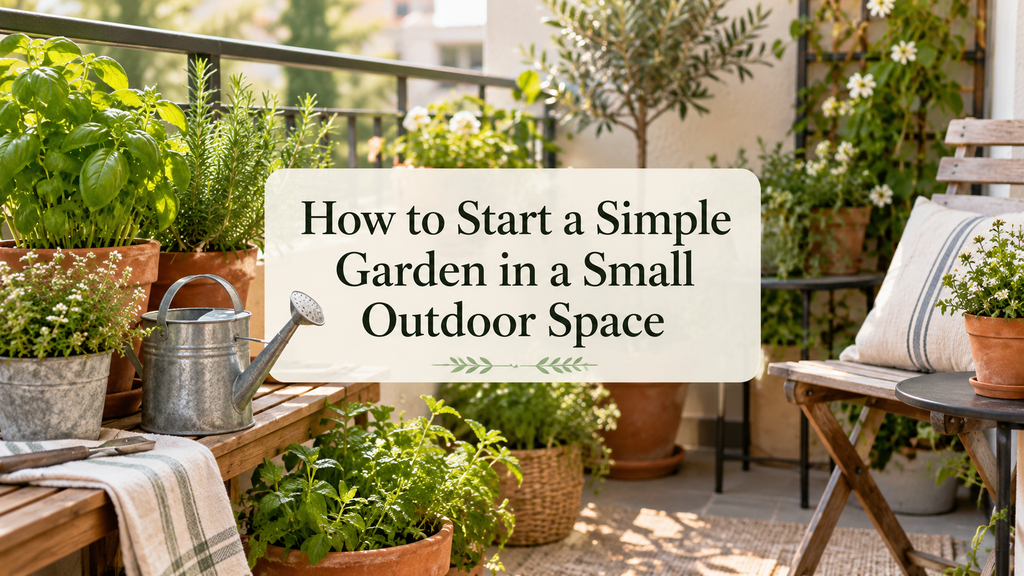
Create a Simple Watering Routine
Plants need regular water, but too much water can be just as harmful as too little.
Before watering, check whether the soil is becoming dry.
You can gently touch the top layer of soil with your finger.
If the soil still feels very wet, the plant may not need more water.
The amount of water a plant needs depends on the weather, container size, soil type, and plant variety.
Small pots usually dry faster than large containers.
Plants may also need more frequent watering during hot weather.
Morning is often a convenient time to water a small garden because plants can absorb moisture before the hottest part of the day.
Try to water the soil directly instead of pouring water unnecessarily over the leaves.
Arrange Plants According to Sunlight
Different plants have different sunlight requirements.
Some vegetables and flowering plants grow best with several hours of direct sun.
Other plants prefer partial shade.
Place sun loving plants in the brightest part of the garden.
Plants that prefer less light can be placed near walls, corners, or behind taller containers.
You may need to move pots during the first few weeks if you notice that a plant is not receiving suitable light.
One advantage of container gardening is that the layout can easily be changed.
This flexibility makes small gardens easier to manage.
Keep the Garden Layout Simple
A small garden can quickly look crowded if too many pots, decorations, and accessories are added.
Try to keep the layout clean and organized.
Group similar plants together when possible.
You might create one section for herbs, another for vegetables, and another for flowers.
Leave enough space to reach each plant easily.
If you have to move several pots every time you water one plant, the garden may become difficult to maintain.
A simple layout usually looks better and requires less effort.
Grow Herbs Near the Kitchen
If your outdoor space is close to the kitchen, herbs can be especially useful.
Fresh herbs can be harvested when needed for cooking.
Basil, mint, coriander, parsley, and rosemary are popular choices.
Growing herbs at home can also reduce waste because you can cut only the amount you need.
Herb plants are usually compact, making them suitable for small outdoor areas.
Place them where they are easy to reach.
A garden becomes more useful when you can include plants in your daily routine.
Learn the Basics of Plant Feeding
Plants eventually use nutrients from the soil.
Container plants may need occasional feeding because nutrients can gradually wash out during watering.
You can use compost or a suitable plant fertilizer according to the needs of the plant.
Avoid using too much fertilizer.
More fertilizer does not always mean faster or healthier growth.
Too much can damage plant roots.
Follow the recommended amount and observe how your plants respond.
Healthy leaves, steady growth, and good flowering are usually signs that a plant is receiving suitable care.
Watch for Pests Regularly
Small gardens can still attract insects and other pests.
Check your plants regularly.
Look underneath leaves and around new growth.
If you notice damaged leaves, unusual spots, or insects, try to identify the cause early.
Minor problems are easier to manage before they spread to other plants.
Keeping the garden clean can also help.
Remove dead leaves and damaged plant material instead of allowing it to collect inside containers.
Avoid using strong pest control products unless they are truly necessary.
Simple garden maintenance often prevents many common problems.
Use Companion Planting Carefully
Companion planting means growing certain plants close together because they may have similar needs or offer practical benefits.
For example, herbs and vegetables can sometimes be grown together in larger containers.
However, do not assume that every plant combination will work.
Plants sharing the same pot should have similar requirements for sunlight, water, and soil.
A plant that prefers dry soil may not grow well beside one that needs frequent watering.
The main goal should always be to provide each plant with the conditions it requires.
Protect Plants From Extreme Weather
Small outdoor gardens can be affected by strong heat, heavy rain, and wind.
Containers can dry out quickly during very hot weather.
You may need to move sensitive plants into partial shade during extreme temperatures.
During storms, lightweight pots may need protection from strong wind.
Heavy rain can also cause water to collect in containers if the drainage holes are blocked.
Check your garden after difficult weather conditions.
A few simple adjustments can protect plants from unnecessary damage.
Reuse Items When Possible
Gardening does not need to become an expensive hobby.
You can reuse suitable household items as plant containers or garden organizers.
Old buckets, wooden boxes, and certain storage containers may be useful after proper cleaning and drainage preparation.
Shelves can also be reused to create vertical growing areas.
The important point is to make sure reused items are safe for plants and strong enough to hold soil and water.
Reusing materials can reduce costs while giving the garden a more personal appearance.
Keep a Simple Gardening Record
You do not need a complicated gardening journal.
A small notebook can be enough.
Write down what you planted, when you planted it, and where you placed it.
You can also record which plants grew well and which ones struggled.
Over time, these notes become very useful.
You may discover that one corner receives better sunlight or that a particular herb grows better during a certain season.
Gardening improves through observation.
Keeping basic records helps you learn from experience instead of repeating the same mistakes.
Add New Plants Slowly
Once your first plants are growing successfully, you may want to expand your garden.
Add new plants gradually.
This gives you time to adjust the layout and understand how much maintenance you can comfortably manage.
You may also discover which plants you enjoy growing the most.
Some people enjoy herbs because they can use them in cooking.
Others prefer vegetables or flowering plants.
There is no requirement for every small garden to contain the same things.
Your garden should reflect your available space, needs, and interests.
Make the Garden Comfortable to Use
A garden should not only contain plants. It should also be a place you enjoy visiting.
If space allows, add a small chair or stool.
Keep walking areas clear.
Arrange the containers so that watering and maintenance remain easy.
A small outdoor garden can become a quiet place to have tea, read, or simply spend a few minutes outside.
Even simple greenery can make a balcony or patio feel more peaceful.
Do Not Expect Perfect Results
Gardening involves learning through experience.
Some seeds may not grow.
A plant may struggle because of unexpected weather.
You might place a container in the wrong location at first.
These situations are normal.
Instead of seeing them as failures, use them to understand your garden better.
Every growing season teaches you something new about soil, sunlight, water, and plant care.
The goal is not to create a perfect garden immediately.
The goal is to create a healthy and enjoyable outdoor space that improves gradually.
Keep Maintenance Regular and Simple
A small garden usually does not require hours of daily work.
A few minutes of regular care can often keep it healthy.
Check the soil.
Water when necessary.
Remove dead leaves.
Look for pests.
Trim plants when they become too large.
Regular small tasks are easier than allowing problems to build up and dealing with them later.
Try to make gardening part of your weekly routine.
Final Thoughts
Learning how to start a simple garden in a small outdoor space is mainly about using what you already have wisely.
You do not need a large backyard, expensive equipment, or advanced gardening knowledge.
Start by understanding your available sunlight and space. Choose a few suitable plants. Use containers with good drainage. Fill them with healthy soil and develop a simple watering routine.
As your experience grows, you can gradually add more plants, experiment with vertical gardening, and improve the layout.
A small garden can provide fresh herbs, vegetables, flowers, and a pleasant outdoor environment.
The most important thing is to begin with a manageable plan and allow the garden to develop naturally over time.
With patience, observation, and consistent care, even a very small outdoor space can become a productive and enjoyable garden.