
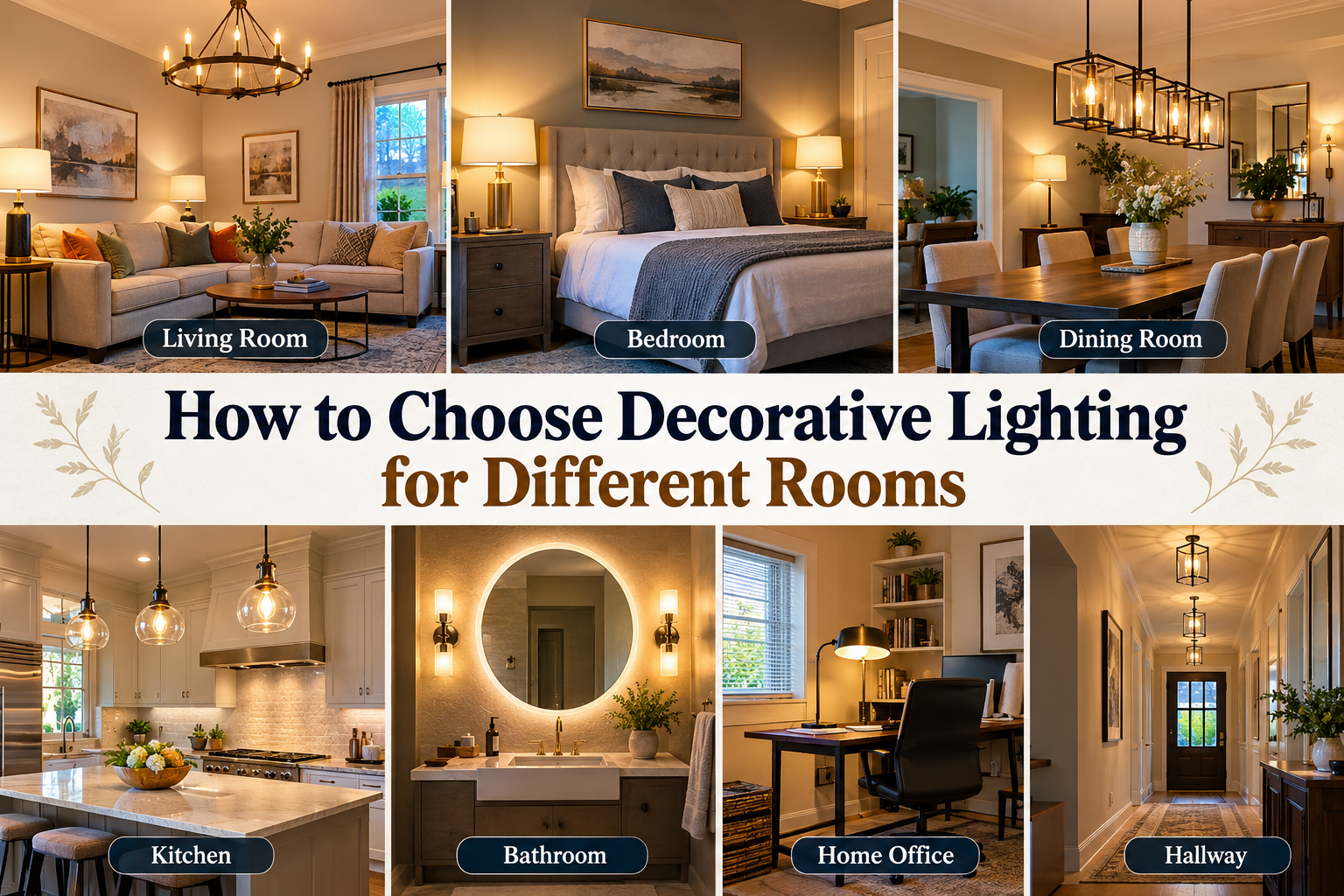
Lighting can completely change the way a room looks and feels. A beautifully decorated room may still feel dull if the lighting is poor, while a simple room can become warm, elegant, and welcoming with the right lights. This is why decorative lighting deserves the same attention as furniture, wall colors, curtains, and other design elements.
When I started learning more about home decoration, I realized that choosing lighting is not only about brightness. Every room has a different purpose, and the lighting should support that purpose. A living room needs comfortable and flexible lighting. A bedroom should feel calm and relaxing. A kitchen needs brighter and more practical light. A dining room benefits from warm lighting that creates a pleasant atmosphere.
The best approach is to understand the function of each space first and then select decorative lights that improve both appearance and comfort.
Understand the Purpose of Decorative Lighting
Decorative lighting is designed to do more than simply light up a room. It also adds style, character, and visual interest.
A chandelier above a dining table can become the main attraction of the room. A pair of stylish bedside lamps can make a bedroom feel balanced and comfortable. Wall lights can highlight artwork or architectural details. Pendant lights can add personality to a kitchen or hallway.
Before buying any light fixture, think about what you want it to achieve.
Ask yourself whether the light is mainly needed for brightness, decoration, reading, working, relaxing, or highlighting a particular feature.
Once you understand the purpose, choosing the correct type becomes much easier.
Use Layers of Lighting
One of the most useful ideas I learned about interior lighting is the importance of layering.
Instead of depending on a single light source, a well designed room usually combines different types of lighting.
The first layer is general lighting. This provides the basic brightness needed to move comfortably around the room.
The second layer is task lighting. It provides focused light for activities such as reading, cooking, studying, or applying makeup.
The third layer is accent lighting. This is used to highlight artwork, shelves, plants, textures, or other decorative features.
Decorative fixtures can be used in all three layers.
For example, a stylish ceiling fixture can provide general lighting, a beautiful table lamp can provide task lighting, and small wall lights can create accent lighting.
Combining these layers creates a more comfortable and attractive environment.
Choosing Decorative Lighting for the Living Room
The living room is usually one of the most flexible spaces in a home. It may be used for family conversations, watching television, reading, relaxing, entertaining visitors, or spending quiet evenings.
Because of this, living room lighting should be flexible.
A central ceiling light is useful for general brightness, but it should not be the only light source.
A chandelier can work beautifully in a large living room, especially when the ceiling is high. In a smaller room, a flush ceiling light or compact decorative fixture may be more suitable.
Floor lamps are excellent for filling dark corners. They can also add height and shape to the room.
Table lamps placed on side tables create a softer and more relaxing atmosphere in the evening.
Wall lights can be used to highlight paintings, textured walls, or decorative panels.
Warm white lighting usually works well in living rooms because it makes the space feel comfortable and welcoming.
The decorative style of the fixtures should also match the furniture. Modern furniture may look better with simple metal or glass fixtures, while traditional furniture may suit fabric lampshades, classic chandeliers, or warm brass finishes.
Avoid Excessive Brightness in the Living Room
A common mistake is making the living room too bright.
Strong white light can sometimes make a comfortable room feel more like an office.
Instead, use several softer light sources around the room.
This allows you to adjust the atmosphere according to the activity. You may use brighter lighting when guests arrive and softer lighting when watching television or relaxing at night.
Dimmer switches can also be very useful in the living room.
Choosing Decorative Lighting for the Bedroom
Bedroom lighting should create a peaceful environment.
The main goal is comfort rather than maximum brightness.
A simple decorative ceiling fixture can provide general lighting, but bedside lamps are often more important for daily use.
Bedside lamps should be positioned so that they provide enough light for reading without creating glare.
Matching lamps on both sides of the bed can create visual balance. However, they do not always need to be identical. Two lamps with similar height, color, or style can still look coordinated.
Wall mounted bedside lights are another good option, especially in small bedrooms where bedside tables have limited space.
Pendant lights hanging beside the bed can create a modern and elegant appearance.
Warm white light is usually the best choice for bedrooms because it supports a calm and relaxing atmosphere.
Very bright cool lighting may feel uncomfortable before sleeping.
Think About Lamp Size
The size of a bedside lamp should match the furniture around it.
A tiny lamp may look lost beside a large bed and wide bedside table. On the other hand, an oversized lamp can make a small bedroom feel crowded.
Try to create visual balance between the bed, bedside table, lamp, and headboard.
This small design detail can make the room look much more carefully planned.
Choosing Decorative Lighting for the Dining Room
The dining room is one of the best places to use decorative lighting as a design feature.
The light fixture above the dining table naturally attracts attention, so it can become a strong decorative element.
Chandeliers are a popular choice for traditional or luxurious dining areas.
Pendant lights work well in modern interiors.
Linear fixtures are especially suitable for long rectangular dining tables.
The shape of the light should generally relate to the shape of the table.
A round pendant or chandelier often works well above a round table. A long fixture or group of pendants may suit a rectangular table better.
The light should be positioned low enough to create intimacy but high enough that people can see across the table comfortably.
Warm lighting is usually ideal because it makes meals feel more inviting.
Keep the Dining Table as the Main Focus
The decorative fixture should visually connect with the table rather than the entire room.
This helps create a clear focal point.
If the fixture is too small, it may look insignificant. If it is too large, it may dominate the room.
The best result usually comes from choosing a fixture that feels proportional to both the dining table and the surrounding space.
Choosing Decorative Lighting for the Kitchen
Kitchen lighting needs to be practical because cooking requires clear visibility.
However, practical lighting does not mean the kitchen has to look boring.
Decorative pendant lights above an island or breakfast counter can add personality while still providing useful light.
Under cabinet lighting is helpful for preparing food because it reduces shadows on work surfaces.
Ceiling lights can provide general illumination throughout the room.
Pendant lights should be positioned carefully so they do not block views across the kitchen.
The fixtures should also be easy to clean because kitchens can collect grease, steam, and dust.
Glass, metal, and other smooth materials are often easier to maintain than highly detailed fabric fixtures.
For food preparation areas, a neutral or slightly brighter light can make it easier to see colors and ingredients clearly.
Warmer decorative lighting can still be used over eating areas or kitchen islands.
Choosing Decorative Lighting for the Bathroom
Bathroom lighting requires careful planning because both safety and visibility are important.
Lighting around the mirror is especially important.
If light comes only from above, it can create shadows on the face.
Wall lights placed on both sides of the mirror can provide more even illumination.
A decorative ceiling fixture can provide general lighting, while additional lights may be used around the vanity or shower area.
Moisture resistance is very important when selecting bathroom fixtures.
Not every decorative light is suitable for wet or humid areas.
Always choose fixtures designed for the bathroom location where they will be installed.
Soft warm lighting can make the bathroom feel relaxing, while brighter neutral lighting around the mirror can be useful for grooming.
Choosing Decorative Lighting for a Home Office
A home office needs enough light to support concentration and reduce eye strain.
General ceiling lighting is useful, but a desk lamp is usually essential.
A decorative desk lamp can become part of the room’s overall style.
Adjustable lamps are especially practical because you can direct the light toward documents, books, or your keyboard.
Avoid placing extremely bright lights directly behind or in front of the computer screen because they may create glare.
Natural light should also be used whenever possible.
A home office can still feel warm and stylish by adding a floor lamp or small decorative table lamp away from the main working area.
This creates a softer atmosphere when you are not doing detailed work.
Choosing Decorative Lighting for Hallways
Hallways are often ignored when planning lighting, but good lighting can make them feel much more interesting.
Wall lights are particularly useful in narrow hallways because they add decoration without using floor space.
Small pendant lights can work in hallways with higher ceilings.
Recessed lights can provide practical illumination, while decorative fixtures add personality.
If artwork or family photographs are displayed along the hallway, small directional lights can highlight them.
Warm light usually creates a welcoming transition between rooms.
Choosing Decorative Lighting for Entryways
The entrance creates the first impression of a home.
A decorative light fixture can immediately make the area feel more welcoming.
A small chandelier or pendant light may work well in an entry hall.
In smaller entrances, a stylish flush ceiling fixture can provide the same decorative effect without taking up too much space.
Wall lights can also help create symmetry around a console table or mirror.
The scale of the fixture should match the entrance.
A very large chandelier in a tiny entryway may feel overwhelming, while a very small fixture can disappear in a spacious entrance.
Choosing Decorative Lighting for Children’s Rooms
Lighting in children’s rooms should be practical, safe, and cheerful.
A ceiling light can provide general brightness for playing and cleaning.
A desk lamp may be needed for homework or drawing.
A bedside light can provide softer illumination before sleep.
Decorative lighting can also make the room more playful.
Simple shapes, interesting shades, or colorful fixtures can add personality without making the room feel cluttered.
Avoid placing fragile lamps where they can easily be knocked over.
Wall mounted or ceiling mounted fixtures may be safer in rooms used by younger children.
Warm lighting can create a comfortable evening environment, while brighter lighting may be useful for study areas.
Choosing Lighting for Small Rooms
Lighting can make a small room feel more open.
Large heavy fixtures may visually reduce the space, so compact designs are usually better.
Wall lights are particularly useful because they do not use valuable floor or table space.
Slim floor lamps can fit into corners without making the room feel crowded.
Mirrors can also help reflect light around the room.
If possible, choose fixtures with simple shapes and light materials.
Glass shades can feel visually lighter than solid fixtures.
Several small light sources can often make a small room feel more spacious than one strong ceiling light.
Choosing Lighting for Large Rooms
Large rooms usually need more than one decorative fixture.
A single ceiling light may leave some areas too dark.
Use a combination of chandeliers, floor lamps, table lamps, wall lights, and accent lighting.
Different lighting zones can also help define areas within an open plan room.
For example, a pendant light may define the dining area while floor lamps create a comfortable seating area nearby.
This approach makes large spaces feel more organized and intimate.
Match Lighting With Interior Style
Decorative lighting should feel connected to the overall design of the room.
For modern interiors, simple geometric fixtures often work well.
Metal, clear glass, black finishes, and clean shapes are common choices.
Traditional interiors may suit chandeliers, fabric shades, brass finishes, and more detailed designs.
Scandinavian interiors often use simple shapes, soft colors, and natural materials.
Industrial interiors may include exposed bulbs, dark metal, or factory inspired fixtures.
Rustic interiors can use wood, woven materials, iron, or warm finishes.
You do not need to match every fixture perfectly. In fact, using slightly different styles can make a home feel more natural.
The important thing is that the fixtures share some visual connection through color, material, shape, or proportion.
Choose the Right Light Temperature
Color temperature has a major effect on atmosphere.
Warm white light creates a soft and comfortable appearance. It is usually suitable for bedrooms, living rooms, and dining areas.
Neutral white light gives a cleaner and more balanced appearance. It can work well in kitchens, bathrooms, and workspaces.
Cooler light may provide strong visibility but can sometimes feel too harsh for relaxing spaces.
The best choice depends on the purpose of the room.
Try to keep similar color temperatures within the same space so the lighting feels consistent.
Pay Attention to Fixture Height
The height of decorative lighting affects both appearance and comfort.
Pendant lights should not hang so low that people walk into them or feel visually blocked.
Fixtures above tables can hang lower because nobody needs to walk underneath them.
In rooms with high ceilings, larger fixtures can help fill the vertical space.
In rooms with low ceilings, flush or semi flush fixtures are usually more practical.
Correct positioning often makes even an affordable light fixture look more expensive.
Consider the Size of the Fixture
Scale is one of the most important parts of decorative lighting.
A fixture should relate to the size of the room and nearby furniture.
Large rooms can usually handle larger chandeliers or statement pendants.
Smaller rooms often look better with simpler fixtures.
When choosing a fixture for a dining table, kitchen island, or bedside area, compare its size with the furniture underneath it.
A balanced relationship between the fixture and furniture makes the design look intentional.
Use Dimmers When Possible
Dimmers give you much more control over the atmosphere of a room.
The same fixture can provide brighter light during cleaning or working and softer light during relaxation.
They are especially useful in living rooms, bedrooms, and dining rooms.
Instead of installing many different lights for every situation, dimmers allow one lighting system to support several moods.
Make sure the bulbs and fixtures are compatible with dimming controls.
Think About Energy Efficiency
Decorative lighting can be beautiful without using excessive electricity.
LED bulbs are widely used because they consume less energy and usually last much longer than traditional incandescent bulbs.
They are available in many brightness levels and color temperatures.
Some decorative fixtures now include built in LED lighting.
When buying these fixtures, check whether the light source can be replaced if it eventually stops working.
Energy efficient lighting can reduce electricity use while still creating an attractive interior.
Avoid Common Decorative Lighting Mistakes
One common mistake is using only a central ceiling light.
This usually creates uneven lighting and can make a room feel flat.
Another mistake is choosing fixtures based only on appearance without considering brightness or function.
A beautiful lamp is not very useful if it does not provide enough light for the activity taking place nearby.
Using too many different fixture styles can also make the home feel uncoordinated.
Ignoring scale is another problem.
A very small chandelier in a large room can look awkward, while a huge pendant in a small space can become overwhelming.
Finally, do not forget about shadows and glare.
Light should make the room more comfortable, not create visual discomfort.
Let Natural Light Guide Your Choices
Before adding artificial lighting, observe how natural light enters the room during the day.
Rooms with large windows may need less artificial lighting during daytime hours.
Rooms with limited natural light may need more general and accent lighting.
The direction of sunlight also matters.
A bright room may benefit from softer decorative lighting in the evening, while a darker room may need stronger general illumination.
Combining natural light and artificial light thoughtfully creates a more balanced environment.
Keep the Design Personal
There are many lighting trends, but decorative lighting should still reflect your personal taste.
A home feels more comfortable when the design choices have some connection to the people living there.
You may prefer simple lamps with neutral shades, bold pendant lights, classic chandeliers, handmade fixtures, or modern sculptural designs.
There is no need to follow every trend.
Choose fixtures that you genuinely enjoy looking at and that suit the way you use your home.
Final Thoughts
Learning how to choose decorative lighting for different rooms is mainly about finding the right balance between beauty and function.
Every room has a different purpose, so every room needs a slightly different lighting approach.
Living rooms benefit from layered and flexible lighting. Bedrooms need soft and relaxing light. Kitchens require practical illumination combined with decorative fixtures. Dining rooms provide an excellent opportunity for statement lighting. Bathrooms need safe and well positioned lights, while home offices require comfortable task lighting.
The most successful lighting plans usually combine general lighting, task lighting, and accent lighting instead of relying on a single fixture.
It is also important to think about fixture size, hanging height, color temperature, energy efficiency, and the overall design style of the room.
Decorative lighting does not need to be expensive or complicated. Even a simple lamp can transform a space when it is placed carefully.
By choosing lights according to the function, size, and atmosphere of each room, you can create a home that feels brighter, more comfortable, and more thoughtfully designed.