
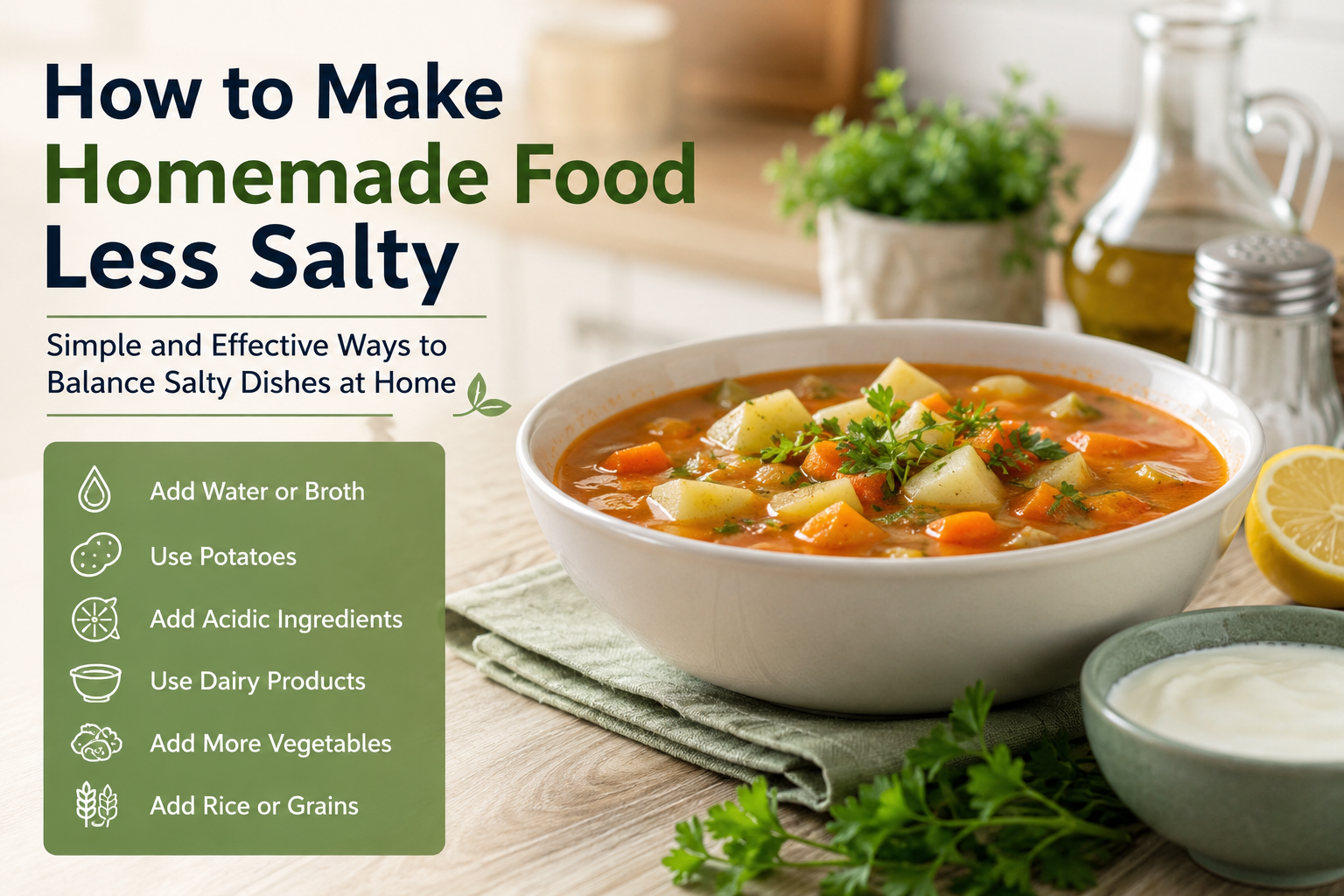
When I cook at home, I always try to make food flavorful without using too much salt. Sometimes, however, a dish can become saltier than expected. This can happen when I add a little extra salt, use salty ingredients, or simply lose track while cooking. The good thing is that overly salty food does not always need to be thrown away. There are several simple ways to balance the flavor and make homemade food taste much better.
In my experience, the best approach is to stay calm and adjust the dish slowly. Adding too many ingredients at once can change the taste completely. I prefer to make small changes, taste the food, and then decide what it needs. In this article, I will share some practical methods that I use to make homemade food less salty while keeping its natural flavor.
Add More Unsalted Ingredients
One of the easiest ways to reduce saltiness is to increase the amount of other ingredients in the dish. When the salty flavor is spread across a larger quantity of food, the overall taste becomes milder.
For example, if I make a vegetable curry and accidentally add too much salt, I may add more unsalted vegetables. Potatoes, carrots, peas, spinach, tomatoes, and other vegetables can increase the volume of the dish without adding more salt.
This method works especially well for curries, soups, stews, sauces, and cooked vegetables. The important thing is to use ingredients that naturally fit the recipe. I would not add random ingredients simply to reduce salt because that can make the dish taste unbalanced.
Add Water or Unsalted Liquid
Adding a little water can help dilute excess salt in soups, gravies, and sauces. I usually add a small amount first and allow the food to simmer before tasting it again.
If the dish becomes too thin, I can let it cook uncovered for a few minutes or add other suitable ingredients to improve the texture. For some recipes, unsalted vegetable stock or homemade broth can also work.
It is important to remember that packaged stocks and ready made broths can contain a surprising amount of salt. When I am trying to fix salty food, I prefer an unsalted liquid whenever possible.
Use Potatoes Carefully
Potatoes are often suggested as a solution for salty food. While adding potatoes can increase the amount of food and help balance the overall flavor, I do not depend on potatoes as a magic ingredient that simply removes salt.
If I have a salty curry or stew, adding chopped potatoes can be useful because the potatoes become part of the meal and increase the total quantity. They can also absorb some of the surrounding liquid.
I usually cook the potatoes until they are tender and then taste the dish again. This method works best when potatoes already fit naturally into the recipe.
Add More Vegetables
Vegetables are another practical way to balance salty homemade food. Fresh vegetables contain natural flavors and water, which can help make a salty dish taste less intense.
For a salty soup, I might add carrots, cabbage, zucchini, spinach, beans, or other vegetables that match the recipe. For a curry, I can increase the amount of onions, tomatoes, potatoes, peas, or other suitable ingredients.
Adding vegetables also improves the nutritional value of many homemade meals. For me, this is one of the most useful solutions because I am not simply trying to hide the salt. I am also making the meal more filling and varied.
Add Rice or Other Grains
Rice can be especially helpful when dealing with salty sauces, curries, and stews. If the sauce is too salty, serving it with a larger portion of plain unsalted rice can make the complete meal taste more balanced.
For some dishes, I can also add cooked rice directly into the food. Other grains such as plain quinoa or couscous may work depending on the recipe.
The key is to keep the added grain unsalted. If I add salted rice to already salty food, the problem can become worse.
Use Dairy Products
Dairy products can sometimes soften the sharp taste of salty foods. Depending on the recipe, plain yogurt, milk, cream, or another suitable dairy ingredient can create a smoother flavor.
For example, plain yogurt can work well in some curries and sauces. A small amount of cream can make certain soups or creamy dishes taste more balanced.
I always consider the original recipe before using dairy. Not every dish needs it, and adding dairy to a recipe where it does not belong can change the flavor and texture.
Add a Little Acid
Sometimes a salty dish does not actually need more ingredients. It simply needs better flavor balance. A small amount of lemon juice or vinegar can add acidity and make the salty taste feel less dominant.
I usually start with a very small amount because acidic ingredients can become strong quickly. After adding them, I mix the food well and taste it again.
Lemon juice works particularly well in many soups, vegetables, sauces, and savory dishes. Vinegar may work better in certain sauces and cooked vegetables.
The goal is not to make the food sour. The goal is to create a better balance between salty, sour, sweet, and savory flavors.
Add Unsalted Sweet Ingredients
A small amount of sweetness can sometimes help balance salty food. Depending on the recipe, I might use a little sugar, honey, or naturally sweet vegetables such as carrots.
This method should be used carefully. Adding too much sugar can create a completely different problem. I prefer to add a tiny amount, mix it well, and taste the food before deciding whether it needs more.
This approach can be useful for tomato sauces, certain curries, soups, and savory sauces where a slight sweetness already fits the flavor profile.
Increase the Main Recipe Ingredients
If I realize early that I have added too much salt, I often increase the main ingredients instead of trying to remove the salt.
For example, if I am making a large pot of soup, I can add more vegetables, water, beans, noodles, or other ingredients that belong in the recipe. If I am making a curry, I can increase the amount of vegetables, tomatoes, onions, or unsalted sauce.
This method is simple because it keeps the original character of the meal. It also gives me more food, which can be useful if I am cooking for a family.
Avoid Adding More Salty Ingredients
When fixing salty food, I pay close attention to ingredients that already contain salt. Soy sauce, cheese, pickles, canned foods, packaged sauces, salted butter, stock cubes, and processed meats can all contribute to the final salt level.
If my dish is already too salty, I avoid adding these ingredients unless I have checked their salt content and know that they are necessary.
Choosing fresh ingredients can make it easier to control the amount of salt in homemade meals.
Taste Food During Cooking
One habit that has helped me the most is tasting food while I cook. I do not wait until the very end to discover that something is too salty.
I taste the dish after adding important seasonings and ingredients. This gives me a chance to make small adjustments before the flavor becomes difficult to control.
I also try to remember that flavors can become stronger as liquid evaporates. A dish that tastes perfectly seasoned at the beginning may become saltier after a long cooking time.
Prevent Food From Becoming Too Salty
The easiest way to fix salty food is to prevent the problem in the first place. I prefer adding salt gradually instead of putting a large amount into the pot at once.
Measuring salt can also help, especially when following a new recipe. Once I become familiar with a dish, I can adjust the amount according to my taste.
I also check packaged ingredients before adding extra salt. Sometimes canned vegetables, sauces, cheese, or broths already provide enough seasoning.
Another useful habit is to use herbs and spices for flavor. Garlic, ginger, black pepper, cumin, coriander, paprika, basil, parsley, oregano, and other seasonings can make food interesting without depending entirely on salt.
Final Thoughts
Learning how to make homemade food less salty is mostly about balance. In my experience, there is no single solution that works for every dish. The best method depends on what I am cooking and how much salt was added.
Adding unsalted ingredients, increasing vegetables, using plain rice, adding water, choosing suitable dairy products, or using a small amount of lemon juice can all help. The most important thing is to make changes slowly and taste the food after every adjustment.
I also believe that preventing excessive salt is easier than fixing it later. By adding salt gradually, tasting food during cooking, and paying attention to salty packaged ingredients, I can create meals that are flavorful and enjoyable.
Homemade food does not need a large amount of salt to taste good. With fresh ingredients, herbs, spices, and a little patience, it is possible to prepare delicious meals with a more balanced flavor. Once you learn these simple techniques, an accidentally salty dish becomes much easier to rescue, and there is usually no reason to waste perfectly good homemade food.