
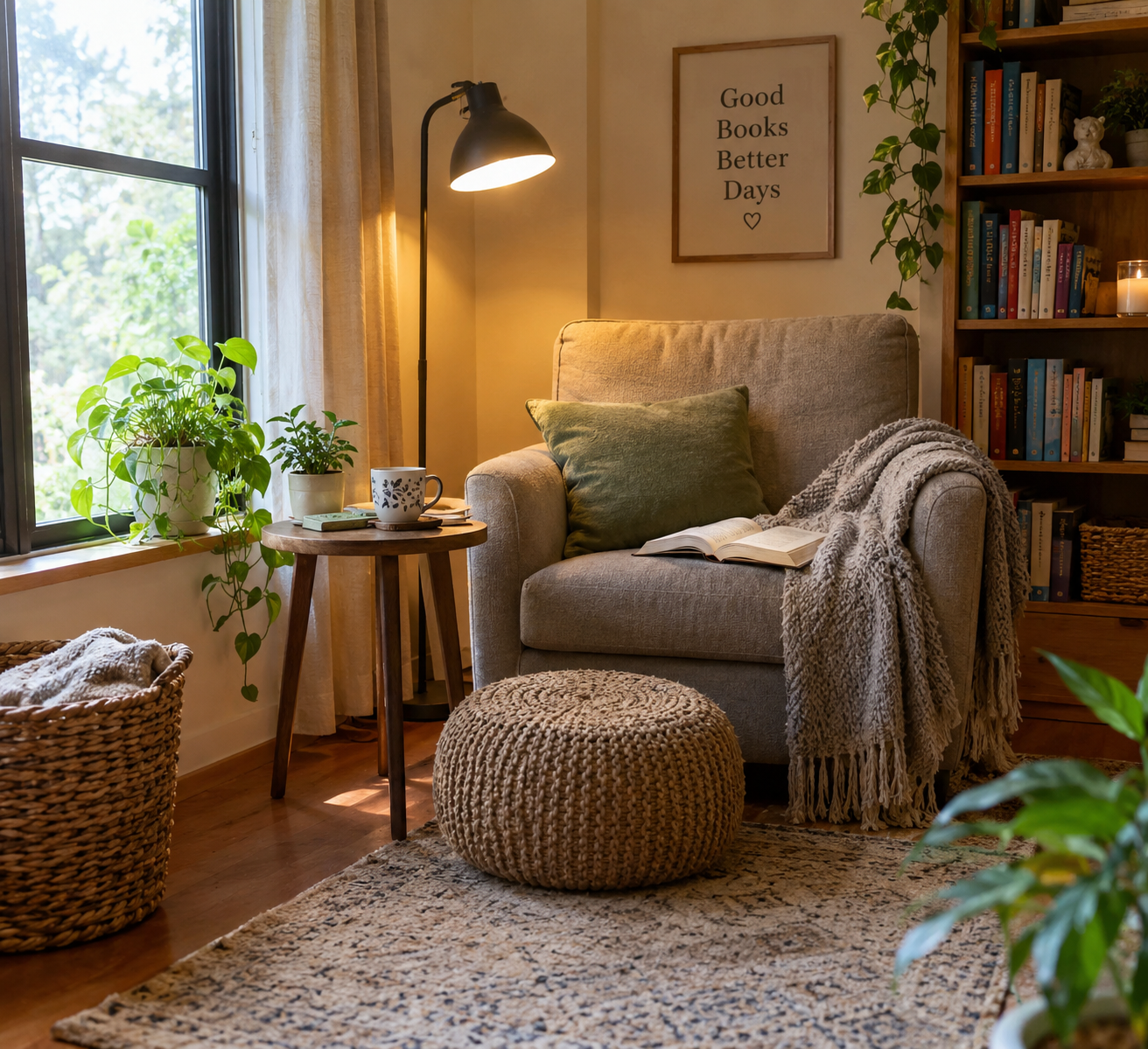
A comfortable reading corner can completely change the way you enjoy books at home. You do not need a large room, expensive furniture, or a complete home renovation to create one. Even a small unused corner can become a peaceful reading space if it is arranged carefully.
I have always felt that reading becomes more enjoyable when the surroundings are quiet, comfortable, and welcoming. A good reading corner gives you a place where you can slow down, leave distractions behind, and spend some peaceful time with a book. It can also make your home feel warmer and more personal.
When I started learning more about home decoration and reading spaces, I realized that the best reading corners are not always the most luxurious ones. The most important things are comfort, lighting, organization, and atmosphere.
In this article, I will explain how to create a comfortable reading corner at home using simple and practical ideas.
Choose the Right Location
The first step in creating a reading corner is choosing the right location.
You do not need an entire room. A corner of the bedroom, living room, hallway, home office, or even a space near a window can work very well.
I think the best location is somewhere that feels naturally calm. Try to avoid places with constant movement, loud television sounds, or frequent interruptions.
A corner near a window can be especially pleasant because natural light makes the space feel brighter and more relaxing. However, even a darker corner can become comfortable with the right lamp.
Look around your home carefully. You may notice an empty corner that you have never really used before. That space might be perfect for your reading area.
Start With a Comfortable Chair
The chair is probably the most important part of a reading corner.
If the chair is uncomfortable, you will not want to spend much time there, no matter how attractive the rest of the space looks.
Choose a chair that supports your back properly and allows you to sit comfortably for longer periods. An armchair is a popular choice because it provides support for the arms and shoulders.
You can also use a lounge chair, rocking chair, small sofa, floor cushion, or even a comfortable dining chair if that is what you already have.
The important thing is that the seat feels comfortable to you.
Before choosing a chair, think about how you normally read. Some people prefer sitting upright, while others like leaning back or curling up with their feet raised.
Your reading chair should match your natural sitting style.
Add a Small Footrest
A footrest can make a reading chair much more comfortable.
When your feet are supported, your body can relax more easily. A small ottoman, stool, or padded footrest can work very well.
If space is limited, look for a compact footrest that can be moved under a table or beside the chair when you are not using it.
You can also use a sturdy storage box with a soft cushion on top.
This gives you two benefits because it provides a place for your feet and extra storage for books or blankets.
Pay Attention to Lighting
Good lighting is essential when creating a comfortable reading corner at home.
Poor lighting can make reading tiring and may cause eye strain. Natural daylight is excellent during the daytime, but you will also need suitable lighting for evenings or cloudy days.
A floor lamp placed beside the chair is one of the easiest solutions.
You can also use a table lamp, wall mounted light, or adjustable reading lamp.
I prefer lighting that feels warm rather than extremely bright. Warm light usually creates a calmer and more welcoming atmosphere.
At the same time, the light should still be strong enough to clearly illuminate the pages of your book.
Try positioning the lamp slightly behind or beside your shoulder so that the light falls directly onto the reading material.
Make Use of Natural Light
If possible, place your reading corner near a window.
Natural light creates a pleasant atmosphere that artificial lighting cannot completely replace. Reading beside a window during the morning or afternoon can feel especially peaceful.
A window also gives you something to look at when you take a break from reading.
However, direct sunlight can sometimes become uncomfortable.
If the light is too strong, use light curtains, blinds, or sheer fabric to soften it.
This allows you to enjoy natural light without excessive glare.
Keep a Side Table Nearby
A small side table is one of the most useful additions to a reading corner.
You can use it for your current book, reading glasses, phone, notebook, cup of tea, or glass of water.
The table does not need to be large.
A compact round table, small wooden stool, or narrow bedside table can work perfectly.
I think having a table nearby makes the reading area feel more practical because everything you need can stay within easy reach.
It also helps prevent books from being left on the floor.
Add Soft Cushions
Cushions instantly make a reading corner look more comfortable.
They also provide extra support for your back, neck, or arms while reading.
Choose cushions that feel soft but still offer enough support. One or two cushions are often enough.
Too many cushions can make the chair crowded and uncomfortable.
You can choose neutral colors for a calm look or add one patterned cushion if you want the space to feel more interesting.
The goal is to create comfort without making the area look overloaded.
Include a Cozy Blanket
A soft blanket can make your reading corner feel much more inviting.
It is especially useful during colder evenings or winter months.
You can fold the blanket neatly over the chair or place it inside a basket beside the seating area.
Choose a fabric that feels comfortable against the skin.
Cotton, fleece, wool blends, and knitted materials can all work depending on the climate and your personal preference.
Even when you are not using it, a folded blanket adds softness and warmth to the overall look of the reading corner.
Keep Books Close to the Reading Area
A reading corner becomes much more useful when books are easy to reach.
You do not necessarily need a large bookcase.
A small shelf, floating wall shelf, narrow book rack, basket, or side table can hold your current books.
I like the idea of keeping only a small selection of books near the chair rather than filling the corner with too many items.
This keeps the area organized and makes it easier to choose what to read next.
You can keep your larger book collection somewhere else in the house while using the reading corner for books you are currently enjoying.
Use a Small Bookshelf
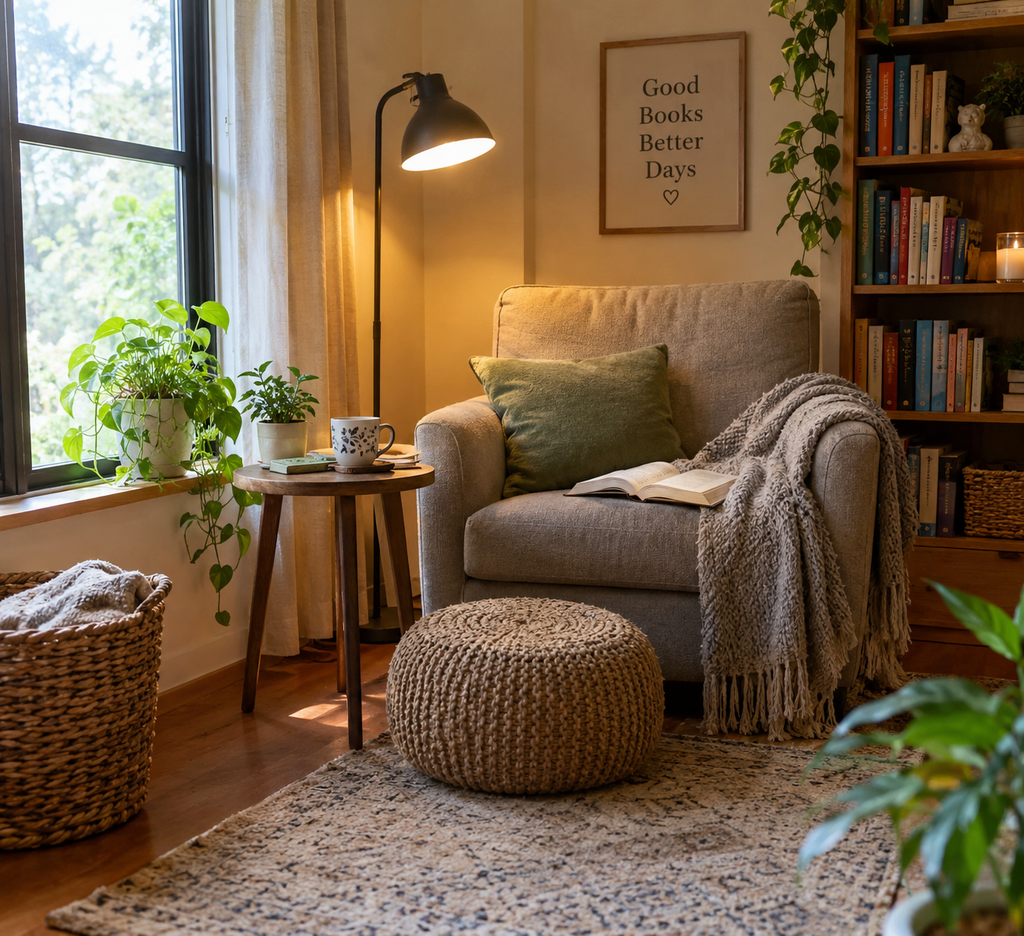
If you have enough space, a small bookshelf can become an important part of the reading corner.
A narrow bookshelf works well in small rooms because it provides storage without taking up too much floor space.
You can organize books by size, topic, author, or simply arrange them in a way that looks neat.
Leave some breathing space between books and decorative objects.
A shelf that is completely packed may feel visually heavy.
A few books, a small plant, and a simple decorative item can create a balanced look.
Add a Rug for Warmth
A small rug can help define the reading area.
This is especially useful when the reading corner is part of a larger room.
For example, if you create a reading corner in the living room, placing a rug under the chair and side table can make that area feel like its own little zone.
A soft rug also makes the floor feel warmer and more comfortable.
Choose a rug that fits the available space without blocking walkways.
Neutral colors work well if you want a calm appearance, while subtle patterns can add personality.
Choose Calm Colors
Color has a strong effect on how a space feels.
For a reading corner, calm and comfortable colors usually work best.
Soft beige, warm white, light gray, muted green, pale blue, cream, and earthy shades can create a relaxing environment.
You do not need to repaint the entire room.
You can introduce calming colors through cushions, curtains, rugs, blankets, artwork, or accessories.
If the rest of the room already has a strong color scheme, try to make the reading corner coordinate with it rather than competing with it.
A reading area should feel connected to the home while still having its own character.
Add a Small Indoor Plant
Plants can make a reading corner feel fresh and peaceful.
A small indoor plant placed on a side table, shelf, or nearby stand can bring natural beauty into the space.
You do not need many plants.
Even one healthy plant can make the corner look more lively.
Choose a plant that suits the lighting conditions of your room.
If the corner receives little natural light, select a plant that can tolerate lower light levels.
Artificial plants can also be used if you prefer something that requires no maintenance.
Include Personal Decorations
Your reading corner should reflect your personality.
You might add framed photographs, simple artwork, a favorite quote, a small clock, or an object that has personal meaning.
Try not to add too many decorations.
The purpose of the space is reading and relaxation, so the area should remain visually calm.
I think the best approach is choosing just a few meaningful items.
A reading corner often feels more comfortable when it looks personal rather than perfectly designed.
Reduce Visual Clutter
Clutter can make a relaxing space feel stressful.
Keep only the things you regularly use in your reading corner.
Books, a lamp, a blanket, a side table, and a few decorations may be all you need.
Avoid filling the floor or shelves with unnecessary items.
A small basket can help you organize magazines, notebooks, cables, or other accessories.
Keeping the area tidy makes it easier to sit down and focus on reading.
Keep Technology to a Minimum
Phones, tablets, televisions, and computers can easily become distractions.
If your goal is to create a peaceful reading corner, try to keep unnecessary technology away from the area.
Of course, this depends on how you like to read.
If you use an electronic reader or tablet for books, technology is naturally part of the experience.
However, you can still avoid placing the reading chair directly in front of the television.
Creating a little distance from screens can help the brain associate the corner with quiet reading time.
Make the Space Comfortable for Different Seasons
A good reading corner can be enjoyed throughout the year.
During winter, you may want thicker blankets, warmer lighting, and heavier fabrics.
In summer, lighter cushions, breathable fabrics, and better air movement may make the space more comfortable.
If the reading corner is near a window, pay attention to how sunlight changes during different seasons.
You may need curtains during very sunny months.
Small seasonal adjustments can keep the space comfortable without requiring major changes.
Think About Sound
A peaceful reading environment is not only about appearance.
Sound is also important.
If the reading corner is near a busy part of the house, try using soft furnishings such as curtains, rugs, and cushions. These materials can help absorb some sound.
Some people enjoy complete silence while reading. Others prefer gentle background sounds.
Soft instrumental music, nature sounds, or a quiet fan can create a relaxing atmosphere.
Choose whatever helps you concentrate best.
Add a Basket for Storage
A simple basket can solve many organization problems.
You can use it for blankets, extra cushions, magazines, books, notebooks, or children’s storybooks.
Baskets are especially useful in small reading corners because they provide storage without requiring more furniture.
Place the basket beside the chair or underneath the side table.
Choose a material that matches the rest of the room, such as woven fiber, fabric, or simple wood.
Create a Reading Corner for Children
A reading corner can also be created for children.
In fact, having a special place for books may encourage children to read more often.
A child’s reading area does not need expensive furniture.
You can use floor cushions, a soft rug, low bookshelves, and good lighting.
Keep books at a height where children can easily reach them.
Bright colors can make the space fun, but avoid adding so many decorations that the corner becomes distracting.
Comfort and easy access to books should remain the main priorities.
Use an Empty Bedroom Corner
Bedrooms often have unused corners that are perfect for reading.
Placing a chair near a bedroom window can create a peaceful place for evening or weekend reading.
Add a lamp, small table, cushion, and blanket.
Because bedrooms are usually quieter than living rooms, they can be ideal for reading.
Just make sure the corner does not interfere with walking space around the bed or wardrobe.
Turn a Window Area Into a Reading Spot
A window seat is one of the most attractive reading corner ideas.
If your home already has a built in window seat, you can make it more comfortable with cushions and pillows.
If you do not have one, you might place a small bench or chair close to the window.
Add a cushion, blanket, and nearby bookshelf.
The combination of daylight and an outdoor view can make the space especially relaxing.
Use Vertical Space in Small Homes
If floor space is limited, use the walls.
Floating shelves are excellent for storing books without using valuable floor space.
Wall mounted lamps can also save space by removing the need for a floor lamp or large table.
You can even hang a small piece of artwork above the chair.
Using vertical space makes it possible to create a complete reading corner in a surprisingly small area.
Make Comfort More Important Than Appearance
It is easy to focus too much on how a reading corner looks.
However, comfort should always come first.
A stylish chair that hurts your back will not be useful.
A beautiful lamp that does not provide enough light will not improve your reading experience.
Choose furniture and accessories based on how they feel and function.
After that, you can think about colors and decoration.
The most successful reading corners are spaces that people actually want to use.
Build a Reading Habit Around the Space
Creating a reading corner is only the first step.
Using it regularly is what makes it valuable.
You might choose a specific time each day for reading, such as early morning, after dinner, or before going to bed.
Even fifteen or twenty minutes of regular reading can become an enjoyable routine.
When you repeatedly read in the same place, your mind may gradually begin to associate that corner with relaxation and concentration.
That can make it easier to disconnect from everyday distractions.
Keep Improving the Corner Over Time
You do not need to finish your reading corner in one day.
Start with the basics.
A comfortable chair and good lighting may be enough at first.
Later, you can add a table, bookshelf, rug, plant, or decorative items.
Pay attention to how you use the space.
If you notice that your back needs more support, add a cushion.
If the light feels too weak, change the lamp.
If books start piling up, add a shelf or basket.
Small improvements can gradually make the space more comfortable.
Common Mistakes to Avoid
One common mistake is choosing furniture mainly because it looks attractive.
Always test comfort first.
Another mistake is using lighting that is too weak or too harsh.
The reading area should feel bright enough for reading without feeling uncomfortable.
Too many decorative items can also make the corner feel crowded.
Keep the design simple.
Finally, avoid placing the reading area where people constantly walk past you.
Even a beautiful corner may not feel relaxing if it is located in a noisy or busy area.
Why a Reading Corner Is Worth Creating
A reading corner provides more than just a place to sit.
It creates a small personal retreat inside the home.
It can encourage you to spend more time reading and less time scrolling through screens.
It can also make an unused corner of the house more functional.
For families, a reading space can encourage children and adults to enjoy books together.
For people who work from home, it can provide a place that feels separate from the desk and computer.
Most importantly, it gives you somewhere to slow down.
In a busy home and a busy life, having one quiet corner can make a noticeable difference.
Final Thoughts
Learning how to create a comfortable reading corner at home does not require a large budget or a lot of space.
Start by choosing a quiet location and adding a comfortable chair. Make sure you have good lighting, a small surface for your book or drink, and enough support for your body.
After that, add simple elements such as cushions, a blanket, a rug, a plant, or a small bookshelf.
Keep the space organized and avoid unnecessary clutter.
The goal is not to create a perfect picture for social media. The goal is to create a place where you genuinely enjoy sitting down with a book.
I believe the best reading corner is one that feels natural, peaceful, and personal.
Even a very small corner can become one of the most relaxing places in your home when it is designed around comfort and simplicity.