

Wall art can completely change the feeling of a room. A plain wall may look empty and unfinished, while the right artwork can make the same space feel warm, balanced, and personal. Choosing wall art is not only about finding a beautiful picture. It is also about understanding the room, its purpose, its colors, its furniture, and the mood you want to create.
Many people buy wall art simply because they like the design. There is nothing wrong with that, but artwork usually looks much better when it connects with the room around it. A calm bedroom may need something very different from a lively living room. A kitchen can look attractive with simple food inspired prints, while a home office may benefit from clean and inspiring artwork.
Learning how to choose wall art for different rooms can help you decorate your home with more confidence. You do not need expensive paintings or professional interior design knowledge. A few simple ideas about size, color, placement, and style can help you make better choices.
Understand the Purpose of the Room
Before choosing any artwork, think about how the room is used.
Every room has its own purpose and atmosphere. A living room is usually a social space where family members and guests spend time together. A bedroom is more private and relaxing. A dining room is connected with meals and conversation. A home office should support concentration and productivity.
The wall art should support the feeling of the room instead of fighting against it.
For example, very bright and energetic artwork may work well in a family room, but it may feel too active in a bedroom where you want to relax. Similarly, very soft and peaceful artwork may look beautiful in a bedroom but may not create enough visual interest in a large living room.
Thinking about the purpose of the room is one of the easiest ways to narrow down your choices.
Choosing Wall Art for the Living Room
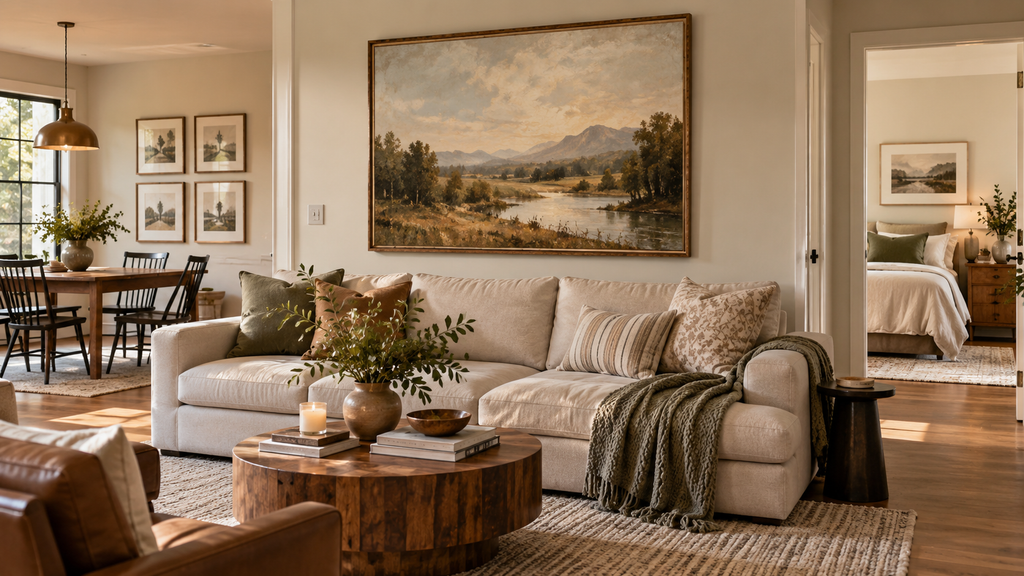
The living room is often the best place to use larger and more noticeable wall art.
Because this room is usually used by both family members and visitors, the artwork can help create the overall personality of the home.
Large paintings, abstract prints, landscape photography, botanical art, or a collection of framed pieces can all work well in a living room.
One important factor is scale. If you have a large sofa, a tiny frame above it may look lost. In many cases, the artwork should cover a good portion of the wall area above the furniture.
A single large piece can create a strong focal point. Another option is to create a gallery wall using several smaller pictures.
When creating a gallery wall, try to keep some connection between the pieces. They might share similar colors, frame styles, themes, or photography styles.
The artwork does not need to match the sofa or curtains exactly. In fact, a little contrast can make the room more interesting. However, using a few colors that already exist in the room can create a more connected appearance.
Choosing Wall Art for the Bedroom
The bedroom should usually feel peaceful, comfortable, and personal.
For this reason, wall art in the bedroom often works best when it has softer colors or relaxing subject matter.
Nature scenes, simple abstract designs, flowers, quiet landscapes, and minimal photography are popular choices.
The wall above the bed is often the main place for artwork. You can use one large piece, two matching pieces, or a set of three smaller prints.
Try not to choose artwork that feels too visually busy if you want the room to feel calm.
Colors such as soft blue, beige, green, cream, dusty pink, gray, and warm neutral shades can help create a restful atmosphere.
Personal photographs can also work well in a bedroom because the space is more private. Family pictures, travel memories, or meaningful photographs can make the room feel more personal without needing expensive decoration.
Choosing Wall Art for the Dining Room
The dining room is a place for conversation, meals, and social connection.
Wall art in this room can be slightly more expressive because people usually spend time sitting and looking around the space.
Food related photography is an obvious choice, but it is not the only option.
Landscapes, traditional artwork, abstract paintings, botanical prints, still life art, and cultural designs can all work beautifully in a dining room.
If the room has a large dining table, choose artwork that feels visually strong enough to balance the furniture.
A large horizontal painting can work well on a long wall. You can also use a group of smaller framed pieces.
Warm colors can create a welcoming atmosphere in dining areas. Earthy tones, deep green, muted red, warm brown, cream, and gold details can help the space feel comfortable.
However, the most important thing is that the artwork should complement the overall style of the room.
Choosing Wall Art for the Kitchen
Kitchen wall art should be simple, cheerful, and practical.
Kitchens often have less empty wall space because cabinets, shelves, appliances, and storage areas take up much of the room.
Smaller prints usually work better in kitchens.
You might choose artwork featuring herbs, fruits, coffee, baking, vegetables, flowers, or simple typography.
Vintage food posters can also add character, especially in traditional or farmhouse inspired kitchens.
Modern kitchens may look better with clean abstract prints or simple black and white photography.
Make sure you place the artwork away from areas where it may be exposed to too much heat, water, steam, or cooking grease.
Framed prints with glass can be easier to clean than delicate canvas artwork in some kitchen areas.
Choosing Wall Art for a Home Office
The home office should feel organized, comfortable, and motivating.
Wall art can help make a workspace feel less boring without becoming distracting.
You can choose simple landscapes, abstract patterns, architectural photography, maps, or inspirational artwork.
Try to avoid filling every wall with visual information. Too many pictures can sometimes make a small office feel crowded.
One meaningful piece above the desk may be enough.
If your work involves creativity, colorful artwork can help make the room feel more energetic.
If your work requires concentration, calm and minimal artwork may be a better choice.
Neutral tones with small areas of color can create a professional but welcoming atmosphere.
Choosing Wall Art for a Child’s Room
A child’s room gives you more freedom to use playful colors and creative designs.
Animals, space, nature, maps, alphabets, cartoons, storybook illustrations, and educational prints can all be suitable.
When choosing wall art for children, think about their age and interests.
A very young child may enjoy simple shapes, animals, or bright colors. Older children may prefer artwork connected with sports, science, travel, music, or hobbies.
It is often better to choose artwork that can still look suitable as the child grows.
For example, a beautiful world map may continue to be useful for many years.
You can also frame the child’s own drawings. This creates meaningful decoration and makes the room feel special.
Choosing Wall Art for the Bathroom
Bathrooms are often ignored when people decorate their homes, but a small piece of wall art can make a big difference.
Because bathrooms are usually smaller spaces, you often do not need large artwork.
Simple botanical prints, coastal photography, abstract designs, or calm nature images can work well.
Humidity is an important factor.
Avoid using delicate artwork without protection in a very humid bathroom. Framed prints with suitable protection may be more practical.
The colors should connect with the tiles, towels, vanity, or other bathroom finishes.
Soft blue, green, beige, white, gray, and natural tones are common choices because they can create a clean and relaxing feeling.
Choosing Wall Art for Hallways
Hallways are excellent places for photographs and smaller pieces of art.
Because hallways are narrow, large and heavy artwork can sometimes feel overwhelming.
A series of smaller framed pictures can create a natural flow through the space.
You can use family photographs, travel images, black and white photography, sketches, or simple art prints.
Try to hang the pieces at a comfortable viewing height.
If you are creating a photo wall, using similar frames can make the arrangement look more organized.
Hallway art can also help connect different rooms by repeating colors or styles used elsewhere in the home.
Consider the Size of the Wall
One of the most common decorating mistakes is choosing artwork that is too small.
A large empty wall usually needs artwork with enough visual weight.
If the artwork is placed above furniture, its size should relate to the furniture underneath.
For example, a very small picture above a wide sofa may look unbalanced.
On the other hand, an oversized painting above a small side table may dominate the space.
Before buying artwork, measure the wall.
You can even use paper or masking tape to mark the size of the artwork on the wall. This helps you understand how large the piece will look before you purchase it.
Think About Color
Color is an important part of choosing wall art, but the artwork does not need to match every item in the room.
A better approach is to find some connection between the artwork and the existing color palette.
For example, if your living room has beige furniture with blue cushions, artwork that includes small amounts of blue can connect the room naturally.
You can also use artwork to introduce a new accent color.
A neutral room can become more interesting with artwork containing green, orange, yellow, or deep blue.
Try to think of color as a relationship rather than an exact match.
The room should feel coordinated, but it should not look like every object was purchased from the same collection.
Choose a Style That Fits Your Home
Wall art should work with the general style of the room.
A modern room may look good with abstract paintings, simple photography, or graphic prints.
A traditional room may suit landscapes, classic paintings, floral art, or detailed illustrations.
A farmhouse style home may work well with botanical prints, vintage signs, or countryside photography.
A minimalist space may only need one simple piece of artwork.
You can also mix styles, but try to create some visual connection between them.
For example, modern artwork can look interesting in a traditional room if the colors connect with the rest of the space.
Do Not Ignore the Frame
The frame is an important part of the artwork.
A frame can make a simple print look more finished and attractive.
Black frames usually work well in modern interiors. Wooden frames can add warmth and suit natural or traditional rooms. White frames create a light and clean appearance.
Gold or brass colored frames can create a more elegant look.
If you are creating a gallery wall, you can use matching frames for a neat appearance or mix different frames for a more relaxed style.
The frame should support the artwork instead of distracting from it.
Consider Eye Level
Artwork usually looks best when it is placed around natural eye level.
A common mistake is hanging pictures too high.
People should be able to look at the artwork comfortably without needing to raise their heads.
When artwork is placed above a sofa, console table, or bed, leave enough space between the furniture and the artwork so they feel connected.
If the gap is too large, the artwork may look like it is floating separately on the wall.
Use Personal Meaning
Wall art does not always need to follow interior design trends.
Some of the most interesting homes include artwork that has personal meaning.
You may have a painting from a local artist, a photograph from a memorable trip, a family portrait, a handmade piece, or an old print from your childhood.
These items make a home feel unique.
Trendy artwork may look attractive, but personal artwork often creates a stronger emotional connection.
Your home should reflect your life, interests, and experiences.
Avoid Decorating Every Wall
You do not need artwork on every empty wall.
Leaving some walls open gives the eyes a place to rest.
If every wall contains several pictures, the room may begin to feel crowded.
Choose the most important walls first.
These may include the wall above the sofa, bed, dining table, fireplace, console table, or desk.
After decorating these areas, look at the room again before adding more artwork.
Sometimes fewer pieces create a stronger effect.
Mix Different Types of Wall Decoration
Wall decoration does not have to include only paintings and photographs.
You can also use mirrors, woven wall hangings, decorative plates, sculptures, baskets, clocks, or textile art.
Mixing different types of decoration can add texture and depth to a room.
For example, a gallery wall could include framed photographs, a small mirror, and a simple decorative object.
The key is balance.
If the room already contains many patterns and decorative items, simpler wall art may work better.
Follow Your Own Taste
Interior design advice can help you understand scale, placement, and color, but your own taste is still important.
You are the person who will see the artwork every day.
Choose pieces that you genuinely enjoy looking at.
Do not buy artwork only because it is fashionable.
Trends change quickly, but meaningful artwork can stay in your home for many years.
When you like a piece of art, consider where it might work best and then look at how its size, colors, and style connect with the room.
This approach combines personal taste with practical design thinking.
Final Thoughts
Learning how to choose wall art for different rooms is mainly about understanding balance. The artwork should connect with the room’s purpose, furniture, colors, size, and overall mood.
Living rooms can handle larger and more expressive pieces. Bedrooms usually benefit from softer and calmer artwork. Dining rooms can be warm and decorative, while kitchens often look better with smaller and simpler prints. Home offices can use art for inspiration, and children’s rooms offer space for playful and educational designs.
You do not need to follow strict decorating rules. Start by measuring your wall, studying the room, and thinking about how you want the space to feel.
Choose artwork that feels comfortable, meaningful, and visually connected with the rest of your home.
When wall art is selected thoughtfully, it does more than fill empty space. It adds personality, creates atmosphere, and helps every room feel more complete.