
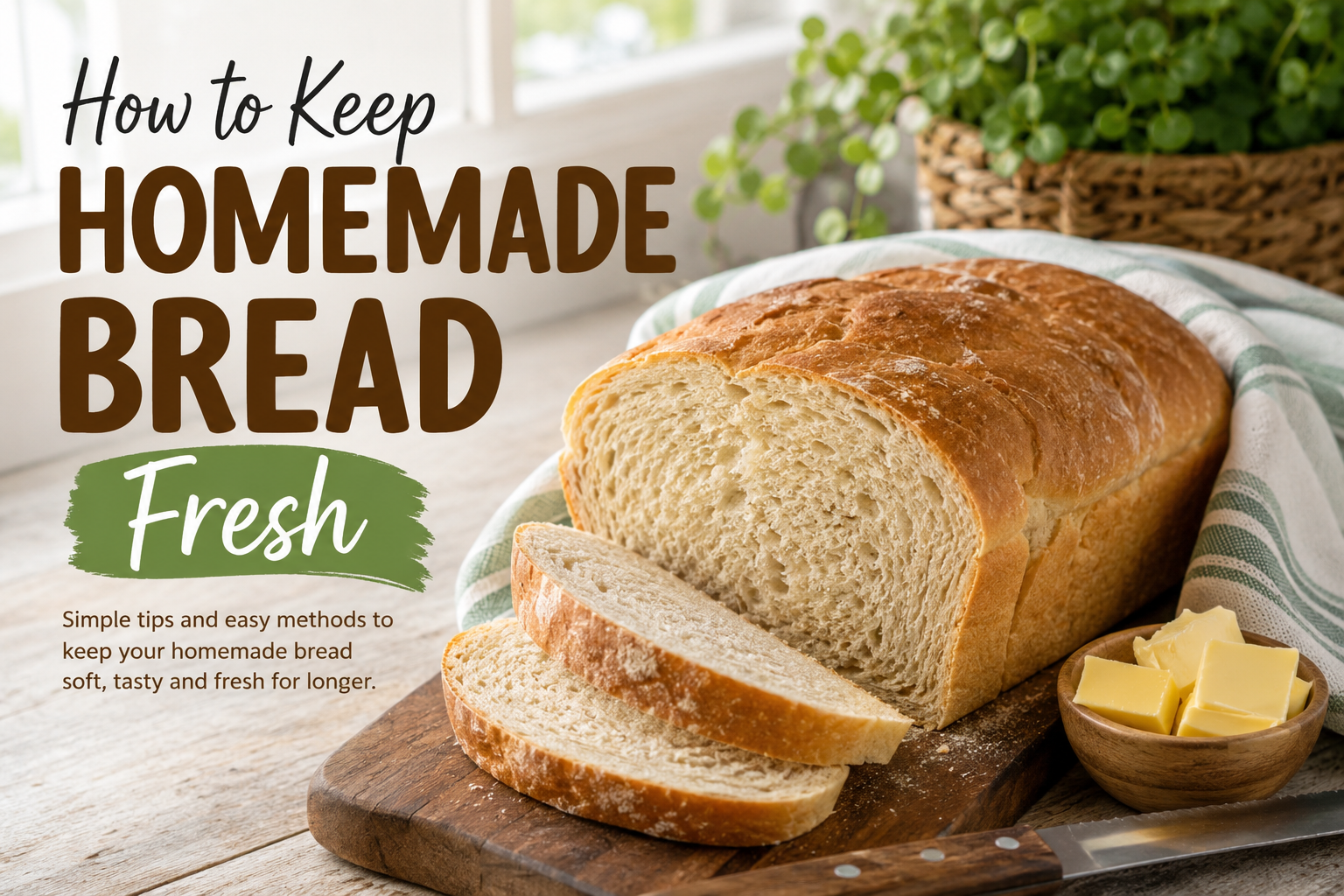
Homemade bread has a special taste that store bought bread simply cannot match. The smell of freshly baked bread, the crisp crust, and the soft center make it difficult to resist. However, one common problem I have noticed is that homemade bread can lose its freshness quite quickly if it is not stored properly.
The good news is that learning how to keep homemade bread fresh is actually quite simple. With the right storage method, you can enjoy soft, flavorful bread for several days without making it dry or allowing moisture to create mold. In this article, I will share the methods I find most useful for keeping homemade bread fresh, soft, and delicious.
Let Homemade Bread Cool Completely
One of the biggest mistakes people make is storing bread while it is still warm. I understand the temptation because freshly baked bread smells amazing, but putting warm bread directly into a bag or container can create condensation.
That extra moisture becomes trapped around the bread and can make the crust soft. More importantly, excessive moisture can encourage mold growth.
I always allow homemade bread to cool completely on a wire rack before storing it. Depending on the size of the loaf, this can take several hours. Once the bread reaches room temperature, it is ready to be wrapped or stored.
This simple step can make a noticeable difference in how long your homemade bread stays fresh.
Use a Bread Bag or Paper Bag
For bread that you plan to eat within a few days, a bread bag is one of the easiest storage options. A breathable bread bag can protect the loaf from excessive air exposure while still allowing some moisture to escape.
A paper bag can also work well, especially if you want to maintain a crisp crust. Paper does not trap as much moisture as plastic, which makes it useful for rustic breads and crusty homemade loaves.
However, paper bags are not always the best choice for soft sandwich bread because they can allow the bread to dry out faster.
The best storage method depends on the type of homemade bread you have made.
Store Bread at Room Temperature
For most homemade bread, room temperature is the best place for short term storage. I prefer keeping bread in a cool, dry area away from direct sunlight and heat.
A kitchen counter, bread box, or pantry shelf can work well. Try to keep the bread away from appliances that produce heat because warm conditions can affect both texture and freshness.
A bread box is particularly useful because it creates a protected environment while allowing enough airflow to prevent excessive moisture buildup.
If you do not have a bread box, a clean kitchen cabinet can also be a practical option.
Avoid Refrigerating Homemade Bread
Many people think that putting bread in the refrigerator will help it stay fresh longer. In my experience, this is usually not the best approach for regular homemade bread.
Refrigeration can make bread become stale faster because the cooler temperature affects the starches in the bread. You may notice that refrigerated bread becomes firm and loses the soft texture you enjoyed when it was freshly baked.
Instead of refrigerating bread, I recommend keeping a small amount at room temperature for immediate use and freezing the rest if you know you will not eat it within a few days.
Freeze Homemade Bread for Long Term Freshness
Freezing is one of my favorite ways to keep homemade bread fresh for longer. When properly wrapped, bread can maintain much of its original flavor and texture after freezing.
If you have baked a large loaf and know you cannot finish it quickly, freezing is a much better option than leaving it on the counter for too long.
First, allow the bread to cool completely. You can then slice it if you prefer. I personally like slicing bread before freezing because I can take out only the amount I need.
Wrap the bread carefully in freezer safe packaging. You can use a freezer bag or another suitable airtight wrapping method. Try to remove as much excess air as possible before sealing the bag.
Place the wrapped bread in the freezer and use it when needed.
Slice Bread Only When Necessary
Another useful tip for keeping homemade bread fresh is to avoid slicing the entire loaf too early.
Once bread is sliced, more of its surface is exposed to air. This can cause the bread to lose moisture faster. If you are eating the loaf over several days, keeping it whole can help preserve its texture.
When I make homemade bread for regular meals, I prefer cutting only the slices I need. This keeps the remaining loaf protected and reduces unnecessary exposure to air.
If you are freezing the bread, however, pre slicing can be very convenient.
Keep the Cut Side Protected
If you have already sliced a loaf, pay attention to the exposed cut surface. This area can dry out quickly.
Place the cut side down on a clean cutting board or wrap the loaf appropriately. This helps reduce direct exposure to air.
For soft homemade sandwich bread, proper wrapping is particularly important because the interior can become dry if left uncovered.
It is a small detail, but it can help maintain a pleasant texture for longer.
Use an Airtight Container Carefully
Airtight containers can be useful for certain types of homemade bread, but they need to be used correctly.
If the bread is completely cool and you want to protect soft bread from drying out, an airtight container can work well. However, if the bread is still warm, sealing it inside can trap moisture.
That moisture can make the crust unpleasantly soft and may increase the risk of mold.
For this reason, I always make sure the bread has cooled completely before placing it inside a container.
Choose Storage Based on Bread Type
Not every homemade bread should be stored in exactly the same way.
Soft sandwich bread usually benefits from a sealed bag or container because the goal is to retain moisture and keep the inside soft.
Crusty artisan bread is different. It often needs some airflow so that the crust does not become chewy or soggy. A paper bag or bread box may be more suitable.
Sweet breads containing ingredients such as butter, milk, or eggs may also have different storage needs depending on the recipe.
Thinking about the type of bread you baked makes it much easier to choose the right storage method.
Keep Bread Away From Moisture
Moisture is one of the biggest enemies of homemade bread freshness. While some moisture is necessary to keep bread soft, excess moisture can cause problems.
Do not store bread next to a sink, dishwasher, or other damp area. Avoid wrapping warm bread immediately after baking.
If your kitchen is particularly humid, pay extra attention to airflow and storage conditions. A breathable bread bag or bread box may work better than tightly sealing a warm loaf.
Keeping the storage environment dry and clean can help your bread remain enjoyable for longer.
Check Homemade Bread for Mold
Homemade bread usually contains fewer preservatives than many commercial breads. Because of this, it can develop mold more quickly under poor storage conditions.
Before eating bread that has been stored for several days, check it carefully. Look for unusual spots, fuzzy growth, strange colors, or an unpleasant smell.
If you see mold on a loaf, it is safest to discard the entire loaf rather than simply cutting away the visible area. Mold can spread beyond what you can see.
Good storage can reduce the chances of mold developing, but it is still important to inspect bread before eating it.
How to Refresh Homemade Bread
Sometimes bread is still perfectly good but has become slightly dry. In that situation, you may be able to refresh it.
For a whole crusty loaf, lightly heating it in the oven can help restore some of its texture. The outside can become crisp again while the inside warms up.
For individual slices, a toaster is one of the easiest solutions. Toasting can make slightly stale bread taste delicious again.
You can also use homemade bread in recipes such as French toast, bread pudding, croutons, breadcrumbs, or sandwiches. This is a great way to avoid wasting bread that is no longer at its freshest.
My Favorite Homemade Bread Storage Method
If I plan to eat the bread within two or three days, I usually let it cool completely and then store it at room temperature in a suitable bread bag or bread box.
If I have baked more bread than I can reasonably eat, I prefer freezing it. Slicing the loaf before freezing makes it easy to remove individual portions whenever I need them.
This approach gives me fresh bread without feeling like I have to eat an entire loaf immediately.
The most important thing is to avoid unnecessary moisture and excessive exposure to air. Once you understand that balance, keeping homemade bread fresh becomes much easier.
Final Thoughts
Learning how to keep homemade bread fresh does not require expensive equipment or complicated techniques. The most important habits are simple. Let the bread cool completely before storing it, choose the right storage method for the type of bread, protect it from excessive air and moisture, and freeze anything you will not eat within a few days.
I have found that proper storage makes homemade bread much more enjoyable because you can bake a larger loaf without worrying about it becoming dry too quickly.
Whether you love soft sandwich bread, rustic sourdough, dinner rolls, or a simple homemade loaf, a little attention to storage can help preserve its flavor and texture.
Homemade bread is best when it tastes fresh, and with these simple tips, you can keep that freshly baked experience going for much longer.