
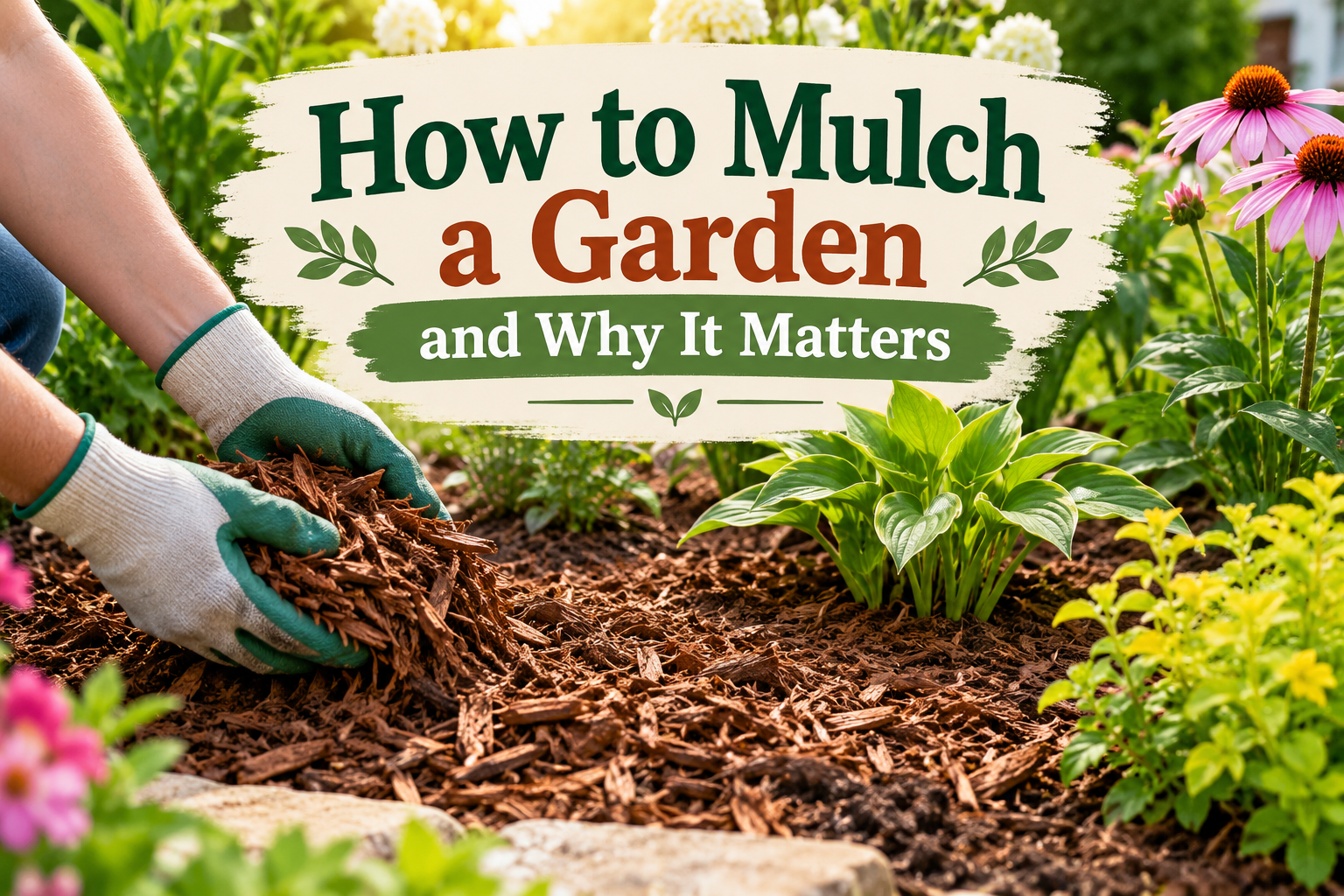
Mulching is one of the simplest ways to improve the health and appearance of a garden. I have found that many gardening problems become easier to manage when the soil is properly covered. Mulch helps protect the soil, conserve moisture, reduce weeds, and support healthier plant growth.
A garden may look fine without mulch, but bare soil is exposed to sunlight, wind, heavy rain, and changing temperatures. Over time, these conditions can dry the soil, encourage weeds, and make it harder for plants to grow well.
Learning how to mulch a garden is useful for both beginners and experienced gardeners. It does not require expensive equipment or complicated techniques. With the right material and proper application, mulch can improve almost any garden bed.
What Is Garden Mulch?
Garden mulch is a layer of material placed on top of the soil around plants. It acts like a protective covering.
Mulch can be made from natural materials such as leaves, compost, straw, grass clippings, wood chips, and bark. Some gardeners also use materials such as gravel or stones in certain areas.
Organic mulch is especially useful because it slowly breaks down and adds organic matter to the soil.
The main purpose of mulch is to protect the soil surface while creating better conditions for plant roots.
Why Mulching a Garden Is Important
Mulching offers several benefits at the same time. This is one reason it is such a useful gardening practice.
The soil underneath mulch usually stays cooler, wetter, and more protected than bare soil. Mulch can also reduce the amount of time spent watering and pulling weeds.
It creates a more stable environment for plants and helps the garden look cleaner and more organized.
Mulch Helps the Soil Hold Moisture
One of the biggest benefits of mulching a garden is moisture conservation.
Water can evaporate quickly from uncovered soil, especially during warm or windy weather. When mulch covers the soil, it reduces direct exposure to sunlight and slows evaporation.
This means the soil can remain moist for longer periods.
Plants benefit because their roots have more consistent access to water. Gardeners may also need to water less often.
Mulching is particularly helpful during hot weather when garden soil can dry very quickly.
Mulch Helps Control Weeds
Weeds compete with garden plants for water, nutrients, sunlight, and space.
A good layer of mulch can reduce weed growth by limiting the amount of sunlight that reaches weed seeds.
Some weeds may still appear, but they are often fewer and easier to remove.
This can save a considerable amount of time during the growing season.
Mulching does not completely eliminate weeds, but it can make weed control much easier.
Mulch Protects Soil From Extreme Temperatures
Soil temperature can change quickly when it is exposed directly to the sun.
During hot weather, bare soil can become very warm. During cooler weather, temperatures may drop quickly.
Mulch creates a protective layer that reduces these sudden temperature changes.
This can help protect plant roots from stress.
A more stable soil temperature is especially useful for young plants and vegetables with shallow root systems.
Mulch Can Improve Soil Quality
Organic mulch gradually decomposes over time.
As materials such as leaves, compost, bark, and grass break down, they add organic matter to the soil.
Organic matter can improve soil structure and help the soil hold both nutrients and moisture.
It can also support earthworms and beneficial soil organisms.
This means mulch can provide immediate protection while also helping improve the soil over the longer term.
Mulch Protects the Soil From Heavy Rain
Heavy rain can damage exposed garden soil.
Raindrops hitting bare soil can break apart the surface and cause soil particles to wash away. In sloping gardens, this may contribute to erosion.
A layer of mulch absorbs some of the impact from heavy rainfall.
It also slows water movement across the soil surface.
This gives water more time to soak into the ground instead of running away.
Mulch Keeps Plants Cleaner
Mulch can also help keep leaves, vegetables, and fruits cleaner.
When rain or irrigation water hits bare soil, it can splash soil onto nearby plants.
Mulch reduces this soil splash.
This is particularly useful for crops such as strawberries, tomatoes, cucumbers, and leafy vegetables growing close to the ground.
Cleaner plants are easier to harvest and maintain.
Choosing the Right Mulch for Your Garden
There are many types of mulch, and each one has different advantages.
The best choice depends on your plants, climate, available materials, and the appearance you want.
Organic mulch is usually a good choice for home gardens because it improves the soil as it decomposes.
Compost as Mulch
Compost is one of the most useful materials for garden beds.
A layer of finished compost can protect the soil while also adding nutrients and organic matter.
Compost works especially well around vegetables, flowers, shrubs, and fruit plants.
It should be well decomposed before being used.
Fresh organic waste should usually be composted first because unfinished material can attract insects or break down unevenly.
Dry Leaves as Mulch
Fallen leaves are an inexpensive and natural mulch.
Instead of throwing dry leaves away, they can be used around plants.
Shredded leaves are usually easier to manage because whole leaves may form thick layers that prevent water from reaching the soil.
Leaves gradually break down and improve soil quality.
They are especially useful around shrubs, trees, flower beds, and vegetable gardens.
Straw as Garden Mulch
Straw is commonly used in vegetable gardens.
It is lightweight, easy to spread, and useful for keeping fruit away from direct contact with the soil.
Straw can work well around tomatoes, peppers, strawberries, pumpkins, and other vegetables.
Choose clean straw without large amounts of weed seeds.
A loose layer allows water and air to reach the soil while still providing good protection.
Grass Clippings as Mulch
Grass clippings can also be used as mulch if they are applied carefully.
Fresh grass should be placed in thin layers rather than thick piles.
Thick layers of wet grass can become compacted and may develop an unpleasant smell.
Allowing grass clippings to dry slightly before use can make them easier to manage.
Avoid using grass that has recently been treated with chemicals if you are unsure whether the treatment is suitable for garden use.
Wood Chips and Bark
Wood chips and bark are useful for longer lasting mulch.
They are commonly used around trees, shrubs, paths, and ornamental garden beds.
These materials break down more slowly than grass or leaves.
This means they do not need to be replaced as frequently.
Wood mulch also gives garden beds a neat and finished appearance.
However, it should not be mixed deeply into vegetable garden soil. It is usually better to keep it on the surface.
How Thick Should Mulch Be?
The thickness of mulch is important.
A layer that is too thin may not provide enough protection.
A layer that is too thick may prevent water and air from reaching the soil properly.
For most garden beds, a mulch layer of around five to eight centimeters works well.
Light materials such as straw may sometimes be applied slightly thicker because they settle over time.
The goal is to cover the soil evenly without creating a heavy barrier.
How to Mulch a Garden Properly
Start by preparing the garden bed.
Remove large weeds and unwanted plants before applying mulch.
If the soil is very dry, water the garden first.
Mulch works best when it helps keep existing moisture in the soil.
Next, spread your chosen mulch evenly around the plants.
Try to maintain a consistent layer across the garden bed.
Leave some open space around the base of each plant.
Mulch should protect the soil without pressing directly against stems or trunks.
Keep Mulch Away From Plant Stems
One common mulching mistake is piling material directly against plant stems.
This can trap excess moisture around the plant and may encourage rot or disease.
Keep a small gap between the mulch and the main stem.
Trees should also have space around the trunk.
Avoid creating large piles of mulch around tree trunks.
The mulch should spread outward across the soil rather than upward against the plant.
When Is the Best Time to Mulch?
Mulch can be applied at different times of the year.
Many gardeners apply mulch after planting in spring.
This helps conserve moisture as temperatures begin to rise.
Mulching before hot weather can also protect roots from high temperatures.
In cooler climates, mulch may be used later in the season to help protect soil and roots from temperature changes.
The most important point is to apply mulch when the soil has suitable moisture.
Mulching extremely dry soil without watering first may simply trap dry conditions underneath.
Watering a Mulched Garden
A mulched garden still requires watering.
The difference is that the soil may stay moist for longer.
Check the soil beneath the mulch before watering.
If the soil still feels damp, additional water may not be necessary.
When watering, apply enough moisture so that it reaches the soil below the mulch.
Light watering that only wets the surface of the mulch may not reach plant roots.
Slow and deep watering usually works better.
How Often Should Mulch Be Replaced?
Organic mulch gradually breaks down.
This is beneficial because decomposed material becomes part of the soil.
However, the mulch layer will eventually become thinner.
Check the depth from time to time.
If the layer has become too thin, add more material.
You do not always need to remove the old mulch first. In many cases, a fresh layer can simply be added on top.
Common Mulching Mistakes to Avoid
Using too much mulch is one of the most common problems.
More mulch is not always better.
A very thick layer may stop water and air from moving freely into the soil.
Another mistake is placing mulch directly against plant stems or tree trunks.
Using contaminated materials can also create problems.
For example, mulch containing weed seeds may introduce new weeds into the garden.
Fresh plant material showing signs of disease should usually not be used as mulch around healthy plants.
Mulching Vegetable Gardens
Vegetable gardens benefit greatly from mulch.
Vegetable plants often need regular moisture and can suffer when the soil dries out.
Mulch can keep the root area cooler and reduce water loss.
It can also reduce mud and soil splash around vegetables.
Organic materials such as straw, compost, dry leaves, and grass clippings are commonly used in vegetable beds.
Choose materials that are clean and easy to remove or mix into the soil later.
Mulching Around Trees and Shrubs
Trees and shrubs can also benefit from mulching.
Spread mulch around the root zone instead of piling it around the trunk.
A wider layer of mulch can help reduce competition from grass and weeds.
It also protects the soil from drying quickly.
Leave some clear space around the trunk so that moisture does not remain trapped against the bark.
Mulching Container Plants
Mulch can even be used in large containers and pots.
A thin layer of compost, bark, or other suitable material can reduce water loss from the surface of potting soil.
Container plants often dry faster than plants growing directly in the ground.
Mulch can help reduce this problem, although regular watering will still be necessary.
Why Organic Mulch Is Often the Best Choice
Organic mulch offers several advantages for home gardeners.
It protects the soil while slowly improving it.
Materials such as compost, leaves, straw, and grass eventually decompose.
This creates a natural cycle where garden waste returns to the soil.
Organic mulch is also often inexpensive because many materials are already available around the home and garden.
Final Thoughts
Learning how to mulch a garden is one of the easiest ways to improve plant health and reduce garden maintenance.
A proper layer of mulch helps conserve water, control weeds, protect roots, reduce soil erosion, and improve soil quality.
The process is simple. Remove weeds, water dry soil, choose a suitable mulch, and spread it evenly around your plants.
Avoid applying mulch too deeply and always keep some space around stems and tree trunks.
Mulching may seem like a small gardening task, but its effects can be noticeable throughout the growing season. Healthy soil creates better conditions for healthy plants, and mulch is one of the simplest tools available for protecting that soil.
Whether you are growing vegetables, flowers, shrubs, fruit plants, or a few plants in containers, adding mulch can make the garden easier to manage and more productive over time.