
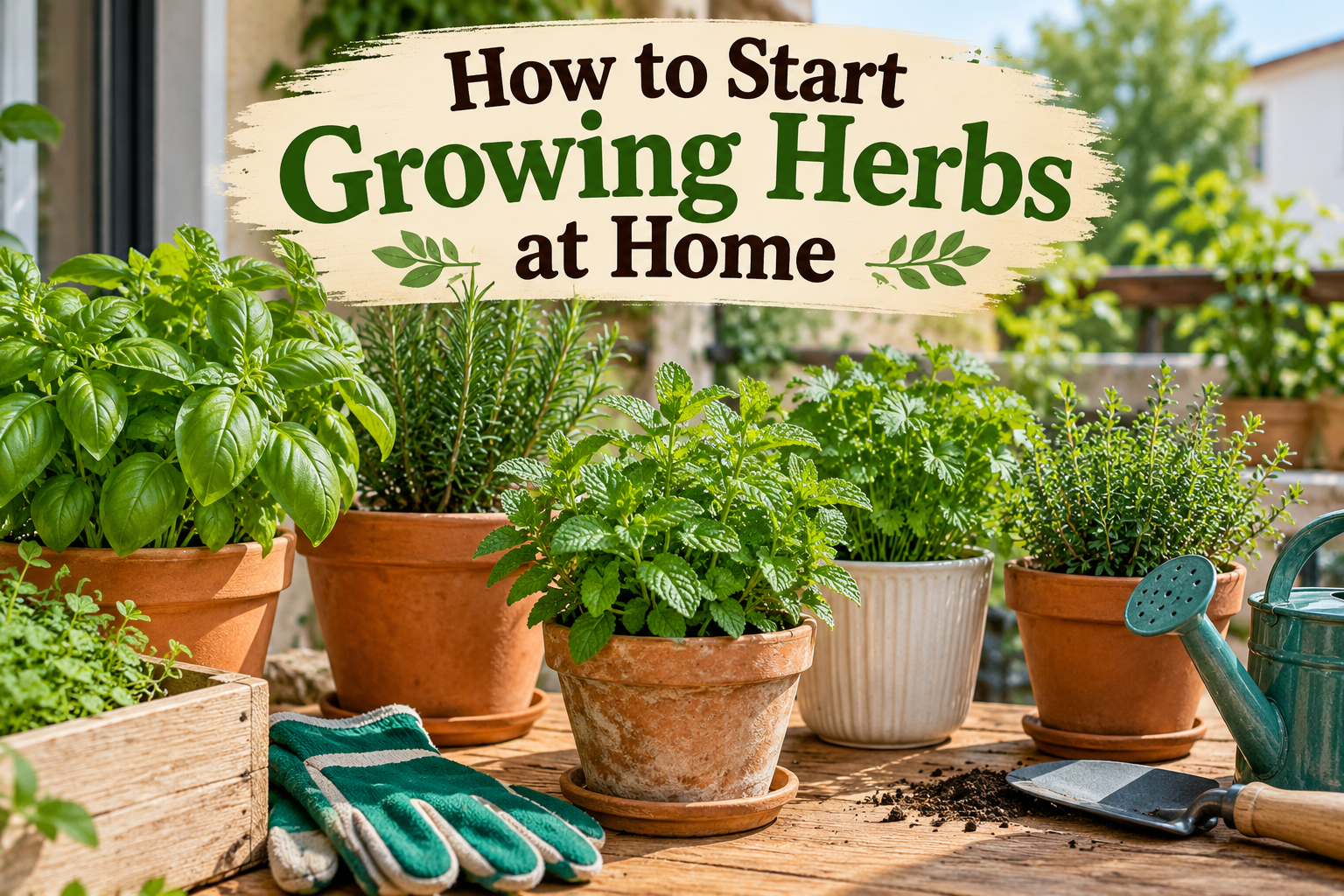
Growing herbs at home is one of the easiest ways to begin gardening. Herbs do not usually need a large garden, expensive equipment, or years of experience. Many common herbs can grow successfully in pots, containers, balconies, windows, patios, and small outdoor spaces.
I have always found herbs interesting because they give something useful back very quickly. A small pot of mint can provide fresh leaves for drinks. Basil can be used in cooking. Coriander can add fresh flavor to meals. Rosemary can make a garden smell pleasant while also being useful in the kitchen.
For beginners, the most important thing is not to grow too many herbs at once. Start with a few simple varieties, learn how they respond to water and sunlight, and gradually expand your herb garden.
This guide explains how to start growing herbs at home in a simple and practical way.
Why Grow Herbs at Home
There are several reasons why home herb gardening has become popular.
Fresh herbs are convenient. Instead of buying a large bunch of herbs from a shop and using only a small amount, you can pick exactly what you need from your own plants.
Growing herbs can also reduce waste. Fresh herbs purchased from stores sometimes become soft or spoiled before they are completely used. A living herb plant can continue producing leaves for weeks or even months when cared for properly.
Herbs also make small spaces feel more natural. A few green pots near a kitchen window or balcony can completely change the atmosphere of the area.
For many people, gardening itself is also relaxing. Checking plants in the morning, watering them, and watching new leaves appear can become an enjoyable daily habit.
Choose Easy Herbs for Beginners
When starting an herb garden at home, choose herbs that are relatively easy to grow.
Some good choices include:
Basil
Mint
Coriander
Parsley
Rosemary
Thyme
Oregano
Chives
These herbs have different growing habits, so it is helpful to understand their basic needs.
Mint is one of the easiest herbs for beginners. It grows quickly and can spread strongly. For this reason, I prefer keeping mint in its own container.
Basil enjoys warm conditions and good sunlight. It grows quickly when temperatures are suitable.
Coriander prefers slightly cooler conditions and can grow from seed quite easily.
Rosemary and thyme usually prefer soil that drains well and does not remain constantly wet.
You do not need to grow every herb at once. Starting with three or four varieties is often enough.
Decide Where to Grow Your Herbs
Before buying plants or seeds, look around your home and identify a suitable growing location.
Most herbs need plenty of natural light. A sunny balcony, patio, rooftop, windowsill, or small garden area can work well.
Many herbs grow best when they receive around six hours of sunlight each day. However, sunlight requirements can vary between plants.
If your home receives very strong afternoon sunlight, some delicate herbs may benefit from protection during the hottest part of the day.
Indoor herb gardens should usually be placed close to a bright window.
When selecting a location, also think about convenience. Herbs that are used regularly in cooking are easier to maintain when they are close to the kitchen.
A location that you see every day also makes it easier to notice when plants need water or attention.
Choose Suitable Containers
Herbs can grow in many types of containers.
You can use clay pots, plastic pots, ceramic containers, wooden planters, or other containers designed for gardening.
The most important feature is drainage.
Water must be able to leave the container easily. If excess water remains around the roots for too long, the roots may begin to rot.
Check whether your pot has drainage holes at the bottom.
If it does not, choose another container or create suitable drainage holes before planting.
Container size also matters.
Very small pots dry quickly and may restrict root growth. Larger containers usually hold moisture for longer and provide more room for roots.
Mint, for example, can grow rapidly and benefits from a reasonably large container.
Rosemary can eventually become a large plant and may need a bigger pot as it matures.

Use Good Quality Soil
Garden soil taken directly from the ground is not always the best choice for containers.
It can become compacted inside pots and may prevent proper drainage.
For container herbs, use a light potting mixture that allows both air and water to move through the soil.
Good potting soil often contains materials that help retain moisture while also preventing the soil from becoming too heavy.
Herbs such as rosemary, thyme, and oregano prefer especially good drainage.
The soil should feel slightly moist after watering but should not remain soaked for long periods.
Healthy roots need both water and oxygen.
Start Herbs From Seeds or Plants
You can begin growing herbs either from seeds or from young plants purchased from a nursery.
Both methods have advantages.
Seeds are usually inexpensive and allow you to grow many plants. However, they require more patience.
Young nursery plants provide faster results because the plants have already passed the early germination stage.
For complete beginners, buying a few healthy young plants can make the first herb garden easier.
If you prefer growing from seed, follow the planting instructions provided on the seed packet.
Seeds are usually planted at different depths depending on their size.
Avoid planting seeds too deeply. Small seeds often need only a thin covering of soil.
Keep the soil slightly moist while the seeds are germinating.
Water Herbs Carefully
Watering is one of the most important parts of growing herbs at home.
Many beginners make the mistake of watering too often.
Plants need water, but roots also need oxygen. Constantly wet soil can create unhealthy growing conditions.
Before watering, touch the top layer of soil.
If it feels dry, the plant may need water.
If the soil still feels moist, wait a little longer.
Water slowly until moisture reaches deeper into the container and some water begins leaving through the drainage holes.
This encourages roots to grow deeper.
The amount of water required will depend on the weather, container size, plant type, and location.
During hot weather, containers may dry much faster.
During cooler conditions, plants may need less frequent watering.
Instead of following a strict watering calendar, learn to observe the soil.
Give Herbs Enough Sunlight
Sunlight plays an important role in healthy herb growth.
Plants use light to produce the energy they need for growth.
Basil, rosemary, thyme, and oregano generally enjoy plenty of sunlight.
Parsley, mint, and some other herbs can tolerate slightly less sun.
If plants become weak, pale, or unusually tall and thin, they may not be receiving enough light.
Indoor plants sometimes lean toward windows because they are searching for stronger light.
Turning pots occasionally can help the plant grow more evenly.
However, avoid moving plants constantly between completely different growing conditions.
Plants usually perform better when they have a stable environment.
Avoid Overcrowding
When seedlings are small, it can be tempting to keep many plants together in one container.
As they grow, competition increases.
Plants begin competing for water, nutrients, root space, and sunlight.
This can result in weak growth.
If several seedlings grow too close together, remove some of them or move them into separate containers.
Giving each herb enough space improves air circulation around the leaves.
Better air circulation may also reduce some problems caused by excessive moisture around plants.
Feed Herbs Lightly
Herbs growing in containers have access to a limited amount of soil.
Over time, nutrients in that soil can decrease.
A small amount of suitable plant fertilizer can support continued growth.
However, more fertilizer does not always mean better plants.
Too much fertilizer can cause excessive soft growth and may affect the flavor of some herbs.
Follow the instructions provided with the fertilizer you choose.
For many home herb gardens, light and occasional feeding is enough.
Healthy soil, good sunlight, and proper watering are usually more important than heavy fertilizing.
Harvest Herbs Regularly
One enjoyable part of growing herbs at home is harvesting fresh leaves.
Regular harvesting can also encourage some herbs to produce new growth.
When harvesting, avoid removing too much of the plant at one time.
Take a reasonable number of leaves and allow enough foliage to remain so the plant can continue growing.
Basil responds well to regular trimming.
Mint can also produce new stems after harvesting.
For leafy herbs, younger leaves often have excellent flavor.
It is usually better to harvest herbs when they look healthy and fresh.
Use clean scissors or gently pinch leaves with your fingers.
Watch for Common Problems
Even easy herbs can occasionally develop problems.
Yellow leaves may be caused by too much water, poor drainage, nutrient problems, or natural aging.
Dry leaves may indicate insufficient watering, very hot conditions, or excessive sunlight.
Small insects may sometimes appear on stems or underneath leaves.
Inspect your herbs regularly.
Early detection makes most plant problems easier to manage.
Keeping the growing area clean and removing damaged leaves can also help maintain healthy plants.
Avoid allowing fallen leaves to remain on wet soil for long periods.
Grow Herbs Near the Kitchen
One practical lesson I have learned from home gardening is that herbs are more useful when they are easy to reach.
If possible, grow frequently used herbs near the kitchen.
A sunny kitchen window, balcony, or nearby patio can be ideal.
When herbs are visible, you are more likely to remember to water and harvest them.
You are also more likely to use fresh herbs while cooking.
Even three or four small pots can provide a useful supply for everyday meals.
Learn From Each Plant
Gardening becomes easier when you start observing plants instead of following rules too strictly.
One balcony may receive strong morning sunlight while another receives intense afternoon heat.
One container may dry quickly while another retains moisture for several days.
Because every growing space is different, observation is important.
Check your herbs regularly.
Notice how quickly the soil dries.
Watch how plants respond to sunlight.
Observe the color and shape of new leaves.
Over time, you begin understanding what healthy growth looks like.
This knowledge becomes more useful than simply memorizing watering schedules.
Start Small and Expand Slowly
Beginners sometimes become excited and buy many plants immediately.
This can make gardening feel difficult.
A better approach is to start small.
Choose two, three, or four herbs that you regularly use.
Learn how to care for them.
Once those plants are growing successfully, add more varieties.
For example, you could start with basil, mint, coriander, and rosemary.
Later, you might add parsley, thyme, oregano, or chives.
Building the garden slowly allows you to understand each plant without becoming overwhelmed.
Final Thoughts
Learning how to start growing herbs at home does not require a large garden or complicated gardening knowledge. A few containers, suitable soil, sunlight, water, and regular observation are enough to begin.
Choose simple herbs that you actually use in your kitchen. Give them containers with good drainage and place them where they can receive suitable light. Water when the soil begins to dry instead of watering automatically every day.
Most importantly, pay attention to your plants.
Herbs often show clear signs when something needs to change. Weak growth may suggest insufficient light. Constantly wet soil may indicate too much water. Dry leaves may mean the plant needs more moisture or protection from intense heat.
Home herb gardening becomes easier with experience.
Once the first few plants begin producing fresh leaves, the small effort involved in caring for them feels worthwhile. Over time, a few pots can develop into a useful and attractive home herb garden that provides fresh ingredients throughout the growing season.